Security Notice: Please be aware of impersonation attempts using our company name
Legitimate communications from Ascent Research will only come from official @ascentresearch.com email addresses.
Quick Order Cart

Cat. No. ARG0277

PLD2 Knockout HCT 116 Cell Line

  • Product Type:

    Genome-edited Cells

  • Tissue Source:

    Large intestine (colon)

  • Disease:

    Carcinoma

  • Gene Species:

    Homo sapiens (Human)

The PLD2 Knockout HCT 116 Cell Line is a CRISPR/Cas9-edited knockout cell line derived from HCT 116 colorectal carcinoma cells, providing a loss-of-function model for phospholipase D2 (PLD2). The parental line carries KRAS G13D and CTNNB1 mutations, driving constitutive ERK and Wnt signaling. PLD2 converts phosphatidylcholine to phosphatidic acid, activating mTORC1 and Raf/MEK/ERK cascades to regulate growth, migration, and survival. This knockout model is ideal for studying PLD2-dependent signaling in colorectal cancer, drug target validation, and lipid signaling research using immunoblotting, migration assays, and lipidomics.

Inquire Now

In stock

Ships next business day


Ask a Question

Shipping Info:

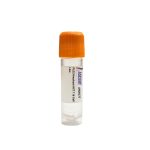
Cryopreserved in vials and shipped on dry ice


Disclaimer:

For Research Use Only

  • Characteristics

    Host Cell

    HCT 116

    Morphology

    Epithelial-like

    Age

    Adult

    Sex of Donor

    Male

    Gene Name

    PLD2

    Gene Species

    Homo sapiens (Human)

    Gene Identifier

    NCBI Gene ID 5338

  • Culture Conditions

    Temperature

    37°C

    Atmosphere

    5% CO₂

  • Quality Control

    Sterility testing

    Daily monitoring confirms that the cells are free from bacterial, yeast, and fungal contamination.

    Mycoplasma testing

    Negative for mycoplasma through PCR analysis

    Pathogens

    Cells tested negative for HIV-1, HBV, and HCV.

  • Disclaimer

    Intended Use

    This product is intended for laboratory in vitro use only. lt is not intended for diagnostic, therapeutic, or clinical applications.

    Disclaimer

    Ascent Research endeavors to provide accurate and up-to-date product information. However, no warranties or representations are made regarding its completeness or reliability. References to scientific literature and patents are for informational purposes only, and the customer assumes sole responsibility for verifying their accuracy.

    By accepting this product, the customer acknowledges and agrees to assume all risks associated with its receipt, handling, storage, disposal, and use, including compliance with all applicable safety and environmental regulations and precautions. Relevant laws, regulations, and ethical guidelines must be followed in conducting any research, modifications, or derivatives derived from this product.

    This product is provided "AS IS", and except as expressly stated herein, Ascent Research disclaims all other warranties, express or implied. Under no circumstances shall Ascent Research, its affiliates, or representatives be liable for indirect, incidental, consequential, or punitive damages arising from the use of this material. While Ascent Research employs rigorous quality control measures, we shall not be held responsible for damages resulting from misidentification or misinterpretation of the provided materials.

Description

The PLD2 Knockout HCT 116 Cell Line is a CRISPR/Cas9-edited human colorectal carcinoma cell line with targeted disruption of the PLD2 gene, creating a stable loss-of-function model for phospholipase D2. This knockout cell line enables precise investigation of PLD2-dependent signaling in an epithelial context without reliance on transient suppression or pharmacological inhibitors.

The parental HCT 116 line is an intestinal epithelial model harboring oncogenic KRAS G13D and CTNNB1 (??-catenin) mutations, with MSI-low status and wild-type p53. These alterations drive constitutive ERK/MAPK and Wnt pathway activation, making it a relevant system for studying colorectal cancer signaling and therapeutic intervention.

PLD2 hydrolyzes phosphatidylcholine to produce phosphatidic acid (PA), a lipid second messenger that activates mTORC1 and the Raf/MEK/ERK kinase cascade. Upstream activators include EGF, PDGF, GPCRs, integrins, and ARF/Rho GTPases, while downstream effectors comprise mTORC1, Raf-1, PI3K, Akt, and S6 kinase. PLD2 interacts with actin, Grb2, PKC, and ??-catenin, linking lipid metabolism to cytoskeletal dynamics and transcription.

In HCT 116 cells, PLD2-generated PA amplifies oncogenic signals from mutant KRAS and ??-catenin, enhancing mTORC1/S6K and ERK phosphorylation. Knockout of PLD2 is therefore expected to attenuate proliferation, migration, and survival pathways, offering a clean genetic tool to dissect the role of phospholipid signaling in colorectal cancer progression.

This model is suited for drug target validation, signal transduction studies, and functional assays such as western blotting for phospho-ERK, phospho-Akt, and phospho-S6, migration/invasion tests, co-immunoprecipitation, and lipidomics. It facilitates investigation of therapy resistance and metastatic mechanisms. For technical inquiries or custom requests, contact Ascent Research.


Reset Password

    Reach Us Questions? Click Me Here!

    Fill out the form below and a member of our team will contact you shortly!

    *Required field


      Reach Us

      Fill out the form below and a member of our team will contact you shortly!

      *Required field

      Product Inquiry (Optional)