Quick Order Cart

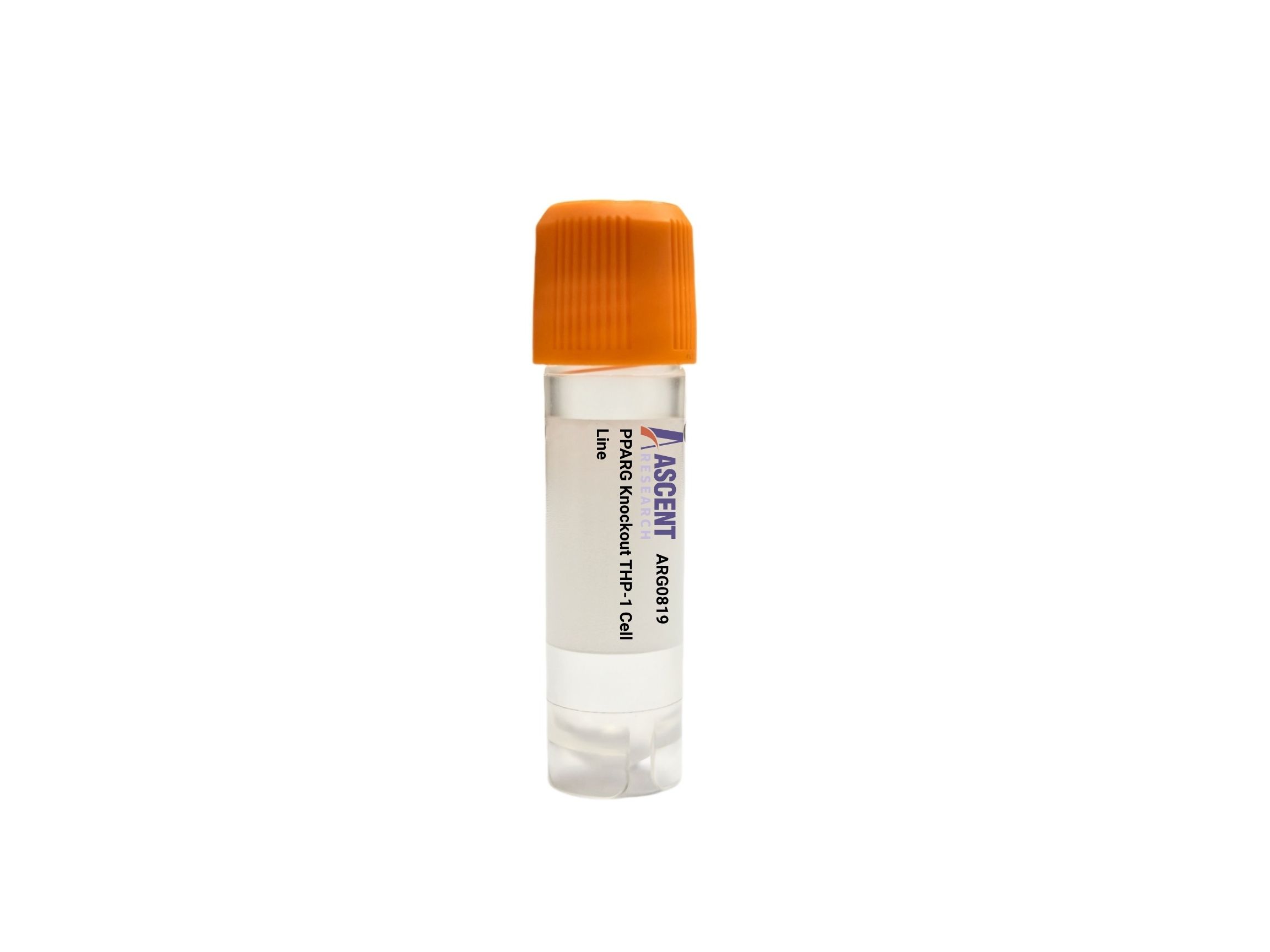
Cat. No. ARG0819

PPARG Knockout THP-1 Cell Line

  • Product Type:

    Genome-edited Cells

  • Tissue Source:

    Blood (peripheral blood)

  • Disease:

    Acute monoblastic leukemia

  • Gene Species:

    Homo sapiens (Human)

The PPARG Knockout THP-1 Cell Line is a CRISPR/Cas9-edited knockout cell line with targeted disruption of PPARG in the THP-1 human acute monocytic leukemia cell line. THP-1 cells differentiate into macrophage-like cells upon PMA treatment, providing a well-established model for monocyte/macrophage biology and inflammation research. PPARG, a nuclear receptor activated by fatty acids and thiazolidinediones, regulates lipid metabolism and anti-inflammatory responses, targeting genes such as CD36 and adiponectin. This knockout line facilitates mechanistic studies of PPARG-dependent macrophage polarization, drug screening, and assays including cytokine ELISA and lipid uptake. Contact Ascent Research for details.

Inquire Now

In stock

Ships next business day


Ask a Question

Shipping Info:

Cryopreserved in vials and shipped on dry ice


Disclaimer:

For Research Use Only

  • Characteristics

    Host Cell

    THP-1

    Age

    1 year

    Sex of Donor

    Male

    Gene Name

    PPARG

    Gene Species

    Homo sapiens (Human)

    Gene Identifier

    NCBI Gene ID 5468

  • Culture Conditions

    Temperature

    37°C

    Atmosphere

    5% CO₂

  • Quality Control

    Sterility testing

    Daily monitoring confirms that the cells are free from bacterial, yeast, and fungal contamination.

    Mycoplasma testing

    Negative for mycoplasma through PCR analysis

    Pathogens

    Cells tested negative for HIV-1, HBV, and HCV.

  • Disclaimer

    Intended Use

    This product is intended for laboratory in vitro use only. lt is not intended for diagnostic, therapeutic, or clinical applications.

    Disclaimer

    Ascent Research endeavors to provide accurate and up-to-date product information. However, no warranties or representations are made regarding its completeness or reliability. References to scientific literature and patents are for informational purposes only, and the customer assumes sole responsibility for verifying their accuracy.

    By accepting this product, the customer acknowledges and agrees to assume all risks associated with its receipt, handling, storage, disposal, and use, including compliance with all applicable safety and environmental regulations and precautions. Relevant laws, regulations, and ethical guidelines must be followed in conducting any research, modifications, or derivatives derived from this product.

    This product is provided "AS IS", and except as expressly stated herein, Ascent Research disclaims all other warranties, express or implied. Under no circumstances shall Ascent Research, its affiliates, or representatives be liable for indirect, incidental, consequential, or punitive damages arising from the use of this material. While Ascent Research employs rigorous quality control measures, we shall not be held responsible for damages resulting from misidentification or misinterpretation of the provided materials.

Description

The PPARG Knockout THP-1 Cell Line is a genetically engineered human monocytic cell line in which CRISPR/Cas9-mediated gene editing has been employed to disrupt the PPARG locus, creating a functional knockout. This product provides a defined loss-of-function system for investigating PPARG-dependent regulatory mechanisms in a monocyte/macrophage context. The cell line is offered as a live culture, amenable to standard tissue culture protocols and differentiation into macrophage-like cells using phorbol 12-myristate 13-acetate (PMA).

THP-1 is a spontaneously immortalized human monocytic cell line originally isolated from the peripheral blood of a one-year-old male with acute monocytic leukemia. It serves as a widely accepted model for studying monocyte-to-macrophage differentiation, innate immune responses, and inflammatory signaling. Upon PMA stimulation, THP-1 cells undergo growth arrest, become adherent, and develop characteristics of mature macrophages, including phagocytic activity, upregulation of surface antigens such as CD11b and CD36, and secretion of cytokines.

PPARG (peroxisome proliferator-activated receptor gamma) encodes a ligand-activated transcription factor belonging to the nuclear receptor superfamily. It forms obligate heterodimers with retinoid X receptor (RXR) and occupies PPAR response elements (PPREs) in target gene regulatory regions. PPARG is activated by endogenous ligands including fatty acids and 15-deoxy-??12,14-prostaglandin J2, and by synthetic agonists such as thiazolidinediones. Its transcriptional activity is modulated by phosphorylation from MAP kinases and AMPK, and by recruitment of coactivators (PGC-1??, SRC-1) or corepressors (NCoR, SMRT). In macrophages, PPARG induces expression of lipid metabolism genes (CD36, FABP4, LPL) and adiponectin, while transrepressing pro-inflammatory cytokines such as TNF-?? and IL-6, thereby steering cells toward an anti-inflammatory M2-like state and maintaining lipid homeostasis.

Within the THP-1 macrophage model, PPARG is a key node linking metabolic sensing and inflammatory output. The PPARG knockout cell line enables researchers to dissect the specific contribution of this nuclear receptor to processes such as macrophage differentiation, foam cell formation, and cytokine production. The model is particularly informative for studying diseases where PPARG-mediated anti-inflammatory and lipid-handling functions are compromised, including atherosclerosis, non-alcoholic fatty liver disease, obesity, and type 2 diabetes. Direct comparison of wild-type and PPARG-null THP-1 macrophages permits attribution of phenotypes to PPARG-dependent signaling.

This knockout cell line supports a wide range of investigative techniques. Gene expression and chromatin-binding studies can employ RT-qPCR and ChIP-qPCR to profile PPARG target genes and PPRE occupancy. Drug discovery applications include screening PPARG agonists or antagonists using luciferase reporter assays and assessing functional lipid uptake via oxidized LDL. Cytokine ELISA for TNF-?? and IL-10, along with flow cytometry for M1/M2 surface markers, characterize inflammatory responses and polarization. Western blotting confirms ablation of PPARG protein. This cell line is a precise genetic tool for metabolic inflammation research and preclinical evaluation of PPARG modulators. For inquiries, contact Ascent Research.


Reset Password

    Reach Us Questions? Click Me Here!

    Fill out the form below and a member of our team will contact you shortly!

    *Required field


      Reach Us

      Fill out the form below and a member of our team will contact you shortly!

      *Required field

      Product Inquiry (Optional)