Quick Order Cart

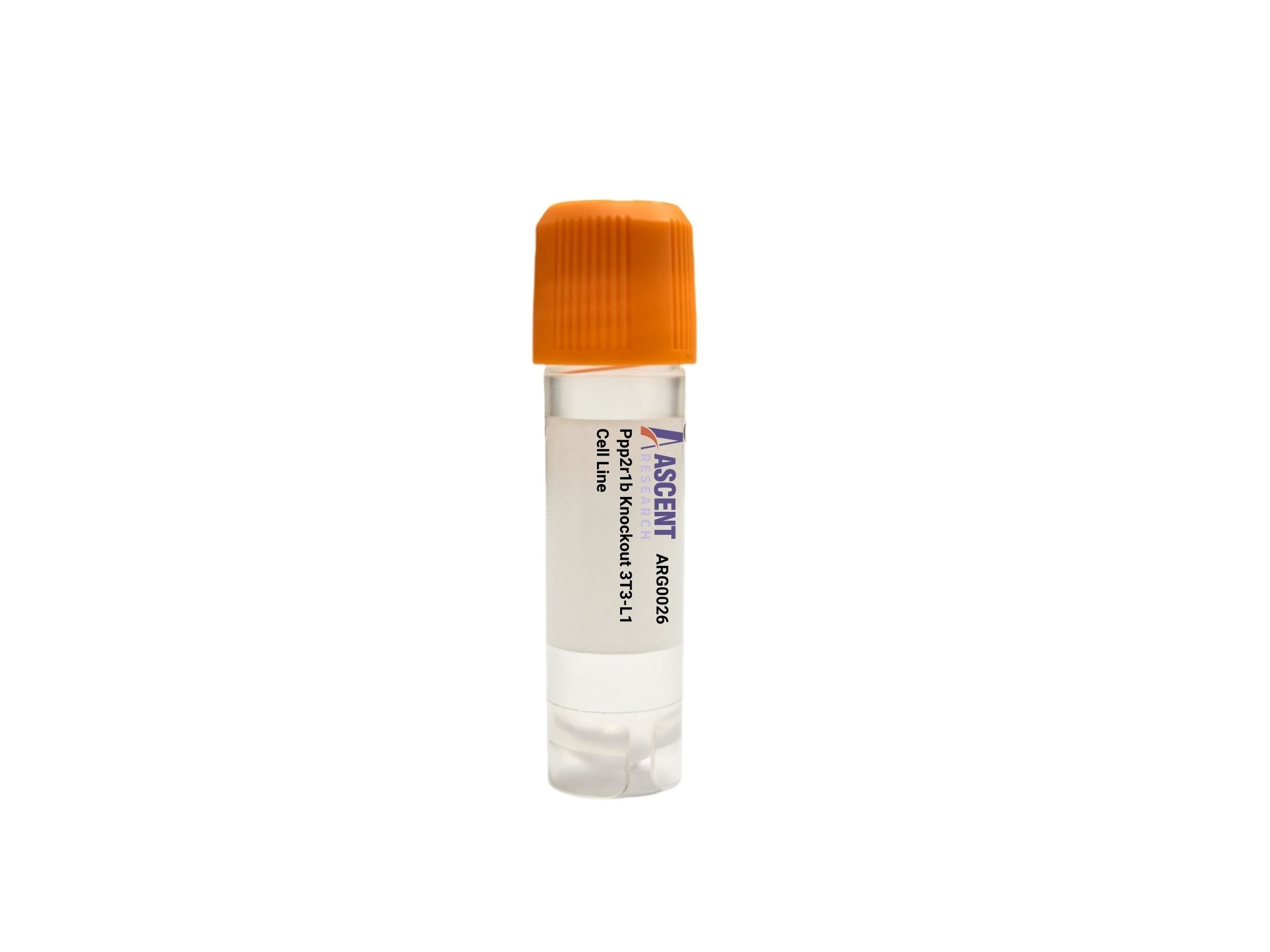
Cat. No. ARG0026

Ppp2r1b Knockout 3T3-L1 Cell Line

  • Product Type:

    Genome-edited Cells

  • Tissue Source:

    Embryo

  • Disease:

    Normal

  • Gene Species:

    Mus musculus (Mouse)

Ppp2r1b Knockout 3T3-L1 is a CRISPR/Cas9-engineered mouse preadipocyte fibroblast model for studying PP2A scaffold biology in adipogenesis and metabolic signaling. PPP2R1B encodes the PP2A A?? scaffold subunit that assembles holoenzymes with PPP2CA/PPP2CB and regulatory B subunits, influencing dephosphorylation of AKT, ERK1/2, GSK3??, FOXO1, and mTOR pathway outputs. In the 3T3-L1 background, this knockout supports mechanistic studies of insulin signaling, adipocyte differentiation, lipid accumulation, and metabolic disease biology using western blotting, adipogenic differentiation assays, Oil Red O staining, glucose uptake analysis, RNA-seq, and phosphatase-focused assays.

Inquire Now

In stock

Ships next business day


Ask a Question

Shipping Info:

Cryopreserved in vials and shipped on dry ice


Disclaimer:

For Research Use Only

  • Characteristics

    Host Cell

    3T3-L1

    Morphology

    Fibroblast

    Age

    Embryo

    Sex of Donor

    Male

    Gene Name

    Ppp2r1b

    Gene Alias

    protein phosphatase 2, regulatory subunit A, beta; 2410091N08Rik

    Gene Species

    Mus musculus (Mouse)

    Gene Identifier

    NCBI Gene ID 73699

    Gene Type

    protein coding gene

    Gene Family

    Protein phosphatase 2 scaffold subunits

  • Culture Conditions

    Temperature

    37°C

    Atmosphere

    5% CO₂

  • Quality Control

    Sterility testing

    Daily monitoring confirms that the cells are free from bacterial, yeast, and fungal contamination.

    Mycoplasma testing

    Negative for mycoplasma through PCR analysis

    Pathogens

    Cells tested negative for HIV-1, HBV, and HCV.

  • Disclaimer

    Intended Use

    This product is intended for laboratory in vitro use only. lt is not intended for diagnostic, therapeutic, or clinical applications.

    Disclaimer

    Ascent Research endeavors to provide accurate and up-to-date product information. However, no warranties or representations are made regarding its completeness or reliability. References to scientific literature and patents are for informational purposes only, and the customer assumes sole responsibility for verifying their accuracy.

    By accepting this product, the customer acknowledges and agrees to assume all risks associated with its receipt, handling, storage, disposal, and use, including compliance with all applicable safety and environmental regulations and precautions. Relevant laws, regulations, and ethical guidelines must be followed in conducting any research, modifications, or derivatives derived from this product.

    This product is provided "AS IS", and except as expressly stated herein, Ascent Research disclaims all other warranties, express or implied. Under no circumstances shall Ascent Research, its affiliates, or representatives be liable for indirect, incidental, consequential, or punitive damages arising from the use of this material. While Ascent Research employs rigorous quality control measures, we shall not be held responsible for damages resulting from misidentification or misinterpretation of the provided materials.

Description

The Ppp2r1b Knockout 3T3-L1 Cell Line is a CRISPR/Cas9-engineered mouse cell model in which the Ppp2r1b gene has been disrupted to eliminate functional PPP2R1B expression. This stable knockout was generated in 3T3-L1 cells, a murine preadipocyte fibroblast line extensively used for mechanistic studies of adipocyte biology. The model provides a defined in vitro system for examining the consequences of altered PP2A scaffold composition in a cellular background that is highly responsive to adipogenic and metabolic cues.

3T3-L1 cells are derived from mouse embryo fibroblast-like precursors and are well established as a model of hormone-induced adipogenic differentiation. Upon appropriate induction, they undergo coordinated transcriptional and metabolic remodeling associated with lipid droplet accumulation, insulin-responsive glucose handling, and lipogenic gene expression. Because of this phenotype, 3T3-L1 cells are widely used to study adipogenesis, insulin signaling, lipid storage, nutrient sensing, and metabolic regulation relevant to obesity, insulin resistance, type 2 diabetes, metabolic syndrome, and related disorders.

PPP2R1B encodes the PP2A scaffold A?? subunit, a structural component that forms complexes with catalytic subunits PPP2CA and PPP2CB together with multiple regulatory B subunit families, including B55, B56, PR72/PR130, and STRN family striatins. Through these holoenzymes, PPP2R1B helps direct serine/threonine dephosphorylation of signaling proteins functioning downstream of insulin, IGF1, PDGF, EGF, serum growth factors, nutrient status, and ceramide-sensitive phosphatase regulation. Altered assembly of PP2A complexes can affect phosphorylation states of AKT, ERK1/2, GSK3??, FOXO1, RB1, and mTORC1 pathway outputs such as RPS6KB1, with downstream consequences for CEBPA, PPARG, and broader lipogenic transcriptional programs. PPP2R1B function is also linked to PP2A regulators including TIPRL and PTPA, placing it within a broader network controlling phosphatase biogenesis and signaling selectivity.

In the 3T3-L1 context, loss of Ppp2r1b offers a relevant model for defining how PP2A complex organization influences adipocyte differentiation and insulin-responsive signaling. This system can be used to examine pathway dependencies between PP2A scaffold usage and PI3K-AKT, MAPK/ERK, and mTOR signaling during preadipocyte proliferation, differentiation, and metabolic maturation. It is also suitable for investigating disease-relevant mechanisms connecting phosphatase dysregulation to impaired adipogenesis, altered lipid accumulation, insulin resistance phenotypes, and growth control.

Applications include insulin stimulation studies followed by western blot analysis of phospho-AKT and phospho-ERK, adipogenic differentiation assays with Oil Red O staining and triglyceride quantification, RT-qPCR or RNA-seq analysis of PPARG-, CEBPA-, and lipogenic gene expression, and glucose uptake assays to assess insulin responsiveness. Researchers may also use co-immunoprecipitation to evaluate PP2A holoenzyme composition, phosphatase activity assays to examine okadaic acid-sensitive signaling, immunofluorescence for subcellular phenotyping, and cell proliferation assays to study RB1-associated cell-cycle regulation. Researchers may contact Ascent Research for additional technical information, product details, or related gene-edited cell models.


Reset Password

    Reach Us Questions? Click Me Here!

    Fill out the form below and a member of our team will contact you shortly!

    *Required field


      Reach Us

      Fill out the form below and a member of our team will contact you shortly!

      *Required field

      Product Inquiry (Optional)