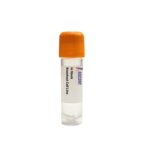
Quick Order Cart

Cat. No. ARG44053

PSENEN Knockout HaCaT Cell Line

  • Product Type:

    In Stock Cell Lines

  • Species:

    Homo sapiens (Human)

  • Tissue Source:

    Skin

  • Disease:

    Normal

The PSENEN Knockout HaCaT Cell Line is a CRISPR/Cas9-edited human keratinocyte model with targeted disruption of the PSENEN gene, encoding a vital gamma-secretase subunit (PEN-2). PSENEN is required for cleavage of Notch receptors (generating NICD), APP, ErbB4, and E-cadherin, interacting with PSEN1, PSEN2, NCSTN, and APH1A/B. Its knockout abolishes gamma-secretase activity, impairing Notch, Alzheimer??s, and ErbB signaling pathways. This line enables investigation of gamma-secretase functions in epidermal biology, including calcium-induced differentiation, Notch target gene expression (Hes1, Hey1), and adhesion. Applications cover drug screening, hidradenitis suppurativa research, Alzheimer??s disease studies, and wound healing, with assays such as RT-qPCR, reporter assays, and immunofluorescence.

Inquire Now

In stock

Ships next business day


Ask a Question

Shipping Info:

Cryopreserved in vials and shipped on dry ice


Disclaimer:

For Research Use Only

  • Characteristics

    Host Cell

    HaCaT

    Sex of Donor

    Male

    Age

    62 years

    Derived From Site

    Back

    Gene Name

    PSENEN

    Gene Identifier

    NCBI Gene ID 55851

    Morphology

    Epithelial-like

    Growth Mode

    Adherent

    Storage

    Liquid nitrogen (LN2)

  • Culture Conditions

    Temperature

    37°C

    Atmosphere

    5% CO₂

  • Quality Control

    Sterility testing

    The bacterial, yeast, and fungi are not detected in these cells by daily monitor.

    Mycoplasma testing

    Negative for mycoplasma through PCR analysis

  • Disclaimer

    Intended Use

    This product is intended for laboratory in vitro use only. lt is not intended for diagnostic, therapeutic, or clinical applications.

    Disclaimer

    Ascent Research endeavors to provide accurate and up-to-date product information. However, no warranties or representations are made regarding its completeness or reliability. References to scientific literature and patents are for informational purposes only, and the customer assumes sole responsibility for verifying their accuracy.

    By accepting this product, the customer acknowledges and agrees to assume all risks associated with its receipt, handling, storage, disposal, and use, including compliance with all applicable safety and environmental regulations and precautions. Relevant laws, regulations, and ethical guidelines must be followed in conducting any research, modifications, or derivatives derived from this product.

    This product is provided "AS IS", and except as expressly stated herein, Ascent Research disclaims all other warranties, express or implied. Under no circumstances shall Ascent Research, its affiliates, or representatives be liable for indirect, incidental, consequential, or punitive damages arising from the use of this material. While Ascent Research employs rigorous quality control measures, we shall not be held responsible for damages resulting from misidentification or misinterpretation of the provided materials.

Description

The PSENEN Knockout HaCaT Cell Line is a CRISPR/Cas9-edited knockout model featuring targeted disruption of the human PSENEN gene in the HaCaT immortalized keratinocyte background. This cell line provides a stable loss-of-function system to analyze gamma-secretase complex activity. Supplied as a ready-to-use line, it eliminates the need for transient gene silencing, ensuring reproducible results in long-term studies.

HaCaT cells are a spontaneously immortalized human keratinocyte line derived from adult skin, maintaining the capacity for terminal differentiation when exposed to elevated calcium. This line models human epidermal biology, including proliferation, differentiation, and barrier formation. Its robust growth and genetic tractability make it widely used for gene-edited derivatives such as the PSENEN knockout.

PSENEN (PEN-2) is an essential subunit of the gamma-secretase complex, which also contains presenilin (PSEN1 or PSEN2), nicastrin (NCSTN), and anterior pharynx defective 1 (APH1A or APH1B). PSENEN facilitates presenilin endoproteolysis, a prerequisite for gamma-secretase maturation and catalytic activity. Once active, the complex mediates intramembrane proteolysis of type I transmembrane proteins: Notch receptors, amyloid precursor protein (APP), ErbB4, and E-cadherin. Cleavage of Notch generates the Notch intracellular domain (NICD), which transcriptionally activates targets such as Hes1 and Hey1. APP processing produces beta-amyloid peptides; ErbB4 cleavage releases its intracellular domain; E-cadherin processing yields fragments influencing adhesion. PSENEN knockout abolishes these events, thereby disrupting Notch, Wnt, Alzheimer’s, and ErbB signaling. Upstream regulators of PSENEN expression include SP1 and NF-kB, while Notch signaling provides feedback regulation.

In the HaCaT keratinocyte context, PSENEN knockout is particularly valuable for exploring gamma-secretase functions in epidermal homeostasis. HaCaT cells differentiate in response to calcium, a process governed in part by Notch-mediated transcriptional programs. Absence of PSENEN thus permits dissection of how gamma-secretase-dependent cleavage affects keratinocyte fate, intercellular adhesion via E-cadherin, and signaling cross-talk. This model is directly relevant to hidradenitis suppurativa, a chronic inflammatory skin disease linked to gamma-secretase mutations, as well as to Notch-related skin cancers and wound healing research.

Applications include high-throughput screening of gamma-secretase modulators using Notch reporter assays (e.g., CBF1-luciferase) or APP cleavage detection. Differentiation studies can be combined with RT-qPCR for Hes1 and Hey1, immunofluorescence for Notch1 and E-cadherin, and phospho-protein profiling. Transcriptomic (RNA-seq) and migration/scratch assays provide broader phenotypic readouts. This knockout line also serves as a non-neuronal platform for Alzheimer’s disease research exploring APP processing. For further details, contact Ascent Research.


Reset Password

    Reach Us Questions? Click Me Here!

    Fill out the form below and a member of our team will contact you shortly!

    *Required field


      Reach Us

      Fill out the form below and a member of our team will contact you shortly!

      *Required field

      Product Inquiry (Optional)