Quick Order Cart

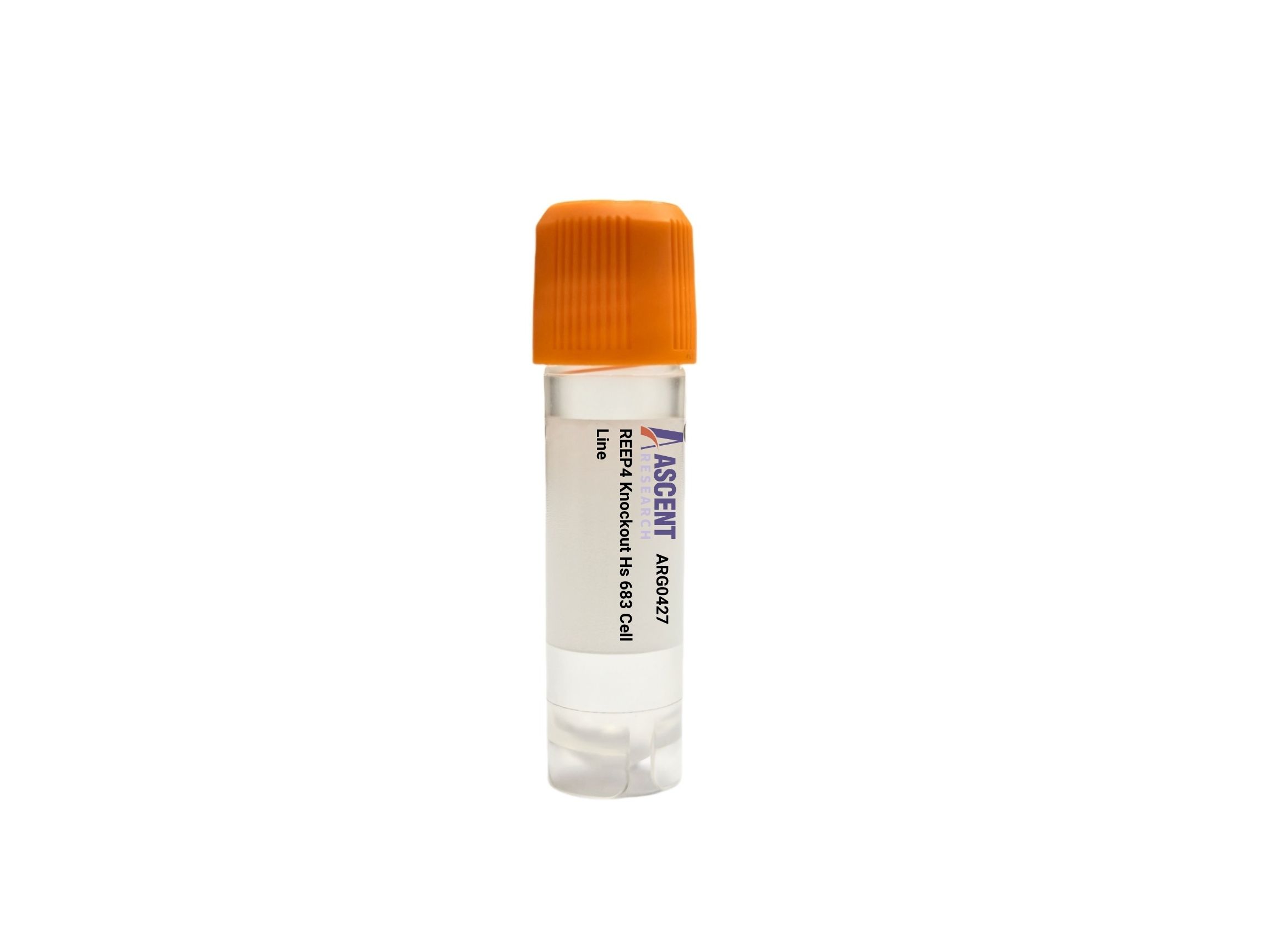
Cat. No. ARG0427

REEP4 Knockout Hs 683 Cell Line

  • Product Type:

    Genome-edited Cells

  • Tissue Source:

    Brain (left temporal lobe)

  • Disease:

    Oligodendroglioma

  • Gene Species:

    Homo sapiens (Human)

The REEP4 Knockout Hs 683 Cell Line is a CRISPR/Cas9-edited knockout model that disrupts REEP4, an ER?shaping protein that interacts with reticulon proteins and atlastin GTPases to regulate microtubule dynamics. Its loss induces ER stress, elevating CHOP and GRP78 through ATF4/XBP1, and impairs autophagy (LC3) and glioma cell migration. This Hs 683-derived cell line is applied in glioblastoma research, drug screening for ER stress modulators, and synthetic lethality studies. Typical readouts include immunofluorescence assays for ER morphology, Western blotting of UPR markers, and temozolomide sensitivity testing.

Inquire Now

In stock

Ships next business day


Ask a Question

Shipping Info:

Cryopreserved in vials and shipped on dry ice


Disclaimer:

For Research Use Only

  • Characteristics

    Host Cell

    Hs 683

    Morphology

    Fibroblast-like

    Age

    76 years

    Sex of Donor

    Male

    Gene Name

    REEP4

    Gene Species

    Homo sapiens (Human)

    Gene Identifier

    NCBI Gene ID 80346

  • Culture Conditions

    Temperature

    37°C

    Atmosphere

    5% CO₂

  • Quality Control

    Sterility testing

    Daily monitoring confirms that the cells are free from bacterial, yeast, and fungal contamination.

    Mycoplasma testing

    Negative for mycoplasma through PCR analysis

    Pathogens

    Cells tested negative for HIV-1, HBV, and HCV.

  • Disclaimer

    Intended Use

    This product is intended for laboratory in vitro use only. lt is not intended for diagnostic, therapeutic, or clinical applications.

    Disclaimer

    Ascent Research endeavors to provide accurate and up-to-date product information. However, no warranties or representations are made regarding its completeness or reliability. References to scientific literature and patents are for informational purposes only, and the customer assumes sole responsibility for verifying their accuracy.

    By accepting this product, the customer acknowledges and agrees to assume all risks associated with its receipt, handling, storage, disposal, and use, including compliance with all applicable safety and environmental regulations and precautions. Relevant laws, regulations, and ethical guidelines must be followed in conducting any research, modifications, or derivatives derived from this product.

    This product is provided "AS IS", and except as expressly stated herein, Ascent Research disclaims all other warranties, express or implied. Under no circumstances shall Ascent Research, its affiliates, or representatives be liable for indirect, incidental, consequential, or punitive damages arising from the use of this material. While Ascent Research employs rigorous quality control measures, we shall not be held responsible for damages resulting from misidentification or misinterpretation of the provided materials.

Description

The REEP4 Knockout Hs 683 Cell Line is a CRISPR/Cas9-edited human knockout cell line that eliminates REEP4 expression, creating a loss-of-function model for endoplasmic reticulum (ER) morphology and related processes. This targeted disruption of the ER?shaping protein REEP4 enables dissection of its roles in ER network organization, microtubule dynamics, and protein trafficking within a glioma background. The cell line provides a platform for mechanistic studies of ER stress pathways, autophagy, and tumor cell vulnerability.

The parental Hs 683 cell line is a neoplastic glial line isolated from a human left temporal lobe glioma. As a widely employed model of glioblastoma multiforme, Hs 683 cells exhibit key hallmarks of high-grade glioma, including rapid proliferation and invasive capacity. This background is particularly appropriate for investigating how REEP4 loss affects ER homeostasis and stress adaptation in the context of brain tumor biology.

REEP4 is a receptor expression?enhancing protein that associates with reticulon proteins, atlastin GTPases, and FAM134B to maintain ER tubule structure. It also binds microtubules, influencing cytoskeletal organization. In this knockout cell line, REEP4 disruption compromises ER architecture, activating the unfolded protein response (UPR). Consequently, the transcription factors ATF4 and XBP1s are induced, leading to elevated levels of CHOP, GRP78, and calnexin. Moreover, REEP4 loss perturbs autophagy, evidenced by altered LC3 processing, and disrupts microtubule?associated protein function. These molecular events position REEP4 at the interface of ER stress, protein homeostasis, and microtubule regulation.

In Hs 683 glioma cells, REEP4 knockout uncovers vulnerabilities linked to ER homeostasis. Glioma cells often face hypoxia and nutrient deprivation, conditions that exacerbate ER stress; REEP4 depletion therefore sensitizes them to ER stress inducers (tunicamycin, thapsigargin) and to the chemotherapeutic agent temozolomide. The knockout also attenuates cell migration. This model is valuable for examining how ER dynamics influence glioblastoma progression and drug resistance.

Applications include immunofluorescence imaging of ER morphology, Western blotting (CHOP, GRP78) and RT?qPCR (ATF4, XBP1s) for UPR markers, and LC3-based autophagy assays. Migration can be assessed by wound healing, viability by MTT, and apoptosis by flow cytometry. The cell line enables drug sensitivity profiling (e.g., temozolomide) and screening for ER stress modulators or synthetic lethal partners. For further information, contact Ascent Research.


Reset Password

    Reach Us Questions? Click Me Here!

    Fill out the form below and a member of our team will contact you shortly!

    *Required field


      Reach Us

      Fill out the form below and a member of our team will contact you shortly!

      *Required field

      Product Inquiry (Optional)