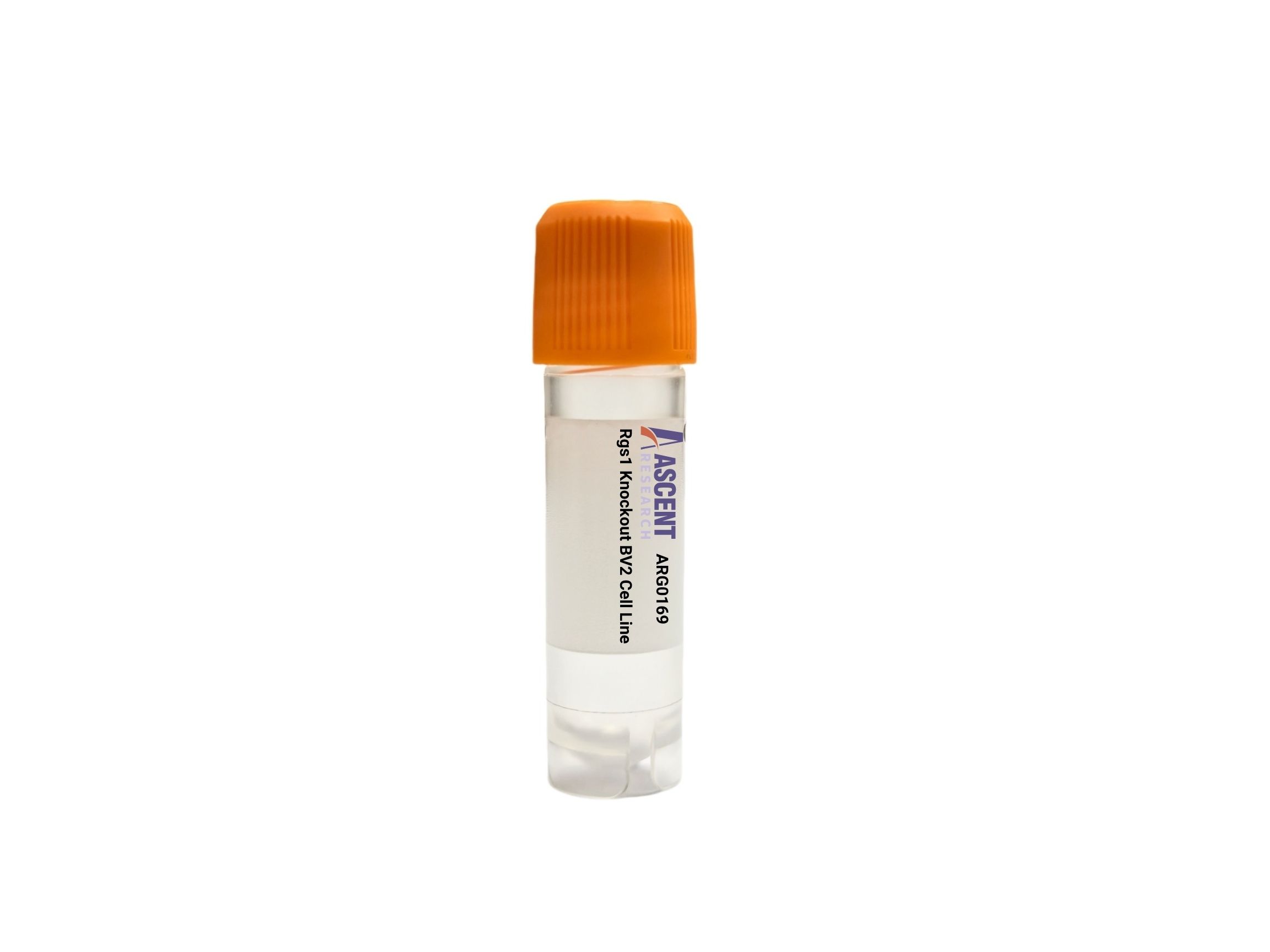
The Rgs1 Knockout BV2 Cell Line is a CRISPR/Cas9-engineered murine microglia-like cell model in which the endogenous Rgs1 gene has been disrupted to eliminate functional gene expression. This stable in vitro knockout system enables controlled investigation of RGS1-dependent signaling processes in an established mouse microglial background. BV2 cells provide a tractable platform for studying innate immune signaling in the central nervous system, and targeted deletion of Rgs1 supports mechanistic analysis of GPCR-linked regulatory pathways in microglia-like cells.
BV2 is an immortalized mouse microglia-like cell line widely used to model core microglial functions relevant to neurobiology and inflammatory disease. In culture, BV2 cells are commonly employed to study activation responses, cytokine production, phagocytic behavior, and stimulus-dependent signaling associated with neuroinflammation. Because microglia are the resident innate immune cells of the CNS, BV2 cells are frequently used in experimental workflows addressing inflammatory surveillance, chemotactic recruitment, and immune-mediated contributions to neurodegenerative and autoimmune pathology. The model is therefore relevant for studies of neuroinflammation, infection-associated inflammatory signaling, and CNS immune regulation.
RGS1 is a regulator of G-protein signaling that acts as a GTPase-activating protein for G??i/o-family subunits, including GNAI1, GNAI2, GNAI3, and GNAO1, thereby shortening signaling downstream of chemokine receptors and related GPCRs. In this signaling context, RGS1 modulates pathways initiated by receptors such as CCR5, CXCR4, and CX3CR1 and influences downstream PLCB, PI3K-AKT, MAPK1/MAPK3, calcium, and NF-kB-associated responses. Rgs1 expression and function are relevant in inflammatory settings regulated by TLR4-LPS, TNF, IFNG, IL1B, NF-kB, STAT1, and chemokine stimulation. Through control of receptor-proximal G??i signaling and interactions functionally linked to GRK2 and beta-arrestins, RGS1 contributes to regulation of ERK1/2 phosphorylation, AKT phosphorylation, intracellular calcium flux, chemotactic migration, cytokine output, phagocytic activity, and broader inflammatory gene expression programs.
In the BV2 background, loss of Rgs1 provides a useful system for examining how reduced negative regulation of chemokine- and GPCR-dependent signaling reshapes microglial responsiveness. This model is well suited for investigating pathway dependency in microglial activation states, altered migration toward chemokine gradients, and changes in inflammatory signal transduction that may be relevant to multiple sclerosis, autoimmune disease, inflammatory bowel disease, celiac disease, infection-related inflammation, and neurodegenerative disease research. It also supports analysis of how GPCR desensitization and signal duration influence microglial phenotypes.
Applications include phospho-signaling studies by western blotting for ERK1/2 and AKT, calcium flux assays following chemokine receptor stimulation, and transwell migration assays to quantify chemotactic behavior. The cell line is also suitable for RT-qPCR, RNA-seq, ELISA, and reporter assays to profile inflammatory gene expression and cytokine responses after LPS, TNF, IFNG, or IL1B treatment. Additional use cases include flow cytometry and immunofluorescence for activation-state phenotyping, phagocytosis assays to assess innate immune function, and co-immunoprecipitation-based studies of GPCR pathway components linked to GNAI2, GRK2, or beta-arrestin-dependent regulatory complexes. Researchers may contact Ascent Research for additional technical information, product details, or related gene-edited cell models.