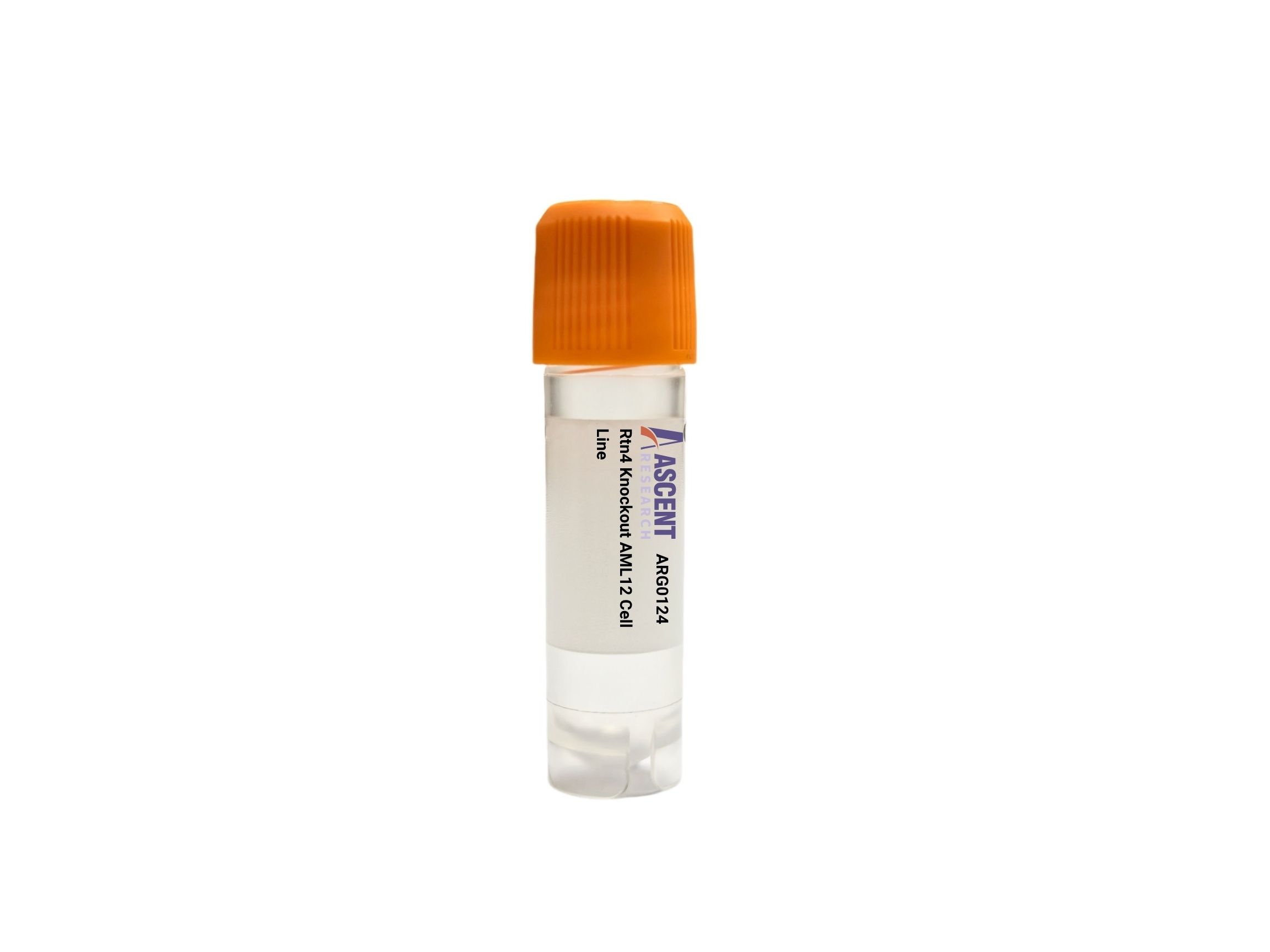
The Rtn4 Knockout AML12 Cell Line is a CRISPR/Cas9-engineered mouse hepatocyte model in which the Rtn4 gene has been disrupted to eliminate functional RTN4 expression. This stable in vitro knockout model is generated in AML12 cells, a non-transformed hepatocyte cell line, and is intended for mechanistic studies of endoplasmic reticulum biology, hepatocyte stress signaling, and metabolic regulation. By combining targeted gene disruption with a liver-relevant epithelial background, this model supports controlled investigation of RTN4-dependent phenotypes under basal culture conditions or following defined metabolic and toxic injury stimuli.
AML12 is an immortalized mouse hepatocyte cell line derived from normal liver and is widely used as a hepatic parenchymal model for studies of metabolism, secretion, and stress adaptation. Because AML12 retains many hepatocyte-associated features relevant to insulin signaling, lipid handling, oxidative stress responses, and liver injury pathways, it is frequently applied in research on steatosis, nonalcoholic steatohepatitis, toxicant-induced injury, and ER stress. The line is therefore well suited for evaluating how perturbation of ER structure and proteostasis influences core hepatocellular functions linked to lipid accumulation, mitochondrial activity, and survival signaling.
RTN4, also known as Nogo, is a conserved reticulon-family ER membrane protein that promotes high-curvature tubular ER architecture and contributes to ER homeostasis. In hepatocytes, RTN4 is positioned within signaling networks regulated by ER stress stimuli such as tunicamycin, thapsigargin, oxidative stress, and lipid overload, with transcriptional input from ATF4, XBP1, and ATF6. RTN4 interacts with ER-shaping and contact-site factors including ATL1, REEP5, CKAP4/CLIMP63, RTN3, and VAPB, linking membrane organization to trafficking and organelle communication. Altered RTN4 function is expected to affect signaling downstream of EIF2AK3/PERK, ATF4, DDIT3/CHOP, ERN1/IRE1alpha-XBP1, MAP1LC3B, and SQSTM1/p62, with relevance to autophagy, apoptosis, mitochondrial ROS generation, and triglyceride accumulation.
Within the AML12 background, Rtn4 loss provides a useful system for examining how ER membrane organization influences hepatocyte-specific stress adaptation and metabolic injury responses. This is particularly relevant to fatty liver disease, hepatic ER stress, and metabolic liver injury, where ER remodeling, unfolded protein response activation, and mitochondrial-ER crosstalk are tightly linked to lipid dysregulation and cell fate determination. The model also enables assessment of pathway dependence during pharmacologic or nutrient stress and comparison of basal versus challenge-induced phenotypes.
Applications include western blotting and phospho-signaling analysis of PERK-eIF2alpha, ATF4, and CHOP responses after tunicamycin or thapsigargin treatment; RT-qPCR or RNA-seq profiling of XBP1s-responsive genes and stress-regulated transcriptional programs; immunofluorescence, confocal ER morphology imaging, and transmission electron microscopy to quantify ER network alterations; co-immunoprecipitation studies of RTN4-associated ER-shaping complexes; assays for LC3B and SQSTM1/p62 to interrogate autophagic flux; CASP3-based apoptosis assays; mitochondrial ROS and membrane potential measurements; triglyceride quantification during lipid overload; and Seahorse metabolic flux analysis to examine consequences for mitochondrial function and hepatocyte bioenergetics. Researchers may contact Ascent Research for additional technical information, product details, or related gene-edited cell models.