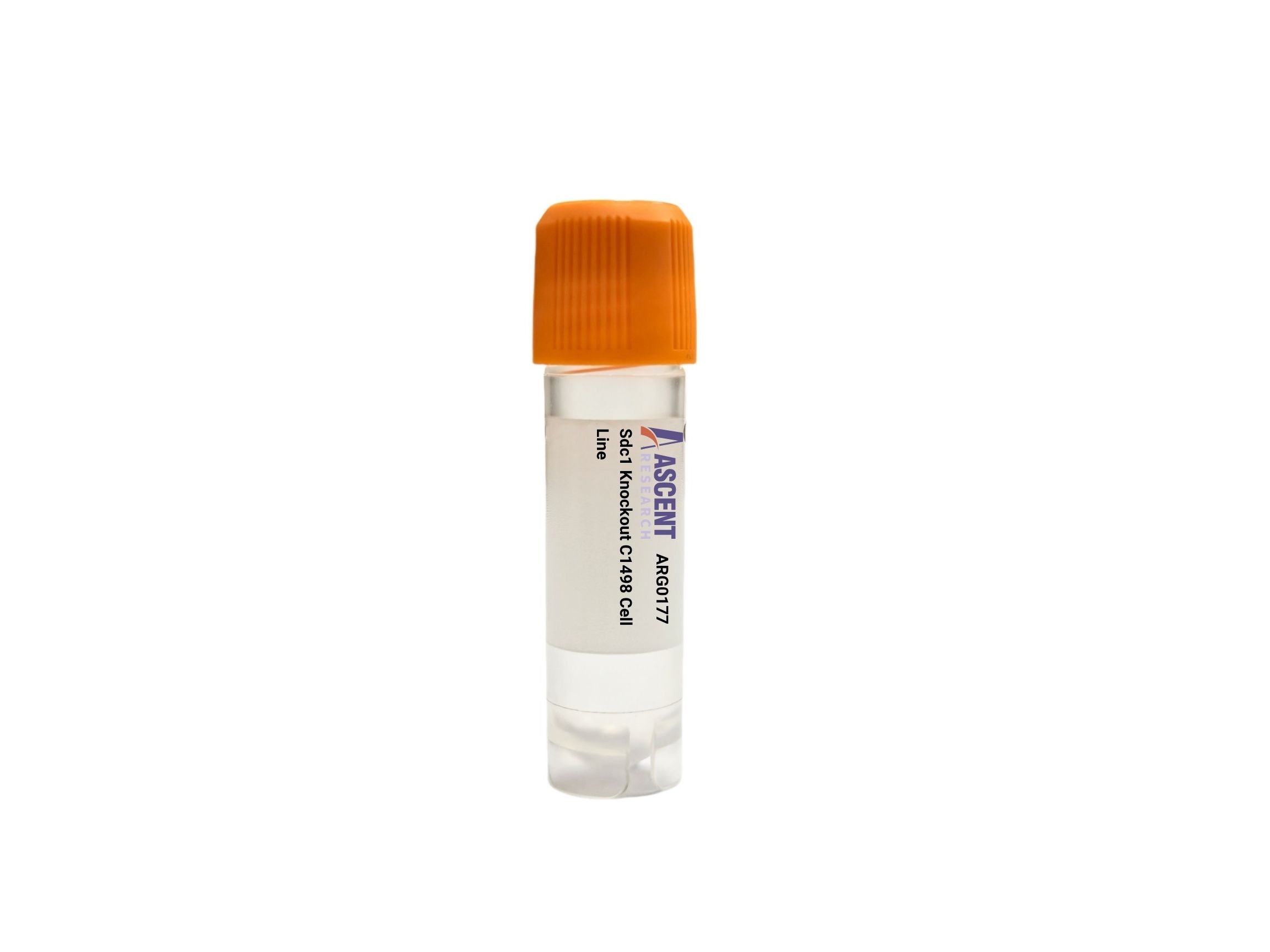
The Sdc1 Knockout C1498 Cell Line is a CRISPR/Cas9-engineered mouse leukemia model in which the Sdc1 gene has been disrupted to eliminate functional syndecan-1 expression. This edited derivative of the murine C1498 acute myeloid leukemia cell line provides a stable in vitro system for investigating the consequences of syndecan-1 loss in leukemic cells. As a transmembrane heparan sulfate proteoglycan, SDC1 is a major organizer of cell-surface ligand presentation and matrix engagement, making this knockout model relevant for studies of adhesion-dependent signaling, proteoglycan biology, and tumor cell interactions with the immune microenvironment.
C1498 is a well-established murine acute myeloid leukemia cell line used extensively as a syngeneic, transplantable leukemia model in immunocompetent mice. It is widely applied to studies of leukemic cell growth, differentiation state, host antitumor immunity, and transplantation biology. Because C1498 cells are used in both in vitro mechanistic experiments and in vivo immune-competent settings, they offer a useful background for examining how surface molecules influence leukemia cell behavior, stromal interactions, and immune engagement in a hematopoietic tumor context.
Sdc1 encodes syndecan-1, which interacts with heparan sulfate chains to bind extracellular ligands and coordinate signaling complexes at the plasma membrane. SDC1 is transcriptionally regulated by factors including SP1, AP-1, and NF-kB, and its expression and shedding are further influenced by TGF-beta, TNF-alpha, IL-1beta, heparanase, and matrix metalloproteinases such as MMP7 and MMP9. At the cell surface, SDC1 interacts with integrin beta1, integrin alphaV beta3, fibronectin, collagen, laminin, FGF2, FGFR1, HGF, MET, VEGFA, and WNT ligands, while intracellular adaptor-associated organization involves factors such as syntenin, CASK, and ezrin. Through these interactions, SDC1 acts upstream of signaling outputs that include ERK1/2, AKT, PTK2/FAK, SRC, and Rho GTPase-dependent cytoskeletal remodeling, thereby influencing adhesion, migration, proliferation, and cell-surface cytokine or chemokine retention. Representative pathway components relevant to this biology include EXT1, NDST1, SULF1, HPSE, ITGB1, FGFR1, MET, VEGFA, and CTNNB1.
In the C1498 background, loss of Sdc1 provides a focused system for examining how heparan sulfate proteoglycan function contributes to leukemic cell-matrix interactions and signaling dependencies that may shape growth and dissemination phenotypes. This model is particularly relevant for investigating how altered ligand presentation affects integrin-associated adhesion signaling, growth factor responsiveness, and leukemic cell communication with inflammatory or stromal cues linked to hematologic malignancy, angiogenesis, and tumor-immune interactions.
This knockout cell line can be applied in workflows that compare edited and parental cells by RT-qPCR, western blotting, flow cytometry, and immunofluorescence to assess Sdc1 loss and associated pathway changes. It is suitable for cell-surface staining for syndecan-1, extracellular matrix binding assays using fibronectin, collagen, or laminin, and functional adhesion, migration, or invasion assays. Researchers can use phospho-ERK, phospho-AKT, FAK, and SRC signaling analyses to define pathway rewiring after Sdc1 disruption, or perform co-immunoprecipitation to examine altered association with integrins or receptor complexes. Additional applications include cytokine binding assays, proliferation studies, RNA-seq-based transcriptional profiling, and drug sensitivity testing in experimental paradigms focused on leukemia biology, proteoglycan function, and syngeneic transplantation studies. Researchers may contact Ascent Research for additional technical information, product details, or related gene-edited cell models.