Quick Order Cart

Cat. No. ARG44107

SETD2 Knockout MeT-5A Cell Line

  • Product Type:

    In Stock Cell Lines

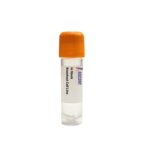
The SETD2 Knockout MeT-5A Cell Line is a CRISPR/Cas9-edited knockout cell line derived from human pleural mesothelial MeT-5A cells, providing a loss-of-function model for SETD2, the histone methyltransferase that catalyzes H3K36me3. Disruption of SETD2 impairs transcriptional elongation, DNA mismatch repair, and alternative splicing, contributing to genomic instability. SETD2 functions in complexes with RNA Polymerase II, MSH2/MSH6, and hnRNP L, and is regulated by p53. This knockout line is highly relevant for mesothelioma research, DNA damage repair studies, and epigenetic regulation, with applications including Western blotting for H3K36me3, immunofluorescence for ??H2AX foci, and RNA-seq for splicing analysis. For additional information, please contact Ascent Research.

Inquire Now

In stock

Ships next business day


Ask a Question

Shipping Info:

Cryopreserved in vials and shipped on dry ice


Disclaimer:

For Research Use Only

  • Characteristics

    Host Cell

    MeT-5A

    Gene Name

    SETD2

    Gene Identifier

    NCBI Gene ID 29072

    Storage

    Liquid nitrogen (LN2)

  • Culture Conditions

    Temperature

    37°C

    Atmosphere

    5% CO₂

  • Quality Control

    Sterility testing

    The bacterial, yeast, and fungi are not detected in these cells by daily monitor.

    Mycoplasma testing

    Negative for mycoplasma through PCR analysis

  • Disclaimer

    Intended Use

    This product is intended for laboratory in vitro use only. lt is not intended for diagnostic, therapeutic, or clinical applications.

    Disclaimer

    Ascent Research endeavors to provide accurate and up-to-date product information. However, no warranties or representations are made regarding its completeness or reliability. References to scientific literature and patents are for informational purposes only, and the customer assumes sole responsibility for verifying their accuracy.

    By accepting this product, the customer acknowledges and agrees to assume all risks associated with its receipt, handling, storage, disposal, and use, including compliance with all applicable safety and environmental regulations and precautions. Relevant laws, regulations, and ethical guidelines must be followed in conducting any research, modifications, or derivatives derived from this product.

    This product is provided "AS IS", and except as expressly stated herein, Ascent Research disclaims all other warranties, express or implied. Under no circumstances shall Ascent Research, its affiliates, or representatives be liable for indirect, incidental, consequential, or punitive damages arising from the use of this material. While Ascent Research employs rigorous quality control measures, we shall not be held responsible for damages resulting from misidentification or misinterpretation of the provided materials.

Description

The SETD2 Knockout MeT-5A Cell Line is a CRISPR/Cas9-edited knockout cell line derived from the MeT-5A human pleural mesothelial cell line, with targeted disruption of the SETD2 gene. This loss-of-function model eliminates SETD2 protein expression, enabling reproducible analysis without transient silencing artifacts. The knockout was generated via CRISPR/Cas9-mediated gene disruption, ensuring specific ablation of SETD2 function within the native host cell background. This product is suitable for applications in cancer biology, epigenetics, and DNA repair research.

The parental MeT-5A line originates from human pleural mesothelial cells immortalized with SV40 large T-antigen. These non-tumorigenic cells retain key mesothelial characteristics: forming protective monolayers, secreting glycosaminoglycans and surfactant, and mediating inflammatory and fibrotic responses. SV40 immortalization permits continuous culture without full transformation, making MeT-5A an ideal model for early events in mesothelial biology and malignant conversion. This background is particularly relevant for mesothelioma research, as pleural mesothelial cells are targets of asbestos-induced carcinogenesis.

SETD2 encodes a histone methyltransferase that trimethylates H3K36, a mark coordinating transcriptional elongation, DNA mismatch repair, and alternative splicing. H3K36me3 facilitates RNA Polymerase II elongation via SUPT6H and IWS1, recruits the mismatch repair complex MSH2/MSH6, and influences splicing through hnRNP L and the FACT complex. SETD2 is regulated by p53 and DNA damage kinases ATM/ATR, and promotes expression of p53 targets like p21 and BAX. Loss of SETD2 impairs these processes, leading to increased mutation rates, aberrant splicing, and genomic instability.

In pleural mesothelial cells, SETD2 knockout is significant for dissecting asbestos-induced carcinogenesis. MeT-5A cells provide a non-malignant platform to study how SETD2 deficiency promotes transformation. Loss of H3K36me3 compromises DNA repair, allowing mutation accumulation upon genotoxic exposure. This model recapitulates genetic alterations seen in mesothelioma and enables investigation of interactions with p53 signaling and epithelial-mesenchymal transition pathways relevant to tumor progression.

This knockout cell line supports diverse experiments: Western blotting for global H3K36me3, RT-qPCR for p53 targets, and RNA-seq for splicing analysis. Immunofluorescence for ??H2AX foci visualizes DNA breaks; cell viability and flow cytometry assays probe stress responses and apoptosis. ChIP-qPCR maps H3K36me3 enrichment, and comet assay quantifies DNA damage. Applications include mesothelioma research, epigenetics, and drug sensitivity studies. For further details, contact Ascent Research.


Reset Password

    Reach Us Questions? Click Me Here!

    Fill out the form below and a member of our team will contact you shortly!

    *Required field


      Reach Us

      Fill out the form below and a member of our team will contact you shortly!

      *Required field

      Product Inquiry (Optional)