Quick Order Cart

Cat. No. ARG0821

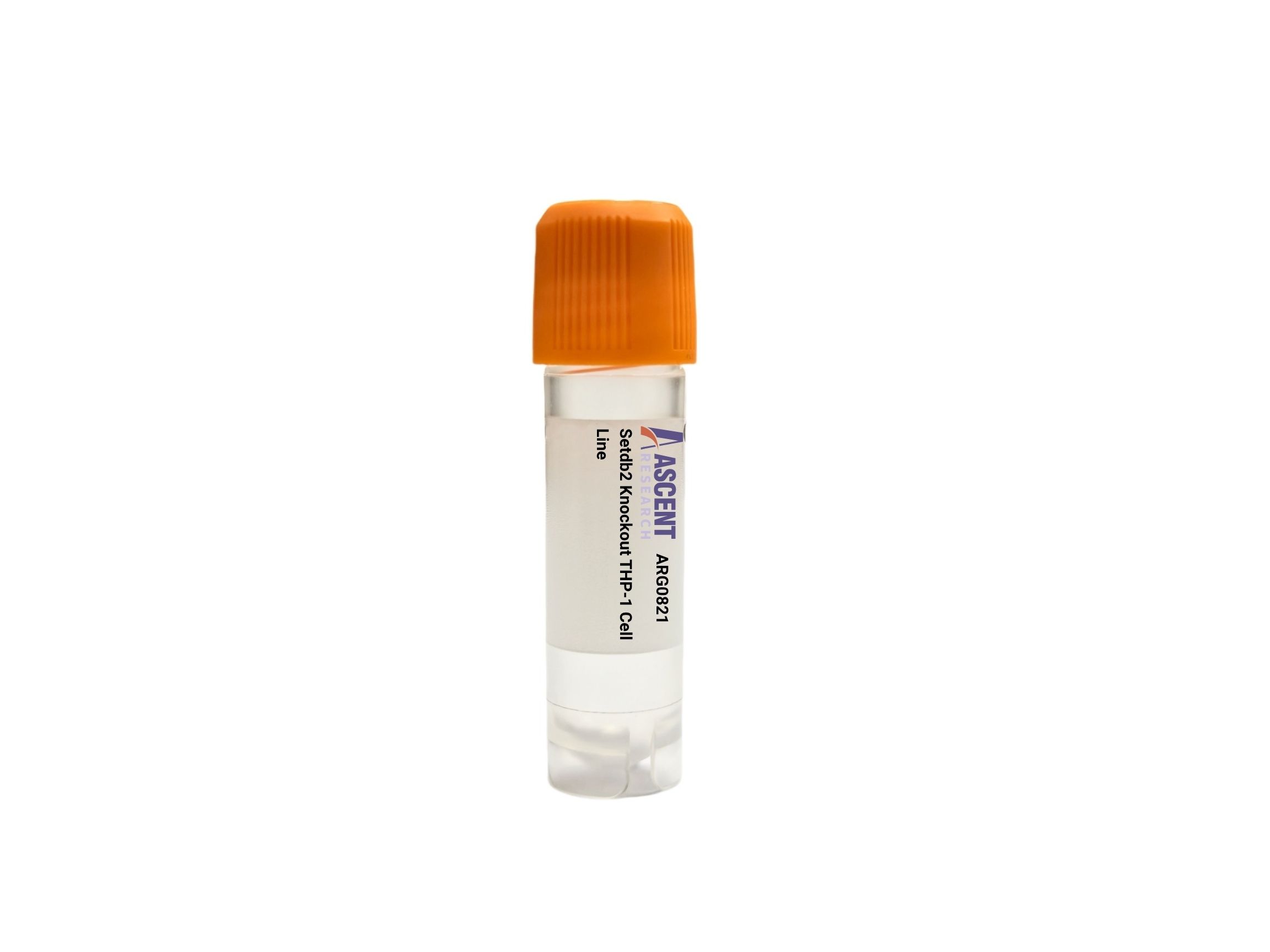
Setdb2 Knockout THP-1 Cell Line

  • Product Type:

    Genome-edited Cells

  • Tissue Source:

    Blood (peripheral blood)

  • Disease:

    Acute monoblastic leukemia

  • Gene Species:

    Homo sapiens (Human)

The Setdb2 Knockout THP-1 Cell Line is a CRISPR/Cas9-edited human monocytic leukemia cell line with targeted disruption of the Setdb2 gene, a histone H3K9 methyltransferase that mediates transcriptional repression. Derived from THP-1 cells, this model is optimized for epigenetic studies of macrophage biology and innate immunity, where Setdb2 silencing occurs via STAT6-dependent induction and H3K9me3 deposition at pro-inflammatory gene promoters like TNF. This knockout cell line enables investigation of chromatin remodeling, macrophage polarization, and inflammatory signaling pathways. Applications include ChIP-qPCR for H3K9me3 profiling, cytokine ELISA, and PMA-induced differentiation assays, supporting research in leukemia, chronic inflammation, and autoimmune diseases. Contact Ascent Research for additional technical details.

Inquire Now

In stock

Ships next business day


Ask a Question

Shipping Info:

Cryopreserved in vials and shipped on dry ice


Disclaimer:

For Research Use Only

  • Characteristics

    Host Cell

    THP-1

    Age

    1 year

    Sex of Donor

    Male

    Gene Name

    Setdb2

    Gene Species

    Homo sapiens (Human)

    Gene Identifier

    NCBI Gene ID 83852

  • Culture Conditions

    Temperature

    37°C

    Atmosphere

    5% CO₂

  • Quality Control

    Sterility testing

    Daily monitoring confirms that the cells are free from bacterial, yeast, and fungal contamination.

    Mycoplasma testing

    Negative for mycoplasma through PCR analysis

    Pathogens

    Cells tested negative for HIV-1, HBV, and HCV.

  • Disclaimer

    Intended Use

    This product is intended for laboratory in vitro use only. lt is not intended for diagnostic, therapeutic, or clinical applications.

    Disclaimer

    Ascent Research endeavors to provide accurate and up-to-date product information. However, no warranties or representations are made regarding its completeness or reliability. References to scientific literature and patents are for informational purposes only, and the customer assumes sole responsibility for verifying their accuracy.

    By accepting this product, the customer acknowledges and agrees to assume all risks associated with its receipt, handling, storage, disposal, and use, including compliance with all applicable safety and environmental regulations and precautions. Relevant laws, regulations, and ethical guidelines must be followed in conducting any research, modifications, or derivatives derived from this product.

    This product is provided "AS IS", and except as expressly stated herein, Ascent Research disclaims all other warranties, express or implied. Under no circumstances shall Ascent Research, its affiliates, or representatives be liable for indirect, incidental, consequential, or punitive damages arising from the use of this material. While Ascent Research employs rigorous quality control measures, we shall not be held responsible for damages resulting from misidentification or misinterpretation of the provided materials.

Description

The Setdb2 Knockout THP-1 Cell Line is a CRISPR/Cas9-edited human monocytic leukemia cell line carrying a targeted disruption of the Setdb2 gene, offering a precise loss-of-function model for epigenetic research. This knockout cell line is generated by CRISPR/Cas9-mediated gene disruption, resulting in abrogation of Setdb2 expression and its associated histone methyltransferase activity, without altering the overall THP-1 genomic background. Designed for advanced biomedical studies, it provides a consistent and scalable platform to investigate Setdb2-dependent regulatory mechanisms in immune cell biology.

THP-1 is a widely utilized human acute monocytic leukemia cell line that serves as a robust model for monocyte and macrophage biology. Upon treatment with phorbol 12-myristate 13-acetate (PMA), these suspension cells differentiate into adherent, macrophage-like cells, recapitulating key features of innate immune cells such as phagocytosis and cytokine secretion. The THP-1 background is particularly valued for studies on inflammation, immune signaling, and leukemic cell behavior, making it an ideal host for exploring epigenetic modifiers like Setdb2 in both undifferentiated and differentiated states.

Setdb2 encodes a histone H3K9 methyltransferase that specifically catalyzes trimethylation of histone H3 lysine 9 (H3K9me3), a repressive mark central to chromatin compaction and gene silencing. In macrophages, Setdb2 is transcriptionally induced by IL-4 and IL-13 via STAT6 signaling, linking anti-inflammatory cytokine pathways to epigenetic regulation. Setdb2 functions upstream of heterochromatin protein 1 homologs HP1?? (CBX5) and HP1?? (CBX1), which recognize H3K9me3 and propagate chromatin condensation, and interacts with TRIM28/KAP1 and CoREST complex components to enforce transcriptional repression. Its catalytic activity targets promoters of pro-inflammatory genes, including TNF and IL6, and interferon-stimulated genes, thereby dampening innate immune responses.

Disruption of Setdb2 in the THP-1 background provides a powerful tool to dissect its role in macrophage polarization and inflammatory gene expression. Given the association of Setdb2 with acute myeloid leukemia, chronic inflammation, and autoimmune disorders, this knockout cell line facilitates examination of epigenetic mechanisms underlying immune dysregulation. Researchers can explore how loss of H3K9 trimethylation at specific loci alters macrophage responses to polarizing stimuli, contributing to a deeper understanding of the interplay between chromatin modifiers and immune cell function.

This knockout model supports diverse experimental approaches, including chromatin immunoprecipitation followed by quantitative PCR (ChIP-qPCR) to map H3K9me3 alterations, quantitative RT-PCR and ELISA for quantifying TNF and IL-6 expression under LPS stimulation, and Western blotting to monitor histone modification dynamics. PMA-induced differentiation assays coupled with flow cytometry for macrophage markers enable functional characterization of Setdb2 in macrophage maturation. Additional applications encompass small-molecule screening to identify modulators of epigenetic silencing and co-culture systems to investigate tumor-immune interactions. For further technical information or to discuss customized applications, please contact Ascent Research.


Reset Password

    Reach Us Questions? Click Me Here!

    Fill out the form below and a member of our team will contact you shortly!

    *Required field


      Reach Us

      Fill out the form below and a member of our team will contact you shortly!

      *Required field

      Product Inquiry (Optional)