Quick Order Cart

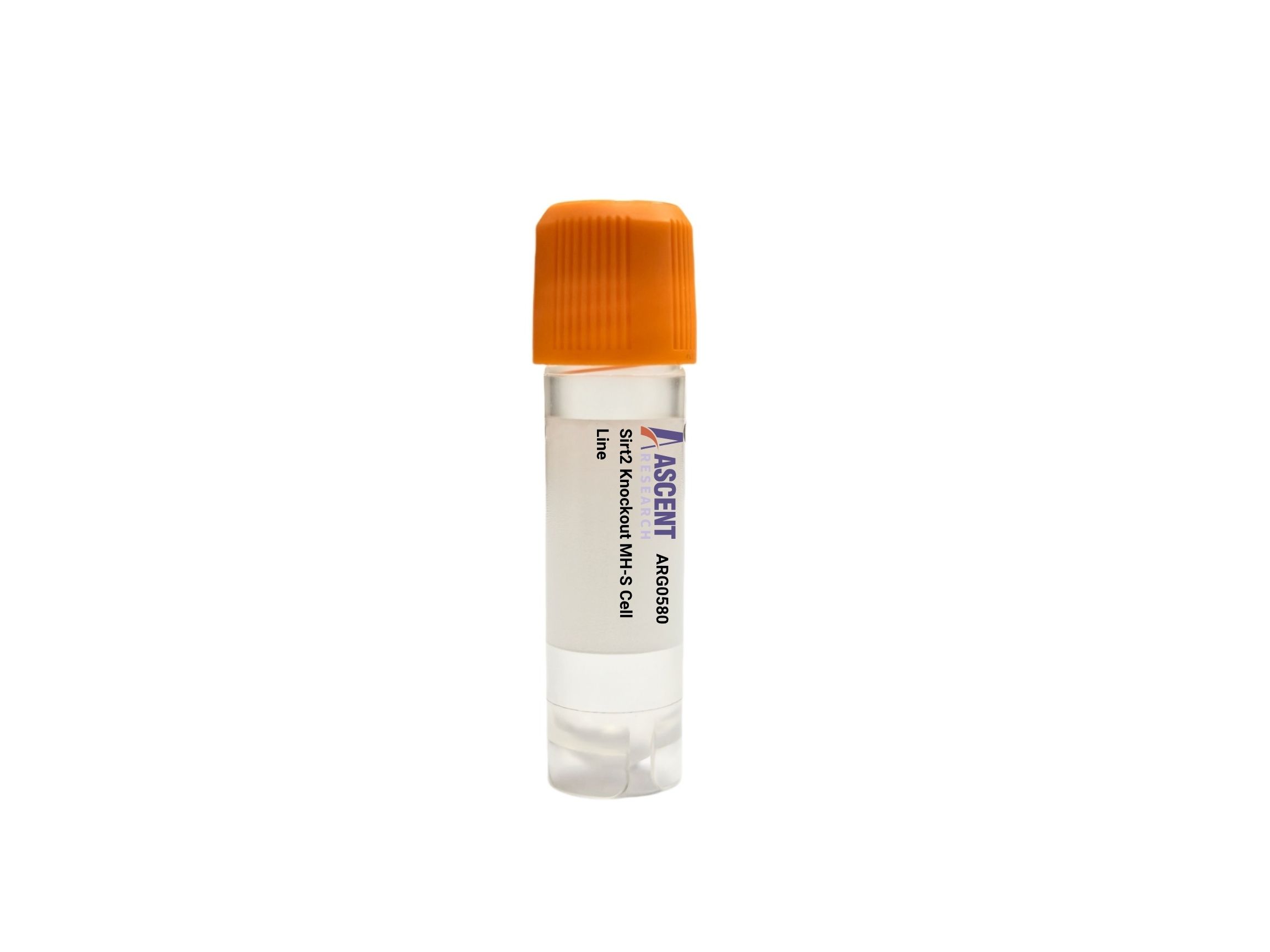
Cat. No. ARG0580

Sirt2 Knockout MH-S Cell Line

  • Product Type:

    Genome-edited Cells

  • Disease:

    Normal

  • Gene Species:

    Mus musculus (Mouse)

The Sirt2 Knockout MH-S Cell Line is a CRISPR/Cas9-edited murine alveolar macrophage cell line with targeted disruption of the Sirt2 gene. Sirt2 is an NAD+-dependent lysine deacetylase that regulates inflammation, metabolism, and cell cycle by deacetylating substrates such as ??-tubulin, p53, histone H4, and the NF-??B p65 subunit. Loss of Sirt2 in macrophages results in enhanced NF-??B acetylation and heightened proinflammatory cytokine production. This knockout model enables detailed investigation of Sirt2-mediated signaling in innate immunity, drug screening for Sirt2 inhibitors, and studies of aging-related immune dysfunction. Researchers can employ Western blotting for acetylated proteins, RT-qPCR for cytokine genes, NF-??B reporter assays, and NAD+/NADH ratio measurements to dissect Sirt2-dependent pathways.

Inquire Now

In stock

Ships next business day


Ask a Question

Shipping Info:

Cryopreserved in vials and shipped on dry ice


Disclaimer:

For Research Use Only

  • Characteristics

    Host Cell

    MH-S

    Gene Name

    Sirt2

    Gene Species

    Mus musculus (Mouse)

    Gene Identifier

    NCBI Gene ID 64383

  • Culture Conditions

    Temperature

    37°C

    Atmosphere

    5% CO₂

  • Quality Control

    Sterility testing

    Daily monitoring confirms that the cells are free from bacterial, yeast, and fungal contamination.

    Mycoplasma testing

    Negative for mycoplasma through PCR analysis

    Pathogens

    Cells tested negative for HIV-1, HBV, and HCV.

  • Disclaimer

    Intended Use

    This product is intended for laboratory in vitro use only. lt is not intended for diagnostic, therapeutic, or clinical applications.

    Disclaimer

    Ascent Research endeavors to provide accurate and up-to-date product information. However, no warranties or representations are made regarding its completeness or reliability. References to scientific literature and patents are for informational purposes only, and the customer assumes sole responsibility for verifying their accuracy.

    By accepting this product, the customer acknowledges and agrees to assume all risks associated with its receipt, handling, storage, disposal, and use, including compliance with all applicable safety and environmental regulations and precautions. Relevant laws, regulations, and ethical guidelines must be followed in conducting any research, modifications, or derivatives derived from this product.

    This product is provided "AS IS", and except as expressly stated herein, Ascent Research disclaims all other warranties, express or implied. Under no circumstances shall Ascent Research, its affiliates, or representatives be liable for indirect, incidental, consequential, or punitive damages arising from the use of this material. While Ascent Research employs rigorous quality control measures, we shall not be held responsible for damages resulting from misidentification or misinterpretation of the provided materials.

Description

The Sirt2 Knockout MH-S Cell Line is a CRISPR/Cas9-edited murine macrophage cell line engineered for disruption of the Sirt2 gene. This knockout cell line serves as a stable loss-of-function model, enabling investigation of Sirt2-dependent regulatory mechanisms in an alveolar macrophage context. Derived from the MH-S cell line, the knockout is designed to ablate Sirt2 expression, providing a consistent genetic background for functional studies.

The host MH-S cell line originates from BALB/c mouse alveolar macrophages, a well-characterized model for studying innate immune responses. These cells exhibit hallmark macrophage activities, including phagocytosis, antigen presentation, and cytokine production. As resident alveolar macrophages, MH-S cells are particularly relevant for pulmonary immunity and host defense research. Their stable growth and phenotypic stability make them suitable for genetic manipulation and downstream functional assays.

Sirt2 encodes an NAD+-dependent lysine deacetylase that regulates diverse cellular processes by removing acetyl groups from key substrates. Sirt2 deacetylates ??-tubulin, histone H4, p53, and the NF-??B p65 subunit, thereby modulating microtubule dynamics, chromatin structure, apoptosis, and inflammatory signaling. Its activity is influenced by NAD+ availability and upstream regulators such as AMPK and oxidative stress. Downstream, Sirt2 impacts FOXO3a and PGC-1??, linking metabolism to stress responses. Through these interactions, Sirt2 integrates signals from nutrient status and cellular energy into cell cycle control, autophagy, and inflammatory pathway modulation.

In MH-S macrophages, Sirt2 disruption is predicted to enhance NF-??B acetylation and transcriptional activity, leading to heightened proinflammatory cytokine production. This model provides a platform to study how loss of Sirt2-mediated deacetylation alters innate immune effector functions, including phagocytosis and antigen presentation. Elevated acetylated p65 drives increased TNF-??, IL-6, and IL-1?? expression, while altered tubulin acetylation may affect cytoskeletal dynamics and vesicle trafficking. By perturbing Sirt2 activity, researchers can dissect the molecular basis of inflammation and metabolic reprogramming in macrophages.

The Sirt2 Knockout MH-S Cell Line is suitable for a range of mechanistic and applied studies. Key applications include investigating Sirt2’s role in NF-??B-mediated inflammation, screening for Sirt2 inhibitors, modeling aging-related immune dysfunction, and exploring metabolic regulation in macrophages. Representative assays that can be performed with this line include Western blotting for acetylated NF-??B p65, p53, and ??-tubulin; RT-qPCR for cytokine genes; flow cytometric analysis of surface markers; immunofluorescence for tubulin acetylation; NF-??B luciferase reporter assays; phagocytosis quantification; and measurement of cellular NAD+/NADH ratios. These tools enable detailed characterization of Sirt2-dependent signaling. For further details, please contact Ascent Research.


Reset Password

    Reach Us Questions? Click Me Here!

    Fill out the form below and a member of our team will contact you shortly!

    *Required field


      Reach Us

      Fill out the form below and a member of our team will contact you shortly!

      *Required field

      Product Inquiry (Optional)