Quick Order Cart

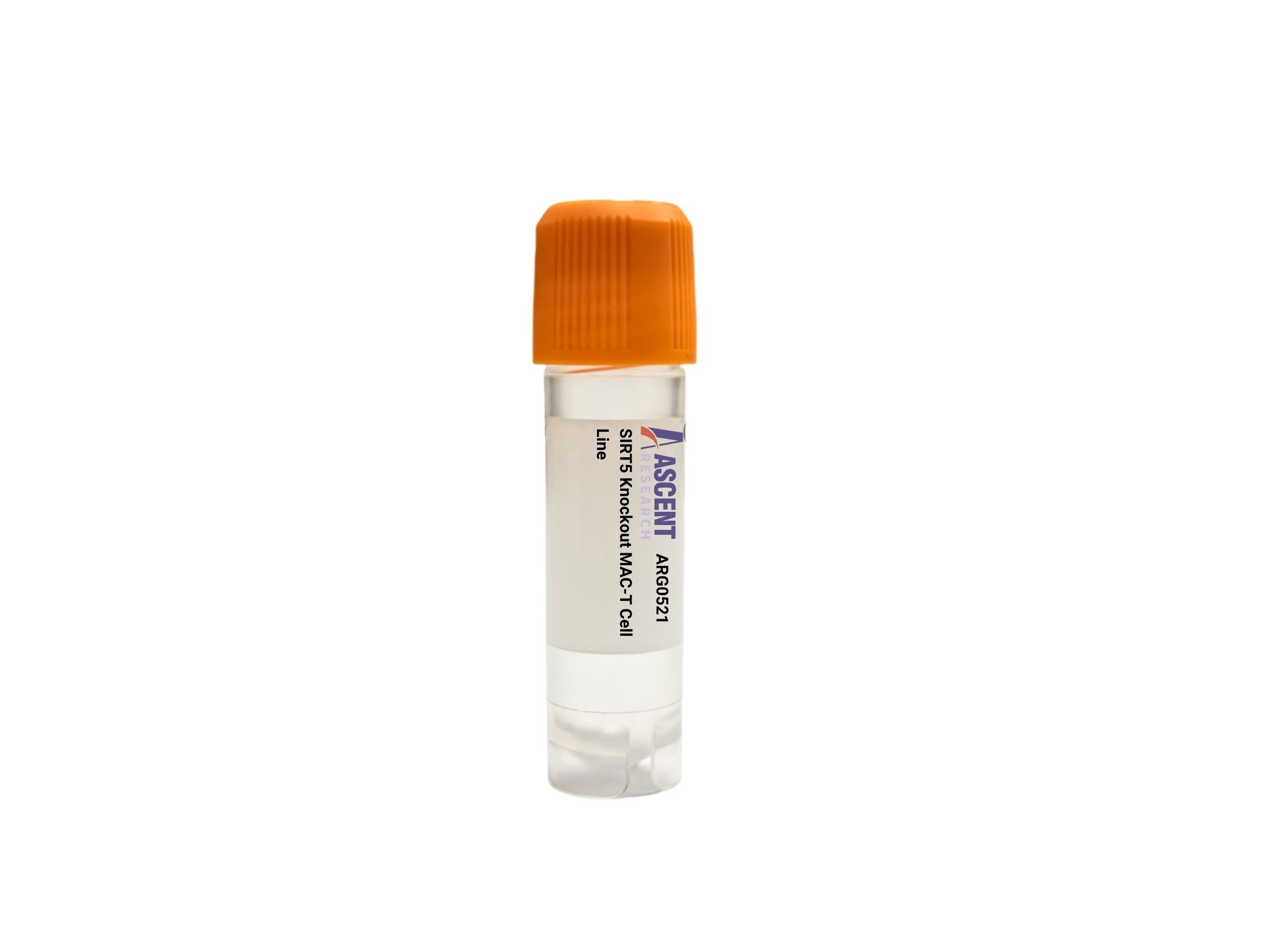
Cat. No. ARG0521

SIRT5 Knockout MAC-T Cell Line

  • Product Type:

    Genome-edited Cells

  • Tissue Source:

    Breast (mammary gland)

  • Gene Species:

    Bos taurus (Domestic cattle)

This SIRT5 Knockout MAC-T Cell Line is a CRISPR/Cas9-edited knockout cell line derived from bovine mammary alveolar epithelial cells (MAC-T). SIRT5, a mitochondrial NAD+-dependent deacylase, regulates metabolism through lysine demalonylation, desuccinylation, and deglutarylation of targets such as CPS1 and ECHA, thereby influencing fatty acid oxidation and ammonia detoxification. The knockout model enables dissection of SIRT5 function in mitochondrial metabolism, post-translational modifications, and metabolic disease. It is suitable for studies in lactation biology, cancer metabolism, and oxidative stress, using assays such as metabolic flux analysis and oxygen consumption rate measurement.

Inquire Now

In stock

Ships next business day


Ask a Question

Shipping Info:

Cryopreserved in vials and shipped on dry ice


Disclaimer:

For Research Use Only

  • Characteristics

    Host Cell

    MAC-T

    Age

    Adult

    Sex of Donor

    Female

    Gene Name

    SIRT5

    Gene Alias

    sirtuin 5

    Gene Species

    Bos taurus (Domestic cattle)

    Gene Identifier

    NCBI Gene ID 507347

    Gene Family

    Sirtuin (class III HDAC)

  • Culture Conditions

    Temperature

    37°C

    Atmosphere

    5% CO₂

  • Quality Control

    Sterility testing

    Daily monitoring confirms that the cells are free from bacterial, yeast, and fungal contamination.

    Mycoplasma testing

    Negative for mycoplasma through PCR analysis

    Pathogens

    Cells tested negative for HIV-1, HBV, and HCV.

  • Disclaimer

    Intended Use

    This product is intended for laboratory in vitro use only. lt is not intended for diagnostic, therapeutic, or clinical applications.

    Disclaimer

    Ascent Research endeavors to provide accurate and up-to-date product information. However, no warranties or representations are made regarding its completeness or reliability. References to scientific literature and patents are for informational purposes only, and the customer assumes sole responsibility for verifying their accuracy.

    By accepting this product, the customer acknowledges and agrees to assume all risks associated with its receipt, handling, storage, disposal, and use, including compliance with all applicable safety and environmental regulations and precautions. Relevant laws, regulations, and ethical guidelines must be followed in conducting any research, modifications, or derivatives derived from this product.

    This product is provided "AS IS", and except as expressly stated herein, Ascent Research disclaims all other warranties, express or implied. Under no circumstances shall Ascent Research, its affiliates, or representatives be liable for indirect, incidental, consequential, or punitive damages arising from the use of this material. While Ascent Research employs rigorous quality control measures, we shall not be held responsible for damages resulting from misidentification or misinterpretation of the provided materials.

Description

The SIRT5 Knockout MAC-T Cell Line is a CRISPR/Cas9-edited knockout cell line derived from MAC-T cells, in which the SIRT5 gene has been disrupted to create a stable loss-of-function model. This product provides researchers with a defined and renewable cell resource for investigating SIRT5-dependent mitochondrial deacylase activity and its role in cellular metabolism. The engineered disruption abrogates SIRT5 expression, enabling studies on the consequences of impaired lysine demalonylation, desuccinylation, and deglutarylation on metabolic enzyme function.

The MAC-T cell line is an immortalized bovine mammary alveolar epithelial cell line, widely employed as an in vitro model for studying mammary gland biology, milk synthesis, and lactation. Originating from Bos taurus, these cells retain key features of differentiated mammary epithelium and are suited for investigations into the metabolic demands of milk production. Their capacity to secrete milk components and respond to lactogenic hormones makes them a valuable host for exploring the intersection of mitochondrial function and mammary epithelial cell physiology.

SIRT5 encodes a mitochondrial NAD+-dependent deacylase that primarily catalyzes the removal of malonyl, succinyl, and glutaryl modifications from lysine residues on target proteins. This activity is critically regulated by the NAD+/NADH ratio and influenced by upstream regulators such as AMPK, PGC-1??, caloric restriction, and oxidative stress. SIRT5 directly modulates key metabolic enzymes including CPS1 (via desuccinylation), ECHA, IDH2, PDHA1, and SOD1, impacting pathways such as the urea cycle, fatty acid oxidation, glycolysis/gluconeogenesis, and the oxidative stress response. Disruption of SIRT5 therefore impairs mitochondrial protein acylation control, leading to reduced enzymatic activities of CPS1 and ECHA, diminished fatty acid oxidation, and compromised ammonia detoxification.

In the context of MAC-T mammary epithelial cells, SIRT5 knockout is particularly relevant due to the high metabolic flux associated with milk synthesis and secretion. Mammary epithelial cells rely heavily on mitochondrial fatty acid oxidation and amino acid metabolism to support lactation. Loss of SIRT5 function is expected to compromise these processes, potentially affecting cellular energy homeostasis, redox balance, and the ability to cope with the oxidative stress inherent to high metabolic output. This model thus provides a tool to dissect the role of mitochondrial sirtuin-dependent deacylation in mammary epithelial cell function and lactation biology.

This SIRT5 knockout cell line is suited for a range of experimental applications in mitochondrial metabolism, post-translational modification research, and metabolic disease modeling. Representative assays include Western blot analysis of global lysine succinylation levels, measurement of CPS1 enzymatic activity, metabolic flux analysis using labeled substrates, oxygen consumption rate (OCR) determination via Seahorse analysis, RT-qPCR profiling of metabolic gene expression, and immunofluorescence staining for mitochondrial markers such as TOM20. The model further enables investigation of SIRT5 in the context of cancer metabolism, neurodegenerative and cardiovascular diseases, and the response to caloric restriction. For additional technical details and ordering information, please contact Ascent Research.


Reset Password

    Reach Us Questions? Click Me Here!

    Fill out the form below and a member of our team will contact you shortly!

    *Required field


      Reach Us

      Fill out the form below and a member of our team will contact you shortly!

      *Required field

      Product Inquiry (Optional)