Quick Order Cart

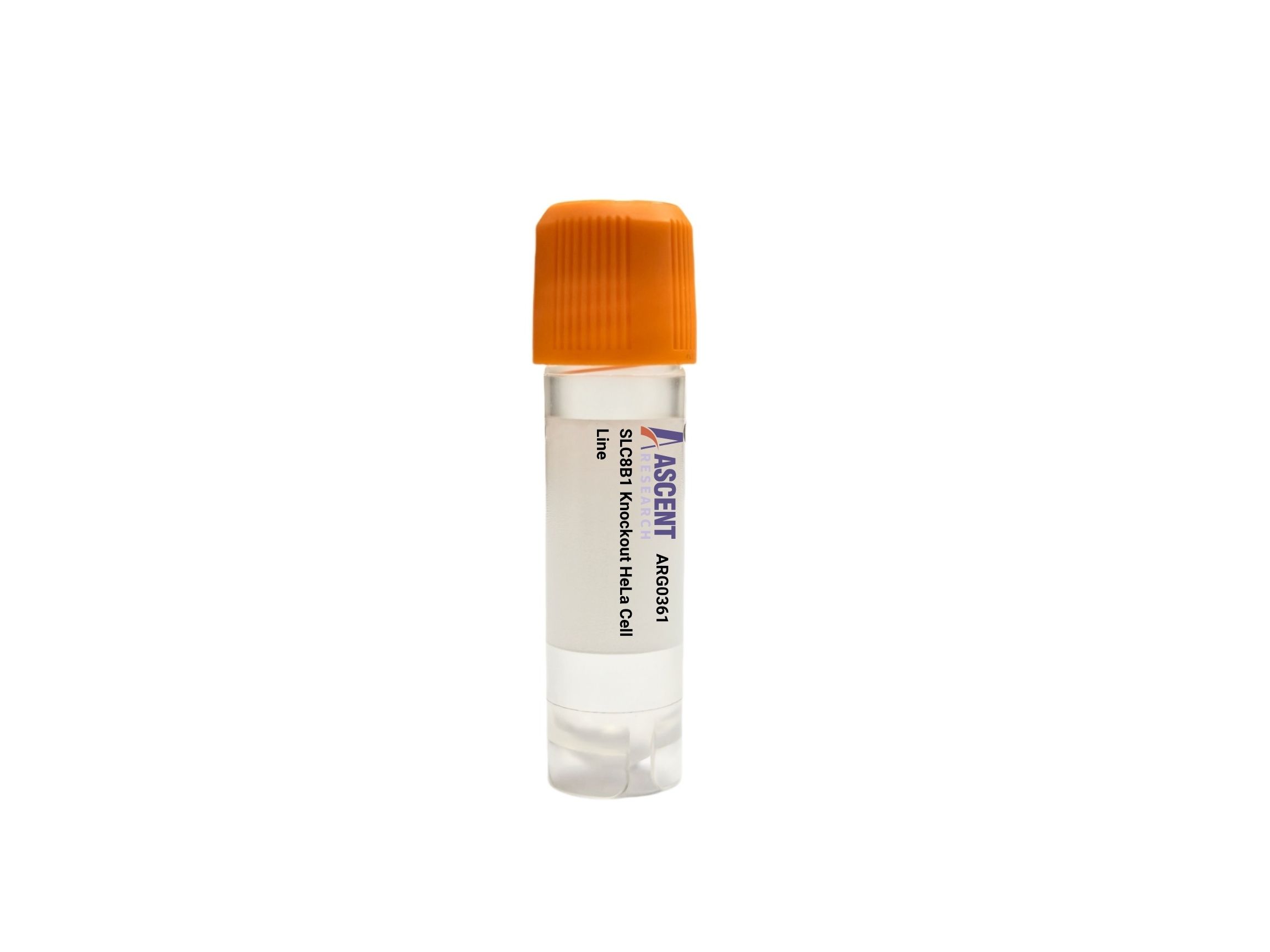
Cat. No. ARG0361

SLC8B1 Knockout HeLa Cell Line

  • Product Type:

    Genome-edited Cells

  • Tissue Source:

    Uterus (cervix)

  • Disease:

    Adenocarcinoma

  • Gene Species:

    Homo sapiens (Human)

The SLC8B1 Knockout HeLa Cell Line is a CRISPR/Cas9-edited knockout cell line derived from HeLa cervical adenocarcinoma cells, designed to disrupt the mitochondrial sodium/calcium exchanger NCLX. This model impairs mitochondrial calcium efflux, impacting reactive oxygen species production, ATP synthesis, and apoptosis, and is valuable for studying mitochondrial calcium signaling in cardiac, ischemic, and neurodegenerative disorders. Key applications include mitochondrial calcium imaging, Seahorse metabolic flux analysis, and drug screening for calcium modulators. The line permits detailed investigation of calcium-mediated cell death pathways, using assays such as ROS measurement and western blotting for apoptotic markers like cleaved caspase-3.

Inquire Now

In stock

Ships next business day


Ask a Question

Shipping Info:

Cryopreserved in vials and shipped on dry ice


Disclaimer:

For Research Use Only

  • Characteristics

    Host Cell

    HeLa

    Morphology

    Epithelial-like

    Age

    31 years

    Sex of Donor

    Female

    Gene Name

    SLC8B1

    Gene Alias

    solute carrier family 8 member B1; FLJ22233; NCKX6; NCLX

    Gene Species

    Homo sapiens (Human)

    Gene Identifier

    NCBI Gene ID 80024

    Gene Family

    Solute carrier family 8

  • Culture Conditions

    Temperature

    37°C

    Atmosphere

    5% CO₂

  • Quality Control

    Sterility testing

    Daily monitoring confirms that the cells are free from bacterial, yeast, and fungal contamination.

    Mycoplasma testing

    Negative for mycoplasma through PCR analysis

    Pathogens

    Cells tested negative for HIV-1, HBV, and HCV.

  • Disclaimer

    Intended Use

    This product is intended for laboratory in vitro use only. lt is not intended for diagnostic, therapeutic, or clinical applications.

    Disclaimer

    Ascent Research endeavors to provide accurate and up-to-date product information. However, no warranties or representations are made regarding its completeness or reliability. References to scientific literature and patents are for informational purposes only, and the customer assumes sole responsibility for verifying their accuracy.

    By accepting this product, the customer acknowledges and agrees to assume all risks associated with its receipt, handling, storage, disposal, and use, including compliance with all applicable safety and environmental regulations and precautions. Relevant laws, regulations, and ethical guidelines must be followed in conducting any research, modifications, or derivatives derived from this product.

    This product is provided "AS IS", and except as expressly stated herein, Ascent Research disclaims all other warranties, express or implied. Under no circumstances shall Ascent Research, its affiliates, or representatives be liable for indirect, incidental, consequential, or punitive damages arising from the use of this material. While Ascent Research employs rigorous quality control measures, we shall not be held responsible for damages resulting from misidentification or misinterpretation of the provided materials.

Description

The SLC8B1 Knockout HeLa Cell Line is a CRISPR/Cas9-edited knockout cell line that disrupts the SLC8B1 gene, which encodes the mitochondrial sodium/calcium exchanger NCLX. This loss-of-function model establishes a controlled genetic background for dissecting mitochondrial calcium handling and its implications for cellular physiology. The cell line is provided as a ready-to-use culture, facilitating direct integration into mitochondrial research programs.

The host HeLa line is an immortalized cervical adenocarcinoma cell line positive for human papillomavirus type 18 (HPV18). HeLa cells are extensively utilized in biomedical research owing to their robust proliferation, ease of genetic engineering, and epithelial origin. While the primary utility of this knockout centers on mitochondrial ion transport, the adenocarcinoma background also permits investigations at the intersection of calcium signaling and cancer cell biology.

SLC8B1 (NCLX) operates as the principal mitochondrial sodium/calcium exchanger, mediating the extrusion of calcium from the mitochondrial matrix in exchange for sodium ions. This activity is essential for preventing mitochondrial calcium overload and the consequent opening of the mitochondrial permeability transition pore (mPTP). The transporter is modulated by upstream factors including cytosolic calcium concentration, mitochondrial membrane potential, and cellular ATP levels. Its activity directly impacts downstream mitochondrial calcium dynamics, thereby influencing reactive oxygen species (ROS) generation, ATP synthesis, and the initiation of apoptotic cascades. NCLX functions in coordination with the mitochondrial calcium uniporter (MCU) for calcium uptake and is integrated with voltage-dependent anion channels (VDAC) and IP3 receptors at endoplasmic reticulum?Cmitochondria contact sites.

In HeLa cells, disruption of SLC8B1 abolishes the major route for mitochondrial calcium efflux, leading to pathological mitochondrial calcium accumulation in response to cytosolic calcium elevations. This imbalance perturbs sodium-calcium exchange and impairs metabolic regulation, manifesting as heightened ROS production and an increased propensity for apoptosis. As a result, the model provides a defined system for examining how mitochondrial calcium overload contributes to cell death decisions in epithelial cells, particularly under conditions of oxidative stress or metabolic challenge.

This knockout cell line supports a range of experimental approaches, including real-time mitochondrial calcium imaging with genetically encoded indicators and Seahorse metabolic flux analysis to assess changes in oxidative phosphorylation and glycolysis. It is well-suited for modeling ischemia-reperfusion injury, calcium dysregulation in cardiac arrhythmias, and mitochondrial dysfunction in neurodegeneration. The line also enables high-throughput screening of calcium modulators and detailed apoptosis profiling through western blotting for markers such as cleaved caspase-3 and cytochrome c release. For additional details or technical support, please contact Ascent Research.


Reset Password

    Reach Us Questions? Click Me Here!

    Fill out the form below and a member of our team will contact you shortly!

    *Required field


      Reach Us

      Fill out the form below and a member of our team will contact you shortly!

      *Required field

      Product Inquiry (Optional)