Quick Order Cart

Cat. No. ARG44129

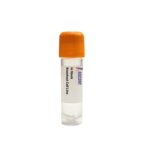
SPINK2 Knockout THP-1 Cell Line

  • Product Type:

    In Stock Cell Lines

  • Species:

    Homo sapiens (Human)

  • Tissue Source:

    Blood (peripheral blood)

  • Disease:

    Acute monoblastic leukemia

The SPINK2 Knockout THP-1 Cell Line is a CRISPR/Cas9-edited knockout of the serine protease inhibitor SPINK2 in the human monocytic leukemia THP-1 cell line (PTEN-null, p53-null, MLL-AF9). Loss of SPINK2 derepresses trypsin, neutrophil elastase, and proteinase-3, enhancing NF-??B-mediated inflammatory cytokine production. This model enables studies of macrophage differentiation, inflammation signaling, and leukemic cell behavior via Western blot, flow cytometry, ELISA, and protease assays. Applications include dissecting protease-dependent NF-??B activation and cytokine regulation (TNF-??, IL-6, IL-1??) in a leukemia-relevant context.

Inquire Now

In stock

Ships next business day


Ask a Question

Shipping Info:

Cryopreserved in vials and shipped on dry ice


Disclaimer:

For Research Use Only

  • Characteristics

    Host Cell

    THP-1

    Sex of Donor

    Male

    Age

    1 year

    Derived From Site

    In situ; Peripheral blood

    Gene Name

    SPINK2

    Gene Identifier

    NCBI Gene ID 6691

    Growth Mode

    Suspension

    Storage

    Liquid nitrogen (LN2)

  • Culture Conditions

    Temperature

    37°C

    Atmosphere

    5% CO₂

  • Quality Control

    Sterility testing

    The bacterial, yeast, and fungi are not detected in these cells by daily monitor.

    Mycoplasma testing

    Negative for mycoplasma through PCR analysis

  • Disclaimer

    Intended Use

    This product is intended for laboratory in vitro use only. lt is not intended for diagnostic, therapeutic, or clinical applications.

    Disclaimer

    Ascent Research endeavors to provide accurate and up-to-date product information. However, no warranties or representations are made regarding its completeness or reliability. References to scientific literature and patents are for informational purposes only, and the customer assumes sole responsibility for verifying their accuracy.

    By accepting this product, the customer acknowledges and agrees to assume all risks associated with its receipt, handling, storage, disposal, and use, including compliance with all applicable safety and environmental regulations and precautions. Relevant laws, regulations, and ethical guidelines must be followed in conducting any research, modifications, or derivatives derived from this product.

    This product is provided "AS IS", and except as expressly stated herein, Ascent Research disclaims all other warranties, express or implied. Under no circumstances shall Ascent Research, its affiliates, or representatives be liable for indirect, incidental, consequential, or punitive damages arising from the use of this material. While Ascent Research employs rigorous quality control measures, we shall not be held responsible for damages resulting from misidentification or misinterpretation of the provided materials.

Description

The SPINK2 Knockout THP-1 Cell Line is a CRISPR/Cas9-edited knockout cell line derived from human THP-1 monocytes, featuring targeted disruption of the SPINK2 gene. This loss-of-function model enables investigation of SPINK2’s role in serine protease inhibition, NF-??B signaling, and macrophage function in a leukemic background.

The parental THP-1 cell line originates from a 1-year-old male with acute monocytic leukemia and is widely used to study monocyte-macrophage differentiation and inflammatory responses. THP-1 cells are PTEN-null, p53-null, and harbor the MLL-AF9 fusion oncogene, making them a valuable system for dissecting pathways relevant to myeloid biology and leukemogenesis.

SPINK2 encodes a Kazal-type serine protease inhibitor that directly binds and inhibits trypsin, acrosin, neutrophil elastase, and proteinase-3. It is transcriptionally upregulated by androgens and by inflammatory cytokines TNF-?? and IL-1?? through NF-??B, forming a negative feedback loop. Loss of SPINK2 removes restraint on these proteases, leading to unchecked proteolytic activity that activates the IKK complex. Subsequent NF-??B nuclear translocation enhances expression of pro-inflammatory cytokines, amplifying the inflammatory response. Thus, SPINK2 normally functions to temper protease-driven inflammation, and its disruption unleashes a feed-forward cycle of cytokine production and protease activation.

In the THP-1 knockout, enhanced serine protease activity is predicted to potentiate NF-??B signaling and increase inflammatory mediator output. This dysregulation may alter macrophage polarization, phagocytosis, and leukemic cell survival or proliferation. By eliminating SPINK2-mediated inhibition, the model enables dissection of the crosstalk between proteolytic cascades and inflammatory gene programs in a leukemia-relevant context. It also serves to explore how aberrant protease signaling contributes to acute myeloid leukemia pathogenesis and inflammation-associated disorders.

Researchers can utilize this cell line in Western blotting, RT-qPCR, and flow cytometry (CD11b, CD14, CD68) to monitor NF-??B pathway activity and macrophage differentiation. ELISA assays for TNF-??, IL-6, and IL-1??, along with NF-??B luciferase reporters and serine protease activity measurements, allow quantitative assessment of signaling output. Further applications include RNA-seq transcriptome profiling, cell viability assays under inflammatory challenge, and drug response screens. This knockout model supports mechanistic and translational studies in inflammation and leukemia. For more information, please contact Ascent Research.


Reset Password

    Reach Us Questions? Click Me Here!

    Fill out the form below and a member of our team will contact you shortly!

    *Required field


      Reach Us

      Fill out the form below and a member of our team will contact you shortly!

      *Required field

      Product Inquiry (Optional)