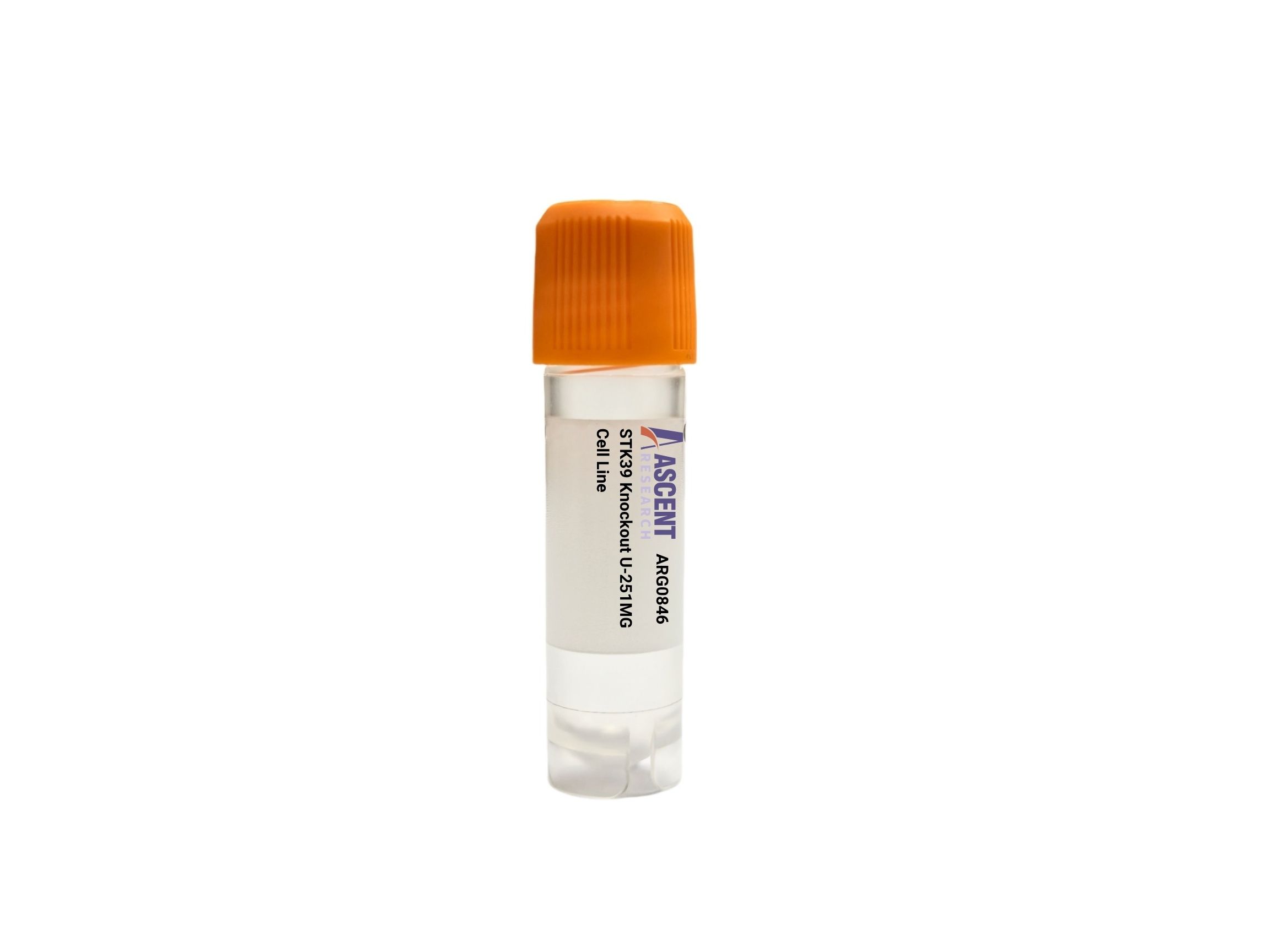
The STK39 Knockout U-251MG Cell Line is a CRISPR/Cas9-edited knockout model generated by disrupting the endogenous STK39 gene in the human glioblastoma cell line U-251MG. This stable loss-of-function platform eliminates STK39 protein expression, creating a consistent genetic background for investigating STK39-dependent signaling and regulatory processes. It serves as a reliable tool for cancer biology and ion homeostasis research, enabling robust functional studies and high-content assays.
The U-251MG cell line, derived from a male patient with glioblastoma multiforme, is a well-established model for high-grade glioma research. These adherent cells display aggressive proliferation, invasiveness, and aberrant apoptosis regulation, making them suitable for dissecting oncogenic pathways. U-251MG is widely used in brain tumor biology, drug resistance, and signal transduction studies, providing a physiologically relevant context for evaluating gene function in glioblastoma.
STK39 (SPAK) is a serine/threonine kinase that regulates ion homeostasis and volume control by phosphorylating cation-chloride cotransporters NKCC1, NCC, and KCC2. It is activated by WNK kinases (WNK1, WNK4), osmotic and oxidative stress, and p38 MAPK, and forms complexes with MO25 and Cab39. STK39 also phosphorylates the pro-apoptotic protein BAD, linking it to stress-induced apoptosis. CRISPR/Cas9 disruption of STK39 impairs the WNK-SPAK/OSR1 signaling axis, altering NKCC1 phosphorylation and likely affecting cellular volume regulation and apoptotic thresholds. Thus, STK39 sits at the intersection of stress responses, ion flux, and cell survival.
In glioblastoma, disrupted ion homeostasis and stress pathways contribute to tumor aggressiveness and therapy resistance. The STK39 knockout in U-251MG cells enables dissection of how loss of this kinase influences glioblastoma cell responses to osmotic and oxidative challenges. Given STK39??s role in volume regulation and BAD-mediated apoptosis, this model allows investigation of whether STK39 deficiency perturbs cotransporter phosphorylation and stress signaling, impacting cell survival and invasive behavior. It offers a relevant platform to connect the WNK-SPAK/OSR1 pathway to malignant glial phenotypes.
This knockout line is suitable for validating STK39 ablation by Western blot and RT-qPCR, analyzing phospho-NKCC1/NCC status, and measuring cell volume changes under stress. Apoptosis and proliferation assays (e.g., Annexin V, MTS/MTT) can correlate STK39 status with survival, while wound healing assays assess migration. It also supports WNK-SPAK/OSR1 inhibitor screening and exploration of hypertension-relevant pathways in glial cells. Sanger sequencing of the STK39 locus is recommended for confirmation. For further information, contact Ascent Research.