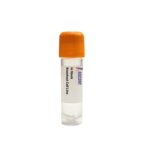
Quick Order Cart

Cat. No. ARG44146

Sucla2 Knockout NIH 3T3 Cell Line

  • Product Type:

    In Stock Cell Lines

  • Species:

    Mus musculus (Mouse)

  • Tissue Source:

    Embryo

The Sucla2 Knockout NIH 3T3 Cell Line is a CRISPR/Cas9-edited knockout cell line designed to disrupt the Sucla2 gene, encoding the beta subunit of succinyl-CoA synthetase, in immortalized mouse embryonic fibroblasts. This model eliminates a key TCA cycle enzyme responsible for converting succinyl-CoA to succinate while generating ATP, with expression normally regulated by PPARGC1A and PPARA. Knockout of Sucla2 impairs mitochondrial substrate-level phosphorylation and energy production, making it a valuable tool for studying succinyl-CoA ligase deficiency, mitochondrial DNA depletion syndrome, and metabolic reprogramming. Researchers can utilize this cell line for TCA cycle metabolite profiling, Seahorse respiration assays, and ATP measurement to investigate mitochondrial function and disease mechanisms.

Inquire Now

In stock

Ships next business day


Ask a Question

Shipping Info:

Cryopreserved in vials and shipped on dry ice


Disclaimer:

For Research Use Only

  • Characteristics

    Host Cell

    NIH 3T3

    Sex of Donor

    Male

    Age

    Embryo

    Derived From Site

    Embryo

    Gene Name

    Sucla2

    Gene Identifier

    NCBI Gene ID 20916

    Growth Mode

    Adherent

    Storage

    Liquid nitrogen (LN2)

  • Culture Conditions

    Temperature

    37°C

    Atmosphere

    5% COâ‚‚

  • Quality Control

    Sterility testing

    The bacterial, yeast, and fungi are not detected in these cells by daily monitor.

    Mycoplasma testing

    Negative for mycoplasma through PCR analysis

  • Disclaimer

    Intended Use

    This product is intended for laboratory in vitro use only. It is not intended for diagnostic, therapeutic, or clinical applications.

    Disclaimer

    Ascent Research endeavors to provide accurate and up-to-date product information. However, no warranties or representations are made regarding its completeness or reliability. References to scientific literature and patents are for informational purposes only, and the customer assumes sole responsibility for verifying their accuracy.

    By accepting this product, the customer acknowledges and agrees to assume all risks associated with its receipt, handling, storage, disposal, and use, including compliance with all applicable safety and environmental regulations and precautions. Relevant laws, regulations, and ethical guidelines must be followed in conducting any research, modifications, or derivatives derived from this product.

    This product is provided "AS IS", and except as expressly stated herein, Ascent Research disclaims all other warranties, express or implied. Under no circumstances shall Ascent Research, its affiliates, or representatives be liable for indirect, incidental, consequential, or punitive damages arising from the use of this material. While Ascent Research employs rigorous quality control measures, we shall not be held responsible for damages resulting from misidentification or misinterpretation of the provided materials.

Description

The Sucla2 Knockout NIH 3T3 Cell Line is a validated CRISPR/Cas9-edited knockout cell line that provides targeted disruption of the Sucla2 gene in a mouse embryonic fibroblast background. This gene-edited model enables investigation of the succinyl-CoA ligase beta subunit without relying on specific mutation information, offering a rigorous loss-of-function platform for metabolic studies.

NIH 3T3 cells are immortalized murine embryonic fibroblasts that are widely adopted in gene editing, signal transduction, and cell biology research owing to their robust growth and ease of manipulation. Their fibroblast origin offers a physiologically relevant system for dissecting mitochondrial function and energy metabolism, making them a suitable host for this knockout.

Sucla2 encodes the beta subunit of succinyl-CoA synthetase (SCS), which together with the alpha subunit SUCLG1 catalyzes the reversible conversion of succinyl-CoA and ADP to succinate and ATP. This reaction represents a critical substrate-level phosphorylation step within the TCA cycle. Sucla2 expression is transcriptionally regulated by PPARGC1A and PPARA, which respond to nutrient availability and AMPK signaling. The enzyme interacts with SUCLG2 and mitochondrial matrix chaperones to form functional complexes. Its activity generates succinate, which feeds into complex II of the electron transport chain, and directly contributes to the mitochondrial ATP pool.

Knockout of Sucla2 in NIH 3T3 cells disrupts TCA cycle flux and substrate-level phosphorylation, leading to reduced ATP synthesis and altered metabolic homeostasis. This deficiency models succinyl-CoA ligase dysfunction found in mitochondrial DNA depletion syndrome and metabolic encephalomyopathy, providing a relevant cellular platform to dissect mitochondrial stress responses and metabolic reprogramming under various nutrient conditions.

This cell line is suitable for diverse experimental applications, including TCA cycle metabolite profiling by LC-MS, assessment of mitochondrial respiration using Seahorse technology, measurement of succinyl-CoA ligase enzymatic activity, RT-qPCR analysis of metabolic gene expression, cellular ATP quantification, and cell proliferation or apoptosis assays following metabolic perturbation. These tools enable detailed investigation of the role of Sucla2 in mitochondrial energy metabolism and disease pathogenesis. For further information, please contact Ascent Research.


Reset Password

    Reach Us Questions? Click Me Here!

    Fill out the form below and a member of our team will contact you shortly!

    *Required field


      Reach Us

      Fill out the form below and a member of our team will contact you shortly!

      *Required field

      Product Inquiry (Optional)