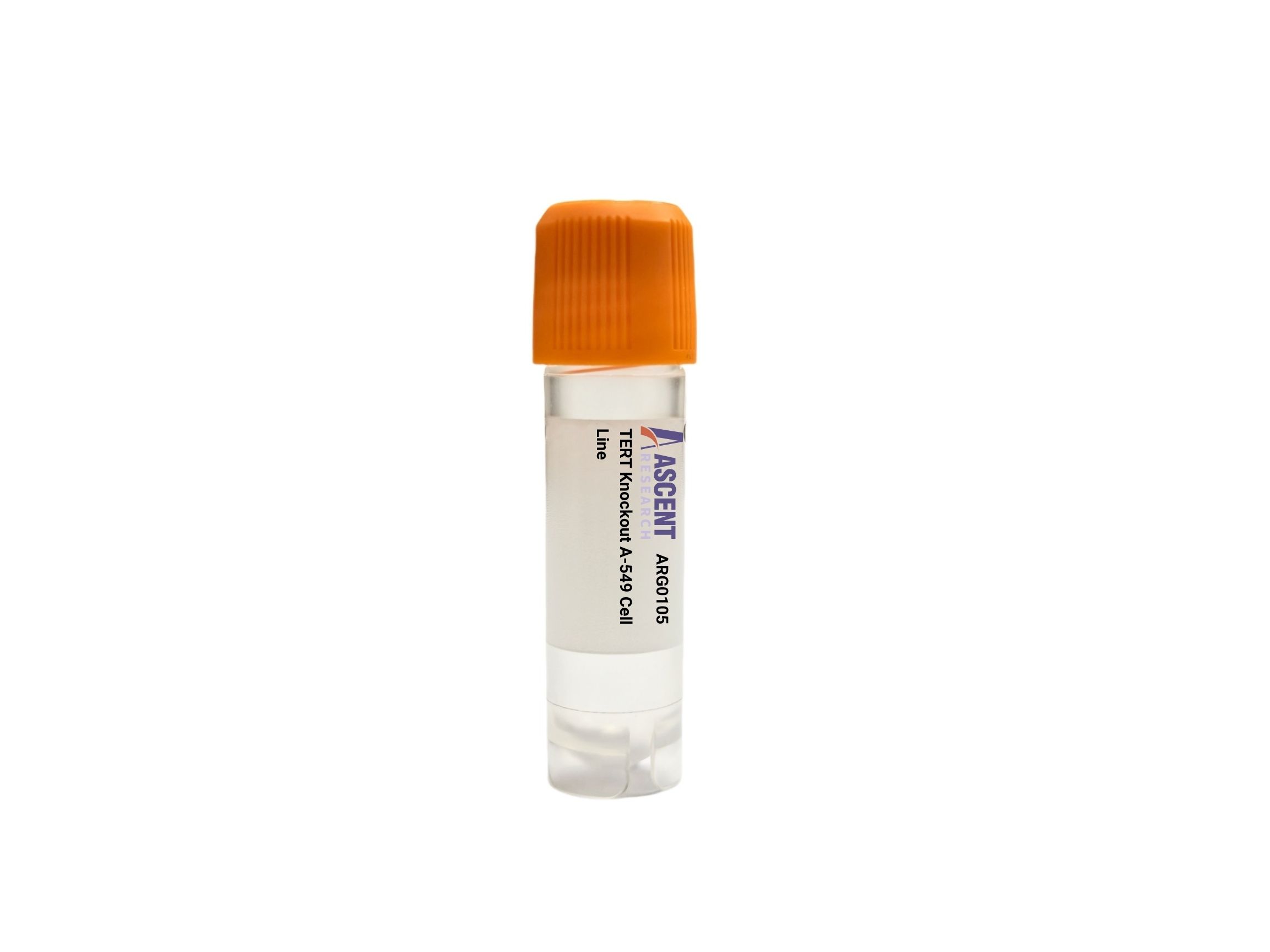
TERT Knockout A-549 Cell Line is a human CRISPR/Cas9-engineered knockout model in which the TERT gene has been disrupted in the A-549 background, resulting in loss of functional telomerase reverse transcriptase expression. This stable in vitro cell model is generated in a human alveolar basal epithelial adenocarcinoma cell line and is designed for studies requiring direct interrogation of telomerase-dependent biology. As an epithelial barrier-derived lung tumor model with active proliferative and oncogenic signaling, A-549 provides a relevant context for examining how TERT loss alters cancer-associated cellular programs.
A-549 is a widely used human lung adenocarcinoma epithelial cell line that supports investigation of non-small cell lung cancer biology, epithelial signaling, metabolism, drug response, and host-pathogen interactions. Because it retains characteristics useful for studying lung tumor cell proliferation and stress responses, this background is well suited for analysis of pathways linking immortalization, DNA damage surveillance, and therapeutic sensitivity. In practical research settings, A-549 cells are frequently applied to studies of epithelial cell-state regulation, tumor-associated signaling, and response to genetic or pharmacologic perturbation.
TERT encodes the catalytic reverse transcriptase subunit of telomerase and functions together with the telomerase RNA component TERC to support telomere repeat synthesis. Its activity is integrated with telomerase holoenzyme and telomere-associated factors including DKC1, NOP10, NHP2, GAR1, and WRAP53/TCAB1, and it interfaces functionally with shelterin components such as POT1, ACD/TPP1, TERF1, TERF2, TINF2, and TERF2IP. TERT expression is regulated by MYC, SP1, ETS factors, estrogen receptor signaling, WNT-beta-catenin signaling, TGF-beta signaling, hypoxia, and promoter methylation status. Loss of TERT is expected to impair telomere length maintenance and telomere capping status, promoting DNA damage signaling mediated through ATM, ATR, TP53, and CDKN1A, with downstream consequences that may include senescence-associated beta-galactosidase induction, increased CDKN1A/p21 and CDKN2A/p16 expression, altered proliferation, and context-dependent apoptotic sensitivity.
In the A-549 lung adenocarcinoma context, TERT knockout provides a mechanistically relevant system for studying telomerase-driven tumorigenic dependency, replicative limitation, and genome stability control. This model enables evaluation of how telomere dysfunction intersects with epithelial tumor cell proliferation, p53 pathway engagement, and DNA damage foci formation in a lung cancer setting. It is therefore useful for dissecting how telomerase loss reshapes oncogenic fitness, stress adaptation, and senescence-associated phenotypes in a commonly used NSCLC-related cellular background.
Researchers can apply this model to telomerase biology, telomere maintenance studies, lung cancer genetics, senescence mechanisms, and genome instability research using orthogonal molecular and phenotypic assays. Representative applications include RT-qPCR or western blotting to examine TERT-associated pathway responses; TRAP assays to assess telomerase activity loss; telomere length analysis by qPCR or Southern blot; immunofluorescence for gamma-H2AX and telomere dysfunction-induced foci; flow cytometry for cell-cycle distribution and apoptosis; senescence-associated beta-galactosidase assays; colony formation studies; RNA-seq-based transcriptional profiling; and anticancer drug sensitivity experiments designed to compare treatment responses under telomerase-deficient conditions. Researchers may contact Ascent Research for additional technical information, product details, or related gene-edited cell models.