Quick Order Cart

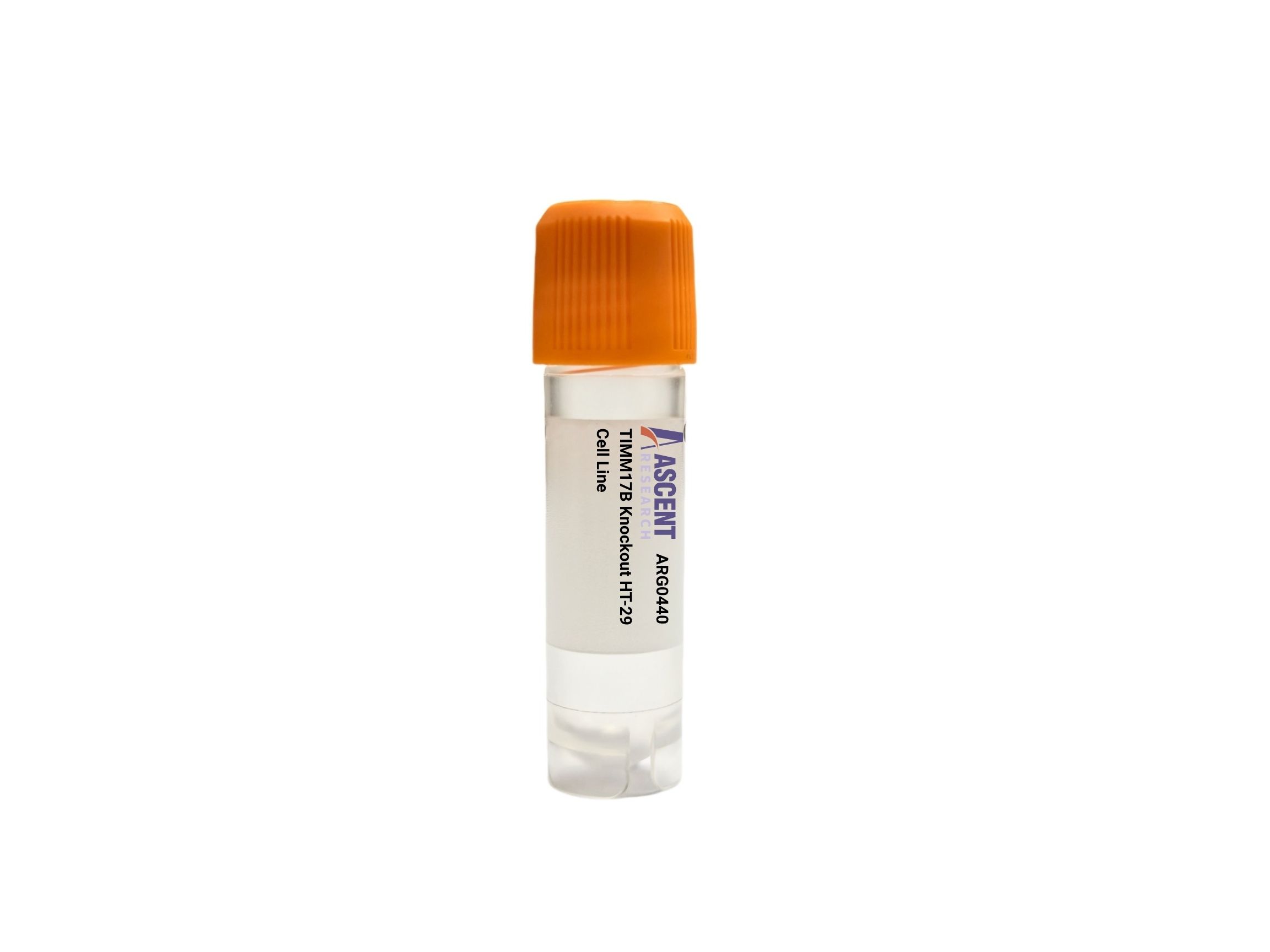
Cat. No. ARG0440

TIMM17B Knockout HT-29 Cell Line

  • Product Type:

    Genome-edited Cells

  • Tissue Source:

    Large intestine (colon)

  • Disease:

    Adenocarcinoma

  • Gene Species:

    Homo sapiens (Human)

The TIMM17B Knockout HT-29 Cell Line is a CRISPR/Cas9-edited knockout cell line derived from human colorectal adenocarcinoma HT-29 cells. This model disrupts the mitochondrial TIM23 translocase subunit TIMM17B, enabling precise studies of mitochondrial protein import and its role in cellular metabolism and apoptosis. With ablation of TIMM17B, downstream interactions with TIMM23, TIMM17A, HSPA9, and PAM16 are compromised, leading to impaired respiratory chain assembly and altered apoptotic signaling. The line is ideally suited for mitochondrial dysfunction research in colorectal cancer, drug target validation, and metabolic flux analyses.

Inquire Now

In stock

Ships next business day


Ask a Question

Shipping Info:

Cryopreserved in vials and shipped on dry ice


Disclaimer:

For Research Use Only

  • Characteristics

    Host Cell

    HT-29

    Morphology

    Epithelial-like

    Age

    44 years

    Sex of Donor

    Female

    Gene Name

    TIMM17B

    Gene Species

    Homo sapiens (Human)

    Gene Identifier

    NCBI Gene ID 10245

  • Culture Conditions

    Temperature

    37°C

    Atmosphere

    5% CO₂

  • Quality Control

    Sterility testing

    Daily monitoring confirms that the cells are free from bacterial, yeast, and fungal contamination.

    Mycoplasma testing

    Negative for mycoplasma through PCR analysis

    Pathogens

    Cells tested negative for HIV-1, HBV, and HCV.

  • Disclaimer

    Intended Use

    This product is intended for laboratory in vitro use only. lt is not intended for diagnostic, therapeutic, or clinical applications.

    Disclaimer

    Ascent Research endeavors to provide accurate and up-to-date product information. However, no warranties or representations are made regarding its completeness or reliability. References to scientific literature and patents are for informational purposes only, and the customer assumes sole responsibility for verifying their accuracy.

    By accepting this product, the customer acknowledges and agrees to assume all risks associated with its receipt, handling, storage, disposal, and use, including compliance with all applicable safety and environmental regulations and precautions. Relevant laws, regulations, and ethical guidelines must be followed in conducting any research, modifications, or derivatives derived from this product.

    This product is provided "AS IS", and except as expressly stated herein, Ascent Research disclaims all other warranties, express or implied. Under no circumstances shall Ascent Research, its affiliates, or representatives be liable for indirect, incidental, consequential, or punitive damages arising from the use of this material. While Ascent Research employs rigorous quality control measures, we shall not be held responsible for damages resulting from misidentification or misinterpretation of the provided materials.

Description

The TIMM17B Knockout HT-29 Cell Line is a CRISPR/Cas9-edited knockout cell line that provides a precise loss-of-function model for studying mitochondrial protein import. Derived through targeted disruption of the TIMM17B gene in the human HT-29 colorectal adenocarcinoma cell line, this product enables investigation of TIMM17B-dependent mitochondrial translocase activity. It serves as a robust platform for functional genomics, drug target validation, and dissecting mitochondrial biology in a defined genetic background.

The parental HT-29 cell line is a widely utilized human epithelial model originating from a colorectal adenocarcinoma. HT-29 cells retain an epithelial morphology and are extensively employed in intestinal biology and cancer research due to their well-characterized signaling pathways and suitability for metabolic studies. This host cell background provides a physiologically relevant context for examining mitochondrial function in the setting of oncogenic transformation and therapeutic resistance.

TIMM17B is an essential core subunit of the TIM23 translocase complex located in the mitochondrial inner membrane. It functions in concert with TIMM23, TIMM17A, TIMM44, and additional co-chaperones such as HSPA9 (mtHsp70), PAM16, PAM18, and DNAJC19 to mediate the ATP-driven import of nuclear-encoded mitochondrial preproteins. Upstream regulators including PGC-1??, NRF1, and TFAM transcriptionally control mitochondrial biogenesis and thus indirectly govern TIMM17B expression, while cellular stress signals modulate translocase activity. Downstream, TIMM17B disruption impairs the translocation of matrix-destined polypeptides, disrupting assembly of respiratory chain complexes, perturbing oxidative phosphorylation, and altering the mitochondrial unfolded protein response. This loss-of-function also compromises the submitochondrial localization of pro-apoptotic factors, thereby affecting cytochrome c release and downstream caspase cascades.

In the context of HT-29 colorectal cancer cells, TIMM17B knockout generates a powerful model for understanding mitochondrial dysfunction in tumor metabolism. Given the metabolic reprogramming characteristic of cancer cells, the knockout line reveals vulnerabilities linked to impaired mitochondrial import, including altered ATP homeostasis, redox imbalance, and aberrant apoptotic regulation. Thus, it is instrumental for exploring the intersection of mitochondrial biology and oncogenic signaling, potentially uncovering synthetic lethal interactions applicable to colorectal cancer therapy.

Principal applications include assessing the functional consequences of attenuated TIM23 translocase activity through mitochondrial protein import assays, measuring changes in ATP levels, and performing Seahorse metabolic flux analysis to profile oxygen consumption and glycolysis. This knockout line supports studies into the composition and assembly of the TIM23 complex using co-immunoprecipitation and immunofluorescence, and it is suitable for evaluating drug candidates targeting mitochondrial pathways in cancer. Additional uses encompass transcript profiling by RT-qPCR and protein expression analysis by Western blotting to validate downstream pathway modulation. For technical inquiries and ordering assistance, please contact Ascent Research.


Reset Password

    Reach Us Questions? Click Me Here!

    Fill out the form below and a member of our team will contact you shortly!

    *Required field


      Reach Us

      Fill out the form below and a member of our team will contact you shortly!

      *Required field

      Product Inquiry (Optional)