Quick Order Cart

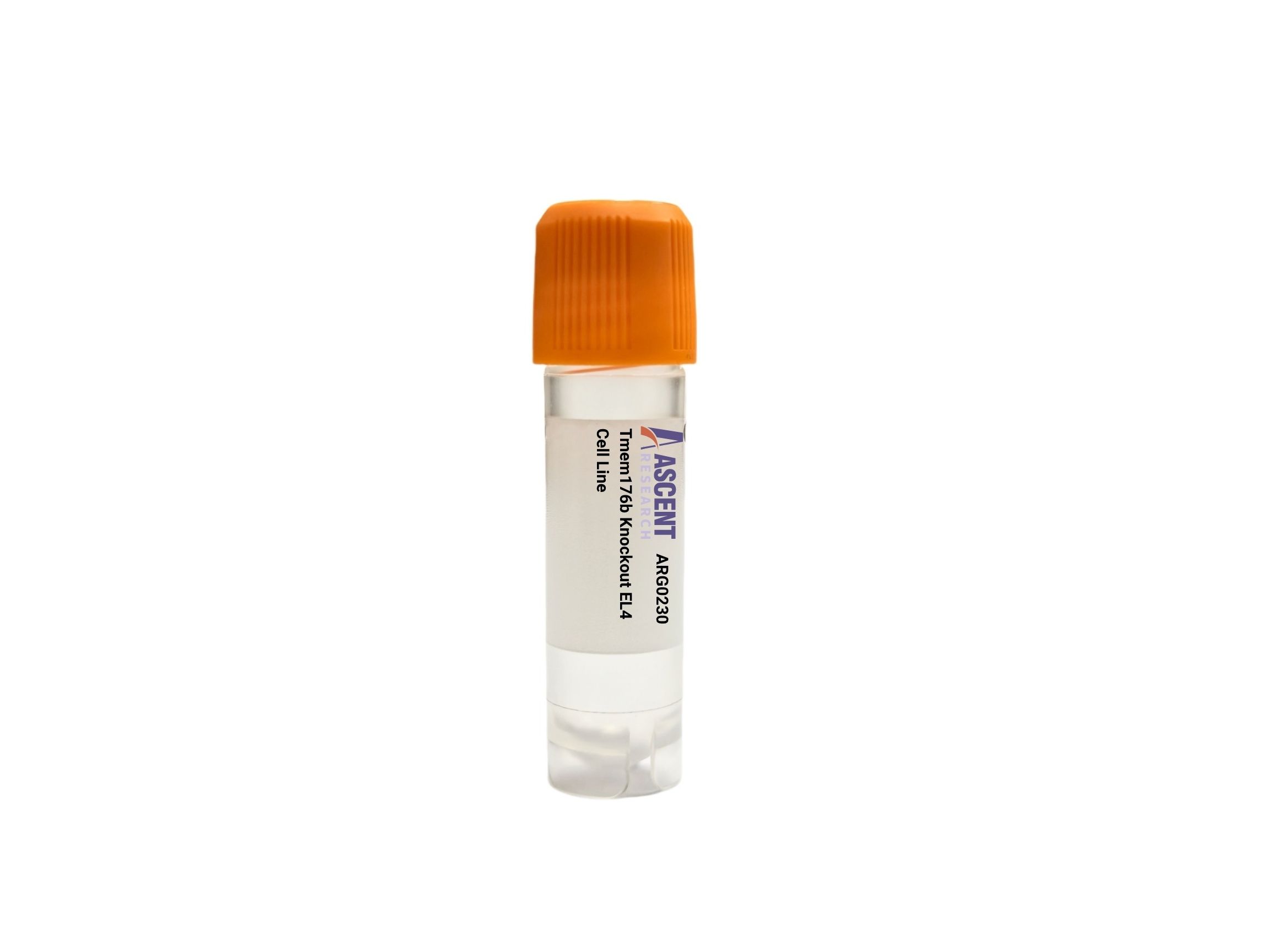
Cat. No. ARG0230

Tmem176b Knockout EL4 Cell Line

  • Product Type:

    Genome-edited Cells

  • Tissue Source:

    Ascites

  • Disease:

    Lymphoma

  • Gene Species:

    Mus musculus (Mouse)

The Tmem176b Knockout EL4 Cell Line is a CRISPR/Cas9-edited mouse T-cell lymphoma line with targeted disruption of the Tmem176b gene, which encodes a modulator of NF-??B signaling and inflammasome activation. Loss of Tmem176b impairs cellular responses to upstream regulators such as TNF-?? and IL-1??, leading to diminished production of downstream targets like IL-6 and IL-12 and altered expression of co-stimulatory molecules CD80/CD86. This model is ideal for investigating T-cell activation, cytokine-mediated signaling, and lymphoma biology. It supports assays including Western blotting, flow cytometry for CD69/CD25, ELISA for IL-2/IL-6, NF-??B reporter analysis, and proliferation studies, facilitating research into autoimmune disease, chronic inflammation, and immune evasion.

Inquire Now

In stock

Ships next business day


Ask a Question

Shipping Info:

Cryopreserved in vials and shipped on dry ice


Disclaimer:

For Research Use Only

  • Characteristics

    Host Cell

    EL4

    Morphology

    Lymphoblast-like

    Age

    Unknown

    Sex of Donor

    Unknown

    Gene Name

    Tmem176b

    Gene Species

    Mus musculus (Mouse)

    Gene Identifier

    NCBI Gene ID 65963

  • Culture Conditions

    Temperature

    37°C

    Atmosphere

    5% CO₂

  • Quality Control

    Sterility testing

    Daily monitoring confirms that the cells are free from bacterial, yeast, and fungal contamination.

    Mycoplasma testing

    Negative for mycoplasma through PCR analysis

    Pathogens

    Cells tested negative for HIV-1, HBV, and HCV.

  • Disclaimer

    Intended Use

    This product is intended for laboratory in vitro use only. lt is not intended for diagnostic, therapeutic, or clinical applications.

    Disclaimer

    Ascent Research endeavors to provide accurate and up-to-date product information. However, no warranties or representations are made regarding its completeness or reliability. References to scientific literature and patents are for informational purposes only, and the customer assumes sole responsibility for verifying their accuracy.

    By accepting this product, the customer acknowledges and agrees to assume all risks associated with its receipt, handling, storage, disposal, and use, including compliance with all applicable safety and environmental regulations and precautions. Relevant laws, regulations, and ethical guidelines must be followed in conducting any research, modifications, or derivatives derived from this product.

    This product is provided "AS IS", and except as expressly stated herein, Ascent Research disclaims all other warranties, express or implied. Under no circumstances shall Ascent Research, its affiliates, or representatives be liable for indirect, incidental, consequential, or punitive damages arising from the use of this material. While Ascent Research employs rigorous quality control measures, we shall not be held responsible for damages resulting from misidentification or misinterpretation of the provided materials.

Description

The Tmem176b Knockout EL4 Cell Line is a CRISPR/Cas9-mediated gene-disrupted cell line derived from the mouse T-cell lymphoma line EL4. This product provides a stable loss-of-function model for Tmem176b, enabling detailed investigation of its role in immune signaling without the need for transient silencing approaches. The knockout cell line is delivered as a ready-to-use culture, facilitating immediate employment in functional assays and gene perturbation studies relevant to immunology and cancer biology. The gene disruption is achieved through CRISPR/Cas9 technology, ensuring efficient targeting of the Tmem176b locus, though the exact editing pattern is not specified.

The parental EL4 cell line originates from a C57BL/6 mouse and represents a widely used model for T-cell activation, signal transduction, and lymphoma biology. EL4 cells recapitulate key aspects of T-lymphocyte function, including responsiveness to mitogens, cytokine secretion, and surface marker expression changes upon stimulation. Their malignant phenotype also renders them valuable for studying mechanisms of T-cell lymphomagenesis and immune evasion. The introduction of a Tmem176b knockout allows researchers to dissect gene-specific contributions within this well-characterized background, offering a controlled system for comparative analyses.

Tmem176b acts as a modulator of the NF-??B pathway and inflammasome assembly, functions critical for innate and adaptive immunity. The protein is induced by upstream stimuli such as TNF-??, IL-1??, and Toll-like receptor ligands, and it operates at a junction influencing both NF-??B activation and inflammasome component expression. Downstream, it regulates production of cytokines including IL-6 and IL-12, and controls expression of co-stimulatory molecules CD80 and CD86. Tmem176b interacts with MS4A family members and Fc receptor-like proteins, and it affects the assembly of the NLRP3/ASC/caspase-1 complex. Its disruption is known to attenuate NF-??B signaling, dampen inflammatory cytokine output, and impair dendritic cell maturation and T-cell activation.

In the context of EL4 T-lymphoma cells, loss of Tmem176b profoundly alters cellular responses central to immune function and malignant growth. Knockout cells exhibit diminished NF-??B activation, reduced pro-inflammatory cytokine secretion, and altered expression of T-cell activation markers such as CD69 and CD25. These changes make the line particularly suitable for dissecting TLR- and cytokine-driven signaling networks, as well as for investigating how inflammasome regulation intersects with T-cell biology. The model thus supports studies into the molecular underpinnings of autoimmune diseases, chronic inflammation, and immune evasion by lymphoma cells, where dysregulated NF-??B and inflammasome activity are prominent.

This knockout cell line is applied in diverse experimental workflows, including Western blotting for pathway component analysis, RT-qPCR for transcriptional profiling, and flow cytometry for activation marker measurement. Functional assays such as NF-??B luciferase reporter systems, CFSE-based proliferation tests, and Annexin V apoptosis detection provide quantitative insights into signaling dynamics. Researchers employ the line for screening immunomodulatory compounds, investigating T-cell receptor-proximal events, and exploring the regulatory interplay between Tmem176b and its interacting partners. For further details or technical support, please contact Ascent Research.


Reset Password

    Reach Us Questions? Click Me Here!

    Fill out the form below and a member of our team will contact you shortly!

    *Required field


      Reach Us

      Fill out the form below and a member of our team will contact you shortly!

      *Required field

      Product Inquiry (Optional)