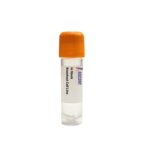
Quick Order Cart

Cat. No. ARG44171

TNFRSF1B Knockout Jurkat E6.1 Cell Line

  • Product Type:

    In Stock Cell Lines

  • Species:

    Homo sapiens (Human)

  • Tissue Source:

    Blood (peripheral blood)

  • Disease:

    Acute lymphoblastic leukemia (ALL)

The TNFRSF1B Knockout Jurkat E6.1 Cell Line is a CRISPR/Cas9-edited knockout cell line that disrupts the gene encoding tumor necrosis factor receptor 2 (TNFR2) in a human T lymphocyte background. This model is used to dissect TNFR2-dependent signaling, which normally activates non-canonical NF-??B via TRAF2 and cIAP1/2, leading to transcription of anti-apoptotic targets like BCL2L1 and BIRC3, and cytokine IL2. The cell line is employed to investigate T cell survival, proliferation, and co-stimulatory signaling. Applications include drug screening for TNFR2-targeted therapies in autoimmunity and cancer, and studies of NF-??B and JNK pathway crosstalk. Standard assays include Western blotting, Annexin V apoptosis staining, RT-qPCR, and phospho-JNK ELISA.

Inquire Now

In stock

Ships next business day


Ask a Question

Shipping Info:

Cryopreserved in vials and shipped on dry ice


Disclaimer:

For Research Use Only

  • Characteristics

    Host Cell

    Jurkat E6.1

    Sex of Donor

    Male

    Derived From Site

    In situ; Peripheral blood

    Gene Name

    TNFRSF1B

    Gene Identifier

    NCBI Gene ID 7133

    Growth Mode

    Suspension

    Storage

    Liquid nitrogen (LN2)

  • Culture Conditions

    Temperature

    37°C

    Atmosphere

    5% COâ‚‚

  • Quality Control

    Sterility testing

    The bacterial, yeast, and fungi are not detected in these cells by daily monitor.

    Mycoplasma testing

    Negative for mycoplasma through PCR analysis

  • Disclaimer

    Intended Use

    This product is intended for laboratory in vitro use only. It is not intended for diagnostic, therapeutic, or clinical applications.

    Disclaimer

    Ascent Research endeavors to provide accurate and up-to-date product information. However, no warranties or representations are made regarding its completeness or reliability. References to scientific literature and patents are for informational purposes only, and the customer assumes sole responsibility for verifying their accuracy.

    By accepting this product, the customer acknowledges and agrees to assume all risks associated with its receipt, handling, storage, disposal, and use, including compliance with all applicable safety and environmental regulations and precautions. Relevant laws, regulations, and ethical guidelines must be followed in conducting any research, modifications, or derivatives derived from this product.

    This product is provided "AS IS", and except as expressly stated herein, Ascent Research disclaims all other warranties, express or implied. Under no circumstances shall Ascent Research, its affiliates, or representatives be liable for indirect, incidental, consequential, or punitive damages arising from the use of this material. While Ascent Research employs rigorous quality control measures, we shall not be held responsible for damages resulting from misidentification or misinterpretation of the provided materials.

Description

The TNFRSF1B Knockout Jurkat E6.1 Cell Line is a CRISPR/Cas9-edited knockout cell line that provides targeted disruption of the TNFRSF1B gene, which encodes tumor necrosis factor receptor 2 (TNFR2). This model enables precise investigation of TNFR2-mediated signaling in a human T lymphocyte background. Generated through CRISPR/Cas9-mediated gene editing, this cell line lacks functional TNFR2 expression and is supplied as a live, growing culture ready for downstream functional assays.

The host cell line, Jurkat E6.1, is an immortalized human T lymphoblastoid line derived from acute T cell leukemia. It is widely utilized as a model system for T cell receptor (TCR) signaling, T cell activation, and immune response studies. Jurkat cells retain key T cell features, including CD3/TCR complex expression and responsiveness to activating stimuli. Their robust proliferation and amenability to genetic manipulation make them an ideal platform for generating gene-edited derivatives such as this knockout line.

TNFRSF1B encodes TNFR2, a receptor that binds both membrane-bound and soluble TNF-??, as well as lymphotoxin-??. Upon ligand engagement, TNFR2 recruits adaptor proteins TRAF2 and TRAF1, along with cIAP1/2, to initiate intracellular signaling cascades. This triggers activation of the non-canonical NF-??B pathway via stabilization of NIK and processing of p100 to p52, as well as canonical NF-??B signaling through RIPK1, TAK1, and the IKK complex. Additionally, TNFR2 stimulates the JNK pathway via ASK1 and engages PI3K-AKT signaling. Key downstream targets include anti-apoptotic genes BCL2L1 and BIRC3, and the cytokine IL2. Disruption of TNFRSF1B in this cell line abrogates these signaling events, impairing NF-??B-driven pro-survival and proliferative programs.

In T lymphocytes, TNFR2 serves as a co-stimulatory receptor that augments TCR-induced signals, enhancing T cell survival and proliferation. Its expression is upregulated upon T cell activation and is critical for regulatory T cell function and immune homeostasis. The Jurkat E6.1 background provides a relevant context to dissect TNFR2-specific contributions, independent of TNFR1 effects. This knockout model facilitates studies on the crosstalk between TNFR2, PI3K-AKT, and JNK pathways, and is valuable for modeling pathological conditions such as autoimmunity and cancer, where dysregulated TNFR2 signaling plays a role.

Researchers can employ this cell line in a range of assays, including Western blotting for NF-??B pathway components (e.g., p100/p52, phospho-p65), flow cytometric apoptosis detection with Annexin V, RT-qPCR analysis of downstream gene expression, cell proliferation assays under TNFR2 stimulation, and phospho-JNK ELISA. The model supports investigations into TNFR2-mediated T cell biology, drug screening for TNFR2-targeted therapies, and studies of immune dysregulation in autoimmune diseases and cancer immunotherapy. For further information or to place an order, please contact Ascent Research.


Reset Password

    Reach Us Questions? Click Me Here!

    Fill out the form below and a member of our team will contact you shortly!

    *Required field


      Reach Us

      Fill out the form below and a member of our team will contact you shortly!

      *Required field

      Product Inquiry (Optional)