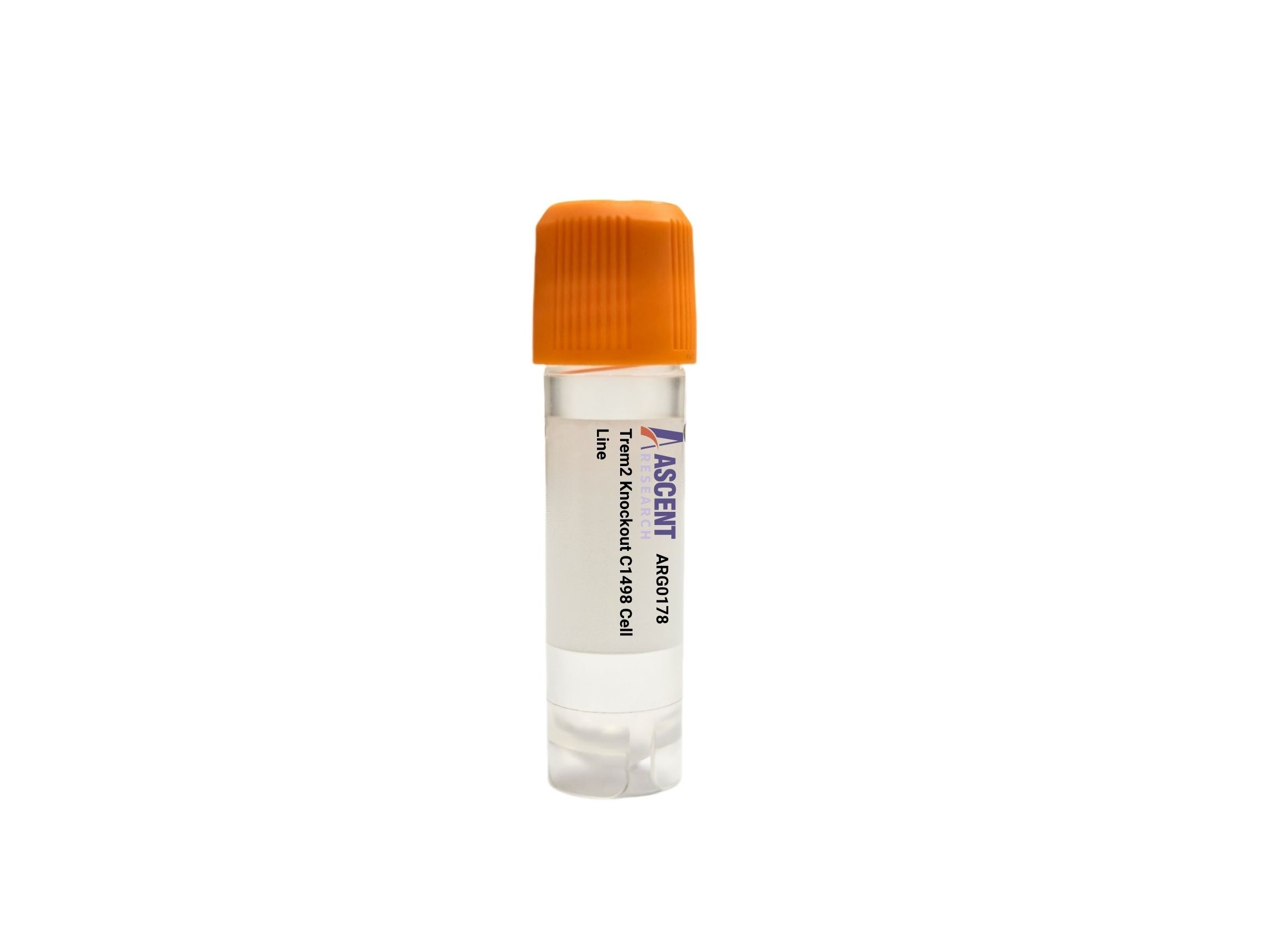
The Trem2 Knockout C1498 Cell Line is a CRISPR/Cas9-engineered mouse cell model in which the Trem2 gene has been disrupted to eliminate functional TREM2 expression in a stable in vitro background. The parental C1498 line is a murine myeloid leukemia suspension cell line, and this edited derivative provides a tractable system for interrogating TREM2-dependent signaling in hematopoietic myeloid-like cells. As a gene-edited leukemia-associated immune model, it is suited for studies of receptor-driven signaling, innate immune regulation, and myeloid functional phenotypes under controlled experimental conditions.
C1498 is derived from mouse leukemia and is widely used as a syngeneic transplantable acute myeloid leukemia model as well as an in vitro myeloid-lineage system for investigating tumor-immune interactions. Its hematopoietic and myeloid-like features make it relevant for analyses of leukemic cell communication with the immune microenvironment, inflammatory signaling, and response programs linked to innate immune receptors. Because C1498 cells are readily adapted to molecular and cell-based assays, they provide a useful platform for connecting receptor perturbation to changes in signaling networks, transcriptional outputs, and functional immune-like behaviors relevant to leukemia biology and myeloid pathophysiology.
TREM2 is a membrane immunoreceptor expressed in myeloid cells that functions through the ITAM-bearing adaptor TYROBP/DAP12. Upon engagement by lipidic and damage-associated ligands, including anionic and zwitterionic lipids, phosphatidylserine on apoptotic cells, lipoprotein particles, APOE, and apolipoprotein J/clusterin, TREM2-TYROBP complexes recruit and activate SRC-family kinases such as LYN and FYN and mediate signaling downstream of SYK. This signaling axis acts upstream of PLCG2, PI3K-AKT, and ERK1/2, with associated intracellular Ca2+ flux, phagocytic uptake, cell survival programs, inflammatory cytokine regulation, and lipid metabolism gene control. TREM2 signaling also intersects with CSF1-dependent myeloid differentiation context and is relevant to neurodegeneration, atherosclerosis, obesity-associated inflammation, tumor immunology, and related disorders such as Nasu-Hakola disease.
Within the C1498 background, Trem2 loss provides a defined system for examining how disruption of a lipid-sensing myeloid receptor alters leukemic myeloid signaling states and immune-associated phenotypes. This model is particularly useful for studying pathway dependency in SYK, PI3K-AKT, MAPK/ERK, and PLCG2-Ca2+ signaling modules, as well as changes in phagocytosis, inflammatory tone, metabolic adaptation, and responses to extracellular lipid or damage-associated cues. In leukemia-focused settings, it can support investigation of microenvironmental interactions and receptor-dependent mechanisms that influence tumor-immune crosstalk.
Applications include western blot or phospho-signaling analysis of SYK, AKT, and ERK1/2 pathway activation; RT-qPCR and RNA-seq profiling of inflammatory and lipid metabolism gene programs; flow cytometry and immunofluorescence assessment of receptor-associated phenotypes; calcium flux assays to evaluate PLCG2-linked signaling; and phagocytosis assays using apoptotic cell or lipid-associated substrates. The model is also suitable for cytokine profiling, co-immunoprecipitation studies of TREM2 pathway components such as TYROBP, SYK, or CSF1R-associated signaling context, metabolic assays examining immunometabolic consequences of receptor loss, and drug sensitivity studies probing pathway vulnerabilities in myeloid leukemia cells. Researchers may contact Ascent Research for additional technical information, product details, or related gene-edited cell models.