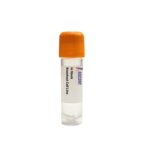
The TRIM8 Knockout Hep-G2 Cell Line is a CRISPR/Cas9-edited human cell line offering a loss-of-function model for TRIM8 E3 ubiquitin ligase. Derived from Hep-G2 hepatocellular carcinoma cells, it enables investigation of TRIM8-dependent signaling in liver cancer and immunity. The CRISPR/Cas9-mediated gene disruption eliminates functional TRIM8, providing a stable and reproducible genetic tool.
Hep-G2 is a well-differentiated hepatocellular carcinoma line from a 15-year-old male, retaining hepatocyte functions like enzyme expression and plasma protein secretion. It serves as a standard model for liver cancer research, drug metabolism, and toxicology, offering a clinically relevant context for studying cancer-related pathways.
TRIM8 functions as an E3 ubiquitin ligase modulating protein stability through ubiquitination. It positively regulates NF-??B signaling via K63-linked ubiquitination of TAK1 and negatively regulates JAK-STAT by degrading SOCS1. Upstream regulators include IFN-??, TNF-??, IL-1??, and p53; it interacts with SOCS1, HSP90, PIASy, MDA5, and RIG-I. Downstream targets such as NF-??B p65, STAT3, and I??B?? mediate effects on proliferation, apoptosis, and inflammation. TRIM8 integrates signals to control innate immunity and cell fate.
In Hep-G2 hepatocellular carcinoma cells, TRIM8 loss disrupts its control over NF-??B and JAK-STAT pathways often dysregulated in liver cancer. This knockout model allows dissection of TRIM8??s dual roles in tumor cell proliferation, apoptosis resistance, and immune evasion. It is valuable for linking oncogenic signaling with innate immunity in hepatocyte-derived carcinoma.
Researchers can employ this cell line in diverse assays: Western blotting for TRIM8 and pathway proteins, RT-qPCR for target genes, NF-??B luciferase reporter assays, and co-immunoprecipitation to study ubiquitination. Functional assays include MTT/CCK-8 proliferation, Annexin V apoptosis, and Transwell migration/invasion. Cytokine stimulation with TNF-?? or IFN-?? enables analysis of stimulus-dependent responses. This model supports hepatocellular carcinoma research, innate immunity studies, and drug resistance investigations. For further details, contact Ascent Research.