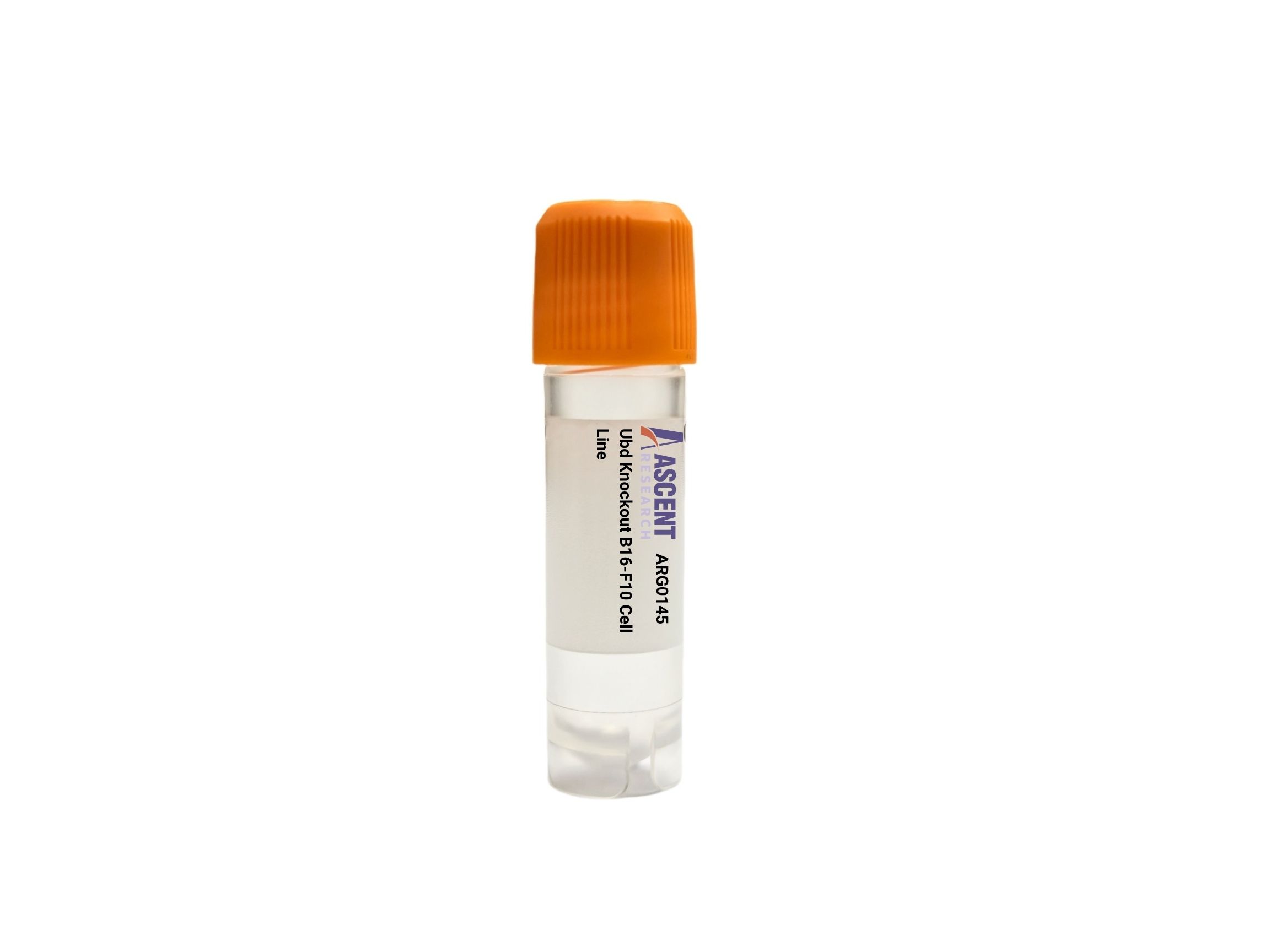
The Ubd Knockout B16-F10 Cell Line is a CRISPR/Cas9-engineered mouse melanoma model in which the Ubd gene has been disrupted to eliminate functional Ubd/FAT10 expression. This stable edited cell line is generated in the B16-F10 background, a tumorigenic melanocytic cell model broadly used for mechanistic studies of melanoma biology. By combining targeted gene knockout with an aggressive metastatic melanoma host line, this product provides a tractable in vitro system for investigating Ubd-dependent effects on inflammatory signaling, proteasome-linked protein turnover, and tumor-associated cellular behavior.
B16-F10 is a murine melanoma subline derived from C57BL/6 mouse melanoma and is extensively used in syngeneic oncology and immuno-oncology research because of its robust tumor-forming capacity and high metastatic potential. The line is widely applied to studies of melanoma progression, invasion, dissemination, and tumor-immune interactions in both cell culture and in vivo settings. Its established use in metastasis-related phenotyping and cytokine-response experiments makes it a relevant host background for interrogating genes that connect inflammatory cues to tumor cell state, proteostasis, and immune regulation.
Ubd encodes ubiquitin D, also known as FAT10, a ubiquitin-like modifier induced predominantly by proinflammatory cytokines. Ubd expression is strongly regulated downstream of TNF-alpha and IFN-gamma signaling through NF-kappaB- and STAT1-associated transcriptional programs, with representative pathway components including TNFRSF1A, IFNGR1, RELA, and STAT1. At the protein level, FAT10 is activated by UBA6 and conjugated by USE1/UBE2Z to substrate proteins. FAT10ylated substrates can be recognized in association with NUB1 and targeted toward 26S proteasome-dependent degradation, while additional interactions with factors such as MAD2L1 and HDAC6 link Ubd to broader control of inflammatory stress responses, cell survival output, and immune-regulatory signaling. In this context, Ubd functions at the intersection of ubiquitin-like protein conjugation, antigen processing, proteasomal degradation, and cytokine-driven transcriptional remodeling.
Loss of Ubd in B16-F10 therefore provides a useful model for dissecting how FAT10-dependent proteostasis contributes to melanoma-associated inflammatory adaptation and tumor-immune crosstalk. In an aggressive melanoma background, Ubd knockout can support analyses of pathway dependency downstream of TNF-alpha or IFN-gamma stimulation, changes in proteasomal degradation output, and alterations in inflammatory gene expression programs relevant to tumor progression, immune evasion, and metastasis-associated phenotypes.
This cell line is suitable for western blotting, RT-qPCR, and RNA-seq studies of cytokine-inducible transcriptional responses; immunofluorescence and flow cytometry analyses of phenotype and immune-related markers; co-immunoprecipitation and FAT10-conjugate assays to examine UBA6-USE1/UBE2Z pathway function; and proteasome activity assays to evaluate degradation dependence. It can also be applied in phospho-signaling studies following TNF-alpha or IFN-gamma treatment, apoptosis assays, migration and invasion assays, and syngeneic in vivo tumor experiments designed to compare tumor growth, metastatic behavior, and tumor-immune interactions between Ubd-deficient and control melanoma cells. Researchers may contact Ascent Research for additional technical information, product details, or related gene-edited cell models.