Quick Order Cart

Cat. No. ARG44208

Ulk4 Knockout Neuro-2a Cell Line

  • Product Type:

    In Stock Cell Lines

  • Species:

    Mus musculus (Mouse)

  • Tissue Source:

    Brain

  • Disease:

    Neuroblastoma

The Ulk4 Knockout Neuro-2a Cell Line is a CRISPR/Cas9-edited knockout cell line derived from mouse neuroblastoma, targeting the Ulk4 gene. ULK4 is a serine/threonine kinase involved in autophagy initiation and neuronal development, acting downstream of mTORC1 and AMPK and interacting with ULK1/2 and ATG13. This model enables investigation of autophagy flux, mTOR signaling, and neuronal phenotypes, with applications in neuropsychiatric disease research, including schizophrenia and autism. It is suitable for assays such as Western blotting, immunofluorescence, and drug screening.

Inquire Now

In stock

Ships next business day


Ask a Question

Shipping Info:

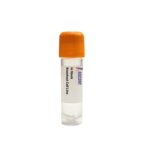
Cryopreserved in vials and shipped on dry ice


Disclaimer:

For Research Use Only

  • Characteristics

    Host Cell

    Neuro-2a

    Sex of Donor

    Male

    Age

    Unknown

    Gene Name

    Ulk4

    Gene Identifier

    NCBI Gene ID 209012

    Morphology

    Neuronal and amoeboid stem cells

    Growth Mode

    Adherent

    Storage

    Liquid nitrogen (LN2)

  • Culture Conditions

    Temperature

    37°C

    Atmosphere

    5% COâ‚‚

  • Quality Control

    Sterility testing

    The bacterial, yeast, and fungi are not detected in these cells by daily monitor.

    Mycoplasma testing

    Negative for mycoplasma through PCR analysis

  • Disclaimer

    Intended Use

    This product is intended for laboratory in vitro use only. It is not intended for diagnostic, therapeutic, or clinical applications.

    Disclaimer

    Ascent Research endeavors to provide accurate and up-to-date product information. However, no warranties or representations are made regarding its completeness or reliability. References to scientific literature and patents are for informational purposes only, and the customer assumes sole responsibility for verifying their accuracy.

    By accepting this product, the customer acknowledges and agrees to assume all risks associated with its receipt, handling, storage, disposal, and use, including compliance with all applicable safety and environmental regulations and precautions. Relevant laws, regulations, and ethical guidelines must be followed in conducting any research, modifications, or derivatives derived from this product.

    This product is provided "AS IS", and except as expressly stated herein, Ascent Research disclaims all other warranties, express or implied. Under no circumstances shall Ascent Research, its affiliates, or representatives be liable for indirect, incidental, consequential, or punitive damages arising from the use of this material. While Ascent Research employs rigorous quality control measures, we shall not be held responsible for damages resulting from misidentification or misinterpretation of the provided materials.

Description

The Ulk4 Knockout Neuro-2a Cell Line is a CRISPR/Cas9-edited mouse neuroblastoma cell line designed to disrupt the Ulk4 gene, enabling loss-of-function studies in a neuronal model system. This stable knockout cell line provides a valuable tool for investigating ULK4 function in autophagy and neuronal signaling pathways.

The Neuro-2a host cell line originates from a spontaneous neuroblastoma in the A/J mouse strain, displaying hallmarks of a neural crest-derived tumor. These adherent cells are commonly employed as a neuronal model due to their capacity to differentiate into neuron-like cells upon serum withdrawal or treatment with differentiation agents, expressing neuronal markers and extending neurites. This background makes them particularly relevant for studying neuronal differentiation, synaptic function, and neurodegenerative processes.

ULK4 is a serine/threonine kinase with key roles in autophagy initiation and neuronal development. It is posited to act downstream of the nutrient sensors mTORC1 and AMPK, which phosphorylate ULK4 to modulate its activity in response to cellular energy status. As part of the autophagy initiation complex, ULK4 interacts with ATG13, FIP200, and the ULK1/2 kinases, potentially scaffolding the assembly of the phagophore. Downstream effects include regulation of the Beclin-1?CVPS34 lipid kinase complex and LC3 lipidation, ultimately influencing autophagosome formation. In neurons, ULK4 also impacts neurite outgrowth and synaptic homeostasis, linking autophagy to neuronal architecture.

Disruption of Ulk4 in Neuro-2a cells offers insight into the intersection of autophagy and neuronal biology. Since these cells undergo neuronal differentiation, the knockout model permits examination of ULK4??s role in neurite extension and stress responses. Given genetic associations with schizophrenia, bipolar disorder, and autism spectrum disorder, this line aids research into the molecular mechanisms of neuropsychiatric disorders and autophagy-related neuronal dysfunction.

Researchers can utilize this knockout cell line for detailed functional studies. Representative assays include Western blotting for LC3 and p62 to monitor autophagy flux, immunofluorescence microscopy to visualize autophagosome markers like LC3 puncta, RT-qPCR to quantify expression of neuronal genes, viability assays under metabolic or proteotoxic stress, neurite outgrowth measurements, mTOR activity determination via phospho-S6 immunoblotting, flow cytometry with fluorescent reporters for autophagy flux, co-immunoprecipitation to identify ULK4-containing protein complexes, and drug sensitivity screening for compounds that modulate autophagy or neuronal phenotypes. For further information or to order, please contact Ascent Research.


Reset Password

    Reach Us Questions? Click Me Here!

    Fill out the form below and a member of our team will contact you shortly!

    *Required field


      Reach Us

      Fill out the form below and a member of our team will contact you shortly!

      *Required field

      Product Inquiry (Optional)