Quick Order Cart

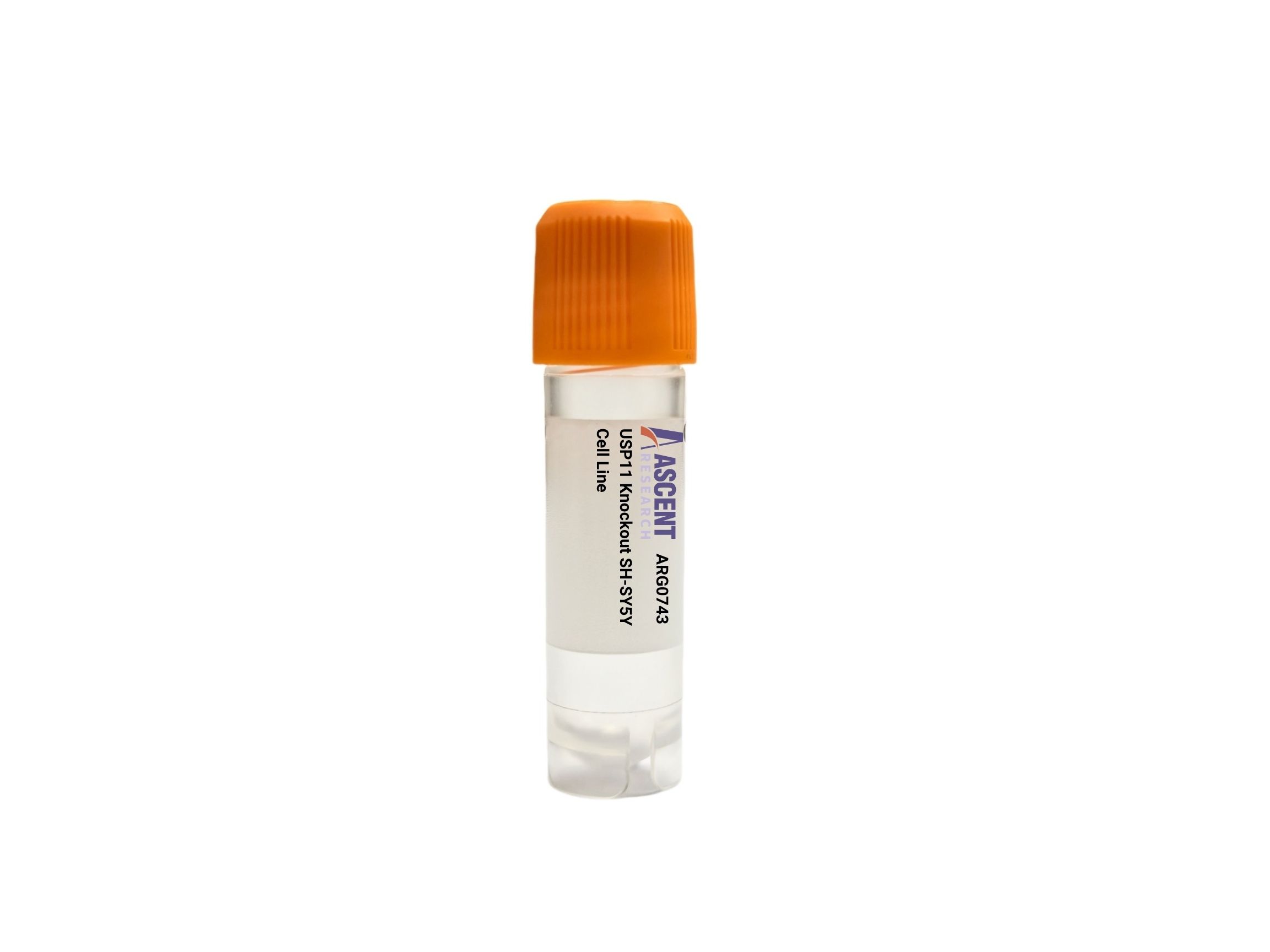
Cat. No. ARG0743

USP11 Knockout SH-SY5Y Cell Line

  • Product Type:

    Genome-edited Cells

  • Tissue Source:

    Bone (bone marrow)

  • Disease:

    Neuroblastoma

  • Gene Species:

    Homo sapiens (Human)

The USP11 Knockout SH-SY5Y Cell Line offers a genetically disrupted neuronal model for studying deubiquitinase function. This CRISPR/Cas9-edited cell line lacks USP11, a deubiquitinase that stabilizes substrates such as PTEN, BRCA2, and I??B??, and is derived from SH-SY5Y neuroblastoma cells with dopaminergic neuron features. Knockout of USP11 impairs DNA repair and alters cell survival signaling, making this line valuable for neurodegeneration, cancer, and inflammation research. Applications include analysis of DNA damage response, NF-??B and TGF-?? pathways, and screening for deubiquitinase inhibitors.

Inquire Now

In stock

Ships next business day


Ask a Question

Shipping Info:

Cryopreserved in vials and shipped on dry ice


Disclaimer:

For Research Use Only

  • Characteristics

    Host Cell

    SH-SY5Y

    Morphology

    Epithelial-like

    Age

    4 years

    Sex of Donor

    Female

    Gene Name

    USP11

    Gene Species

    Homo sapiens (Human)

    Gene Identifier

    NCBI Gene ID 8237

  • Culture Conditions

    Temperature

    37°C

    Atmosphere

    5% CO₂

  • Quality Control

    Sterility testing

    Daily monitoring confirms that the cells are free from bacterial, yeast, and fungal contamination.

    Mycoplasma testing

    Negative for mycoplasma through PCR analysis

    Pathogens

    Cells tested negative for HIV-1, HBV, and HCV.

  • Disclaimer

    Intended Use

    This product is intended for laboratory in vitro use only. lt is not intended for diagnostic, therapeutic, or clinical applications.

    Disclaimer

    Ascent Research endeavors to provide accurate and up-to-date product information. However, no warranties or representations are made regarding its completeness or reliability. References to scientific literature and patents are for informational purposes only, and the customer assumes sole responsibility for verifying their accuracy.

    By accepting this product, the customer acknowledges and agrees to assume all risks associated with its receipt, handling, storage, disposal, and use, including compliance with all applicable safety and environmental regulations and precautions. Relevant laws, regulations, and ethical guidelines must be followed in conducting any research, modifications, or derivatives derived from this product.

    This product is provided "AS IS", and except as expressly stated herein, Ascent Research disclaims all other warranties, express or implied. Under no circumstances shall Ascent Research, its affiliates, or representatives be liable for indirect, incidental, consequential, or punitive damages arising from the use of this material. While Ascent Research employs rigorous quality control measures, we shall not be held responsible for damages resulting from misidentification or misinterpretation of the provided materials.

Description

The USP11 Knockout SH-SY5Y Cell Line is a CRISPR/Cas9-mediated gene disruption model in a human neuroblastoma background. This product provides a stable knockout cell line derived from SH-SY5Y, a widely used neuronal model. The targeted disruption of USP11 eliminates functional USP11 deubiquitinase, enabling researchers to study loss-of-function phenotypes in a dopaminergic neuron-like context. The cell line is supplied as a ready-to-use, edited population for applications in neurodegeneration, cancer biology, and signaling research.

The SH-SY5Y host line originates from a human female metastatic neuroblastoma and retains capacity for differentiation into neuron-like cells with dopaminergic characteristics. These cells express neuronal markers and exhibit electrophysiological activity, making them a standard in vitro platform for Parkinson’s disease modeling, neurotoxicity testing, and neuronal differentiation studies. Their neoplastic origin also supports cancer-focused investigations, particularly in pediatric neuroblastoma biology.

USP11 functions as a deubiquitinase that selectively removes polyubiquitin chains from target proteins, opposing proteasomal degradation. In this context, USP11 acts downstream of ATM kinase, p53, and general DNA damage signals to stabilize substrates including PTEN, BRCA2, PML, I??B??, and TGF-?? receptor components. USP11 forms complexes with BRCA2 and PTEN, modulates NF-??B signaling through I??B??, and intersects with p53-dependent responses. Its activity influences DNA repair via homologous recombination, cell cycle checkpoints, and apoptosis regulation. Upon knockout, loss of USP11 leads to enhanced degradation of these substrates, impairing DNA damage response and altering cell survival networks.

In SH-SY5Y cells, USP11 knockout has particular significance given the neuronal context and the relevance of genome maintenance to neurodegeneration. USP11’s regulation of PTEN and BRCA2 directly affects PI3K/AKT pathway output and DNA double-strand break repair, processes implicated in neuronal survival and programmed cell death. Moreover, USP11 influences NF-??B and TGF-?? signaling, pathways that govern inflammation, differentiation, and synaptic plasticity. This knockout model therefore provides a tool to dissect deubiquitinase-dependent mechanisms in neuronal stress responses, with potential links to Parkinson’s disease and neuroblastoma pathogenesis.

Typical research applications for this CRISPR/Cas9-edited knockout cell line include investigating USP11-mediated regulation of DNA damage repair pathways, studying deubiquitinase-dependent control of PTEN stability and downstream AKT signaling, and modeling neurodegeneration-related protein turnover. The cell line is well-suited for assays such as western blotting for USP11, PTEN, and phospho-H2AX, immunofluorescence detection of ??H2AX foci, RT-qPCR analysis of downstream targets, MTT or Annexin V-based viability/apoptosis assays, comet assays to measure DNA strand breaks, and co-immunoprecipitation of USP11 substrate interactions. It also serves as a platform for screening small-molecule inhibitors of deubiquitinases. For additional technical information or to request custom applications, please contact Ascent Research.


Reset Password

    Reach Us Questions? Click Me Here!

    Fill out the form below and a member of our team will contact you shortly!

    *Required field


      Reach Us

      Fill out the form below and a member of our team will contact you shortly!

      *Required field

      Product Inquiry (Optional)