Quick Order Cart

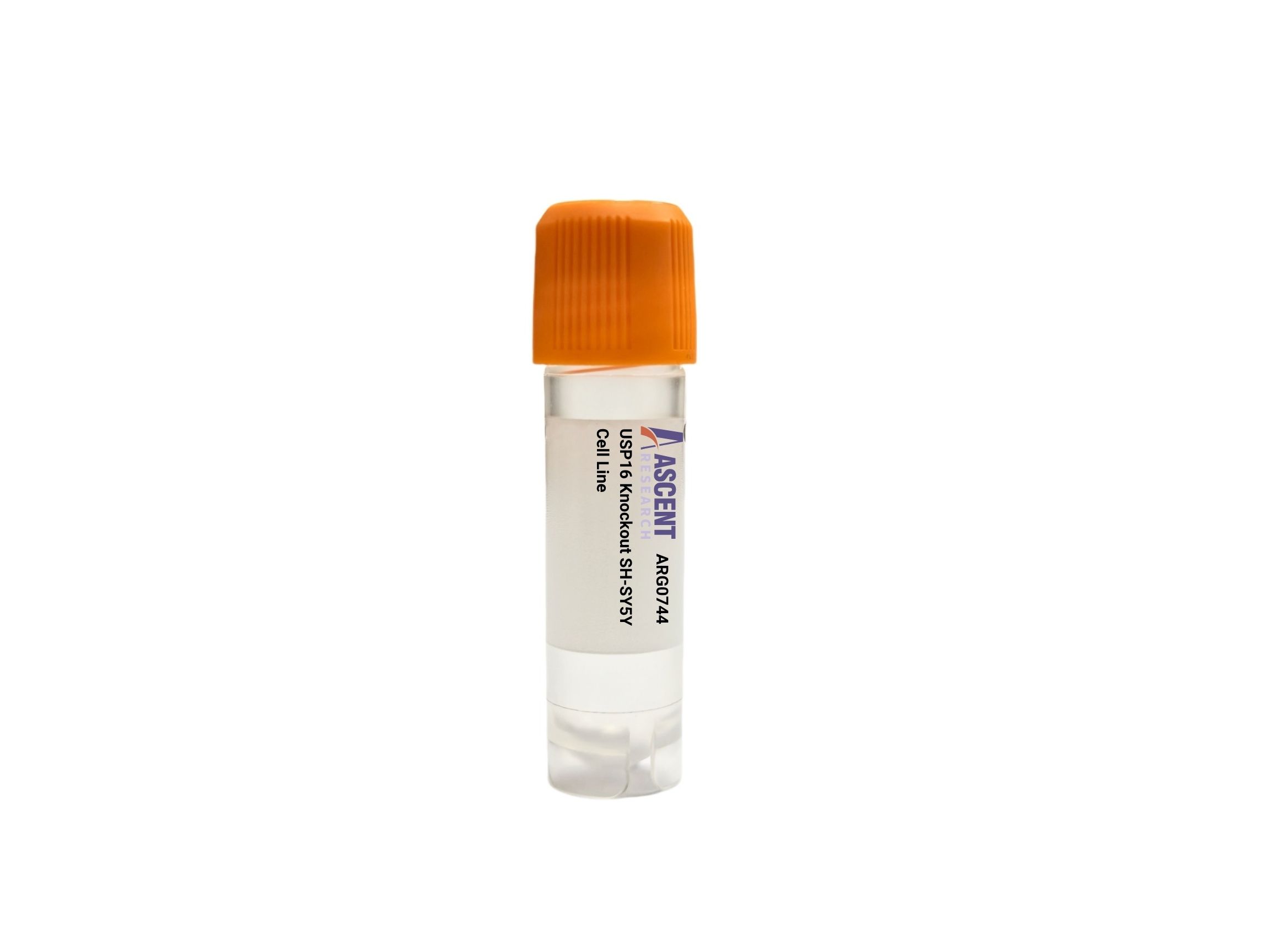
Cat. No. ARG0744

USP16 Knockout SH-SY5Y Cell Line

  • Product Type:

    Genome-edited Cells

  • Tissue Source:

    Bone (bone marrow)

  • Disease:

    Neuroblastoma

  • Gene Species:

    Homo sapiens (Human)

The USP16 Knockout SH-SY5Y Cell Line is a CRISPR/Cas9-edited knockout model derived from human neuroblastoma SH-SY5Y cells, enabling loss-of-function studies of the USP16 deubiquitinase. USP16 deubiquitinates histone H2A at lysine 119 (H2AK119ub), opposing PRC1-mediated gene silencing and regulating Polycomb target genes such as HOX clusters. The knockout leads to elevated H2AK119ub, enhanced PRC1 repression, and potential disruption of neuronal differentiation. This cell line is suitable for epigenetic regulation studies in neuroblastoma, neuronal differentiation assays using retinoic acid, Western blot and ChIP-qPCR for H2AK119ub, RT-qPCR analysis of Polycomb target genes, and drug screening for USP16 modulators. It offers a defined system to explore Polycomb-mediated chromatin remodeling and deubiquitinase function in neural development.

Inquire Now

In stock

Ships next business day


Ask a Question

Shipping Info:

Cryopreserved in vials and shipped on dry ice


Disclaimer:

For Research Use Only

  • Characteristics

    Host Cell

    SH-SY5Y

    Morphology

    Epithelial-like

    Age

    4 years

    Sex of Donor

    Female

    Gene Name

    USP16

    Gene Species

    Homo sapiens (Human)

    Gene Identifier

    NCBI Gene ID 10600

  • Culture Conditions

    Temperature

    37°C

    Atmosphere

    5% CO₂

  • Quality Control

    Sterility testing

    Daily monitoring confirms that the cells are free from bacterial, yeast, and fungal contamination.

    Mycoplasma testing

    Negative for mycoplasma through PCR analysis

    Pathogens

    Cells tested negative for HIV-1, HBV, and HCV.

  • Disclaimer

    Intended Use

    This product is intended for laboratory in vitro use only. lt is not intended for diagnostic, therapeutic, or clinical applications.

    Disclaimer

    Ascent Research endeavors to provide accurate and up-to-date product information. However, no warranties or representations are made regarding its completeness or reliability. References to scientific literature and patents are for informational purposes only, and the customer assumes sole responsibility for verifying their accuracy.

    By accepting this product, the customer acknowledges and agrees to assume all risks associated with its receipt, handling, storage, disposal, and use, including compliance with all applicable safety and environmental regulations and precautions. Relevant laws, regulations, and ethical guidelines must be followed in conducting any research, modifications, or derivatives derived from this product.

    This product is provided "AS IS", and except as expressly stated herein, Ascent Research disclaims all other warranties, express or implied. Under no circumstances shall Ascent Research, its affiliates, or representatives be liable for indirect, incidental, consequential, or punitive damages arising from the use of this material. While Ascent Research employs rigorous quality control measures, we shall not be held responsible for damages resulting from misidentification or misinterpretation of the provided materials.

Description

The USP16 Knockout SH-SY5Y Cell Line is a CRISPR/Cas9-edited knockout cell line derived from the SH-SY5Y human neuroblastoma cell line, designed to disrupt the USP16 gene. This model provides a stable loss-of-function system for investigating the role of the USP16 deubiquitinase in epigenetic regulation and neuroblastoma biology. By introducing a targeted gene disruption through CRISPR/Cas9 technology, this cell line enables researchers to study the functional consequences of USP16 ablation without off-target transgene expression.

SH-SY5Y cells are a widely used subclone of the SK-N-SH neuroblastoma line, originally isolated from a bone marrow biopsy of a pediatric neuroblastoma patient. These adherent cells exhibit a noradrenergic neuronal progenitor phenotype and retain the capacity to differentiate into mature neuron-like cells upon induction with retinoic acid or other neurotrophic factors. This makes SH-SY5Y an invaluable model for examining neuronal differentiation, neurodevelopmental signaling, and the molecular pathology of neuroblastoma. The cell line’s well-characterized genetic background and ease of culture further support its use in high-throughput and mechanistic studies.

The USP16 protein is a deubiquitinating enzyme with high specificity for histone H2A monoubiquitinated at lysine 119 (H2AK119ub), a mark catalyzed by the PRC1 complex. Deubiquitination by USP16 reverses this modification, alleviating PRC1-mediated transcriptional repression and enabling gene activation. USP16 physically interacts with PRC1 components Bmi1 and RING1B (RNF2) and influences the expression of downstream targets such as HOX gene clusters and genes essential for stem cell maintenance and differentiation. The enzyme’s activity is coupled with the broader Polycomb system, including PRC2 (marked by EZH2), thereby coordinating the dynamics of repressive chromatin states. The precise transcriptional regulation of USP16 remains undefined, but its enzymatic function places it as a key rheostat in H2A ubiquitination pathways.

In the SH-SY5Y neuroblastoma background, loss of USP16 leads to increased H2AK119 ubiquitination and enhanced PRC1-dependent gene silencing. This epigenetic shift can impair the transcriptional programs necessary for neuronal differentiation and may affect neuroblastoma cell growth characteristics. As a result, this knockout model enables dissection of how USP16-mediated deubiquitination balances Polycomb repression and activation during neural development and tumorigenesis. It is particularly suited for exploring the intersection between epigenetic dysregulation and neuroblastoma pathogenesis, offering insights into potential therapeutic vulnerabilities.

The USP16 Knockout SH-SY5Y Cell Line provides a versatile tool for a wide array of applications. Researchers can monitor H2AK119ub levels via Western blot and ChIP-qPCR, assess transcriptional changes in Polycomb target genes by RT-qPCR, and evaluate neuronal differentiation efficiency using retinoic acid-induced protocols. Functional assays for cell proliferation and apoptosis allow characterization of USP16’s role in cell fitness. Additionally, this line can be employed in high-throughput screening for small molecule modulators of USP16 activity or in combination with chemical inhibitors of Polycomb complexes. The model also facilitates studies of chromatin remodeling dynamics in neuroblastoma and other Polycomb-related contexts. For further information, please contact Ascent Research.


Reset Password

    Reach Us Questions? Click Me Here!

    Fill out the form below and a member of our team will contact you shortly!

    *Required field


      Reach Us

      Fill out the form below and a member of our team will contact you shortly!

      *Required field

      Product Inquiry (Optional)