Quick Order Cart

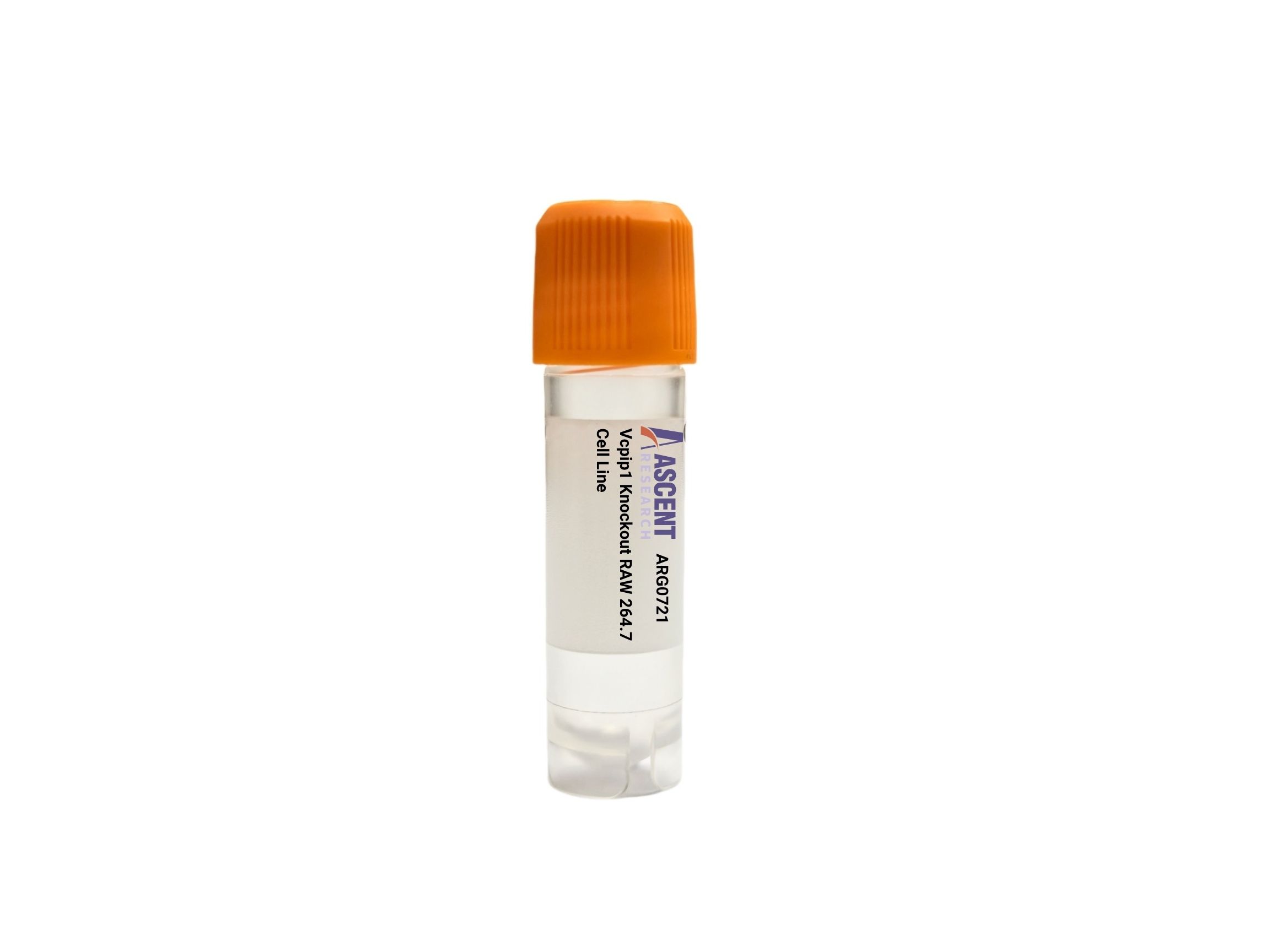
Cat. No. ARG0721

Vcpip1 Knockout RAW 264.7 Cell Line

  • Product Type:

    Genome-edited Cells

  • Tissue Source:

    Ascites

  • Disease:

    Leukemia

  • Gene Species:

    Mus musculus (Mouse)

The Vcpip1 Knockout RAW 264.7 Cell Line is a CRISPR/Cas9-edited mouse macrophage model with targeted disruption of the Vcpip1 gene, encoding the VCIP135 deubiquitinating cofactor for p97/VCP. This knockout cell line enables investigation of Golgi reassembly, ER-associated degradation, and ubiquitin-proteasome processes in an immune-competent monocyte/macrophage background. Vcpip1 functions downstream of CDK1 and ubiquitin signals, interacting with p97/VCP and p47 to modulate targets like GM130 and GRASP65. Researchers can employ this model for studying mitotic organelle dynamics, ER stress responses, macrophage immune function, and proteasome inhibitor drug screening.

Inquire Now

In stock

Ships next business day


Ask a Question

Shipping Info:

Cryopreserved in vials and shipped on dry ice


Disclaimer:

For Research Use Only

  • Characteristics

    Host Cell

    RAW 264.7

    Age

    Adult

    Sex of Donor

    Male

    Gene Name

    Vcpip1

    Gene Alias

    valosin containing protein (p97)/p47 complex interacting protein 1; VCIP135; mKIAA1850; 4932442A08; 5730421J18Rik; 5730538E15Rik

    Gene Species

    Mus musculus (Mouse)

    Gene Identifier

    NCBI Gene ID 70675

    Gene Type

    protein coding gene

  • Culture Conditions

    Temperature

    37°C

    Atmosphere

    5% CO₂

  • Quality Control

    Sterility testing

    Daily monitoring confirms that the cells are free from bacterial, yeast, and fungal contamination.

    Mycoplasma testing

    Negative for mycoplasma through PCR analysis

    Pathogens

    Cells tested negative for HIV-1, HBV, and HCV.

  • Disclaimer

    Intended Use

    This product is intended for laboratory in vitro use only. lt is not intended for diagnostic, therapeutic, or clinical applications.

    Disclaimer

    Ascent Research endeavors to provide accurate and up-to-date product information. However, no warranties or representations are made regarding its completeness or reliability. References to scientific literature and patents are for informational purposes only, and the customer assumes sole responsibility for verifying their accuracy.

    By accepting this product, the customer acknowledges and agrees to assume all risks associated with its receipt, handling, storage, disposal, and use, including compliance with all applicable safety and environmental regulations and precautions. Relevant laws, regulations, and ethical guidelines must be followed in conducting any research, modifications, or derivatives derived from this product.

    This product is provided "AS IS", and except as expressly stated herein, Ascent Research disclaims all other warranties, express or implied. Under no circumstances shall Ascent Research, its affiliates, or representatives be liable for indirect, incidental, consequential, or punitive damages arising from the use of this material. While Ascent Research employs rigorous quality control measures, we shall not be held responsible for damages resulting from misidentification or misinterpretation of the provided materials.

Description

The Vcpip1 Knockout RAW 264.7 Cell Line is a CRISPR/Cas9-mediated gene-disrupted macrophage model designed for functional dissection of Vcpip1 (VCIP135) in murine immune cells. This knockout cell line provides a stable loss-of-function system through targeted disruption of the Vcpip1 locus, eliminating VCIP135 deubiquitinase activity. It serves as an essential tool for advanced studies on post-mitotic Golgi membrane dynamics, endoplasmic reticulum-associated degradation (ERAD), and p97/VCP-dependent proteostatic pathways, offering a clean background for rigorous mechanistic investigations.

The parental RAW 264.7 cell line was originally derived from BALB/c mouse monocytes/macrophages via Abelson murine leukemia virus-induced transformation. These cells maintain hallmark macrophage functions, including robust phagocytosis, lipopolysaccharide-inducible cytokine secretion, and antigen presentation capabilities. Their well-documented responsiveness to immune agonists and metabolic stressors makes them a preferred platform for immunological research, and when paired with this Vcpip1 knockout, they enable targeted exploration of how VCIP135 impacts innate immune cell physiology and protein degradation networks.

Vcpip1 encodes the deubiquitinating enzyme VCIP135, a crucial cofactor for the hexameric ATPase p97/VCP. VCIP135 interacts directly with p97/VCP and its adaptor p47 to mediate deubiquitination of Golgi matrix proteins GM130 and GRASP65, thereby driving mitotic Golgi reassembly. In the ERAD pathway, VCIP135 collaborates with ER membrane components such as Derlin-1 and VIMP to extract and deubiquitinate misfolded proteins prior to proteasomal degradation. Upstream, CDK1 phosphorylation and ubiquitin-dependent signals regulate Vcpip1 activity, positioning it at a convergence point between cell cycle progression and cellular proteostasis.

In the context of RAW 264.7 macrophages, ablation of Vcpip1 disrupts p97/VCP-driven membrane trafficking and ERAD, likely leading to accumulation of polyubiquitinated proteins and aberrant Golgi morphology. These molecular defects can impair macrophage effector functions, including phagocytosis, inflammatory signaling, and proteostatic adaptation. This model therefore enables precise examination of how Vcpip1-dependent processes influence immune homeostasis and how their failure may contribute to macrophage-driven inflammation or immune dysfunction.

Typical applications of this cell line include immunofluorescence-based tracking of Golgi reassembly, Western blot analysis of p97/VCP and ERAD markers, and flow cytometric cell cycle profiling following synchronization. Functional assessments such as bacterial phagocytosis assays and ELISA-based cytokine quantification clarify Vcpip1??s role in macrophage-driven immune responses. The model is also suited for drug sensitivity studies using proteasome inhibitors or small molecules targeting the p97/VCP axis, supporting cancer and neurodegeneration research. For further inquiries or technical assistance, please contact Ascent Research.


Reset Password

    Reach Us Questions? Click Me Here!

    Fill out the form below and a member of our team will contact you shortly!

    *Required field


      Reach Us

      Fill out the form below and a member of our team will contact you shortly!

      *Required field

      Product Inquiry (Optional)