Security Notice: Please be aware of impersonation attempts using our company name
Legitimate communications from Ascent Research will only come from official @ascentresearch.com email addresses.
Quick Order Cart

Cat. No. ARG0323

YWHAZ Knockout HEK293T Cell Line

  • Product Type:

    Genome-edited Cells

  • Tissue Source:

    Kidney

  • Gene Species:

    Homo sapiens (Human)

The YWHAZ Knockout HEK293T Cell Line is a CRISPR/Cas9-edited human cell line with targeted disruption of the 14-3-3 protein zeta gene. Derived from the HEK293T epithelial host, this loss-of-function model eliminates YWHAZ scaffold activity, perturbing key signaling networks including AKT/mTOR, RAF/MEK/ERK, and Hippo pathways that govern apoptosis, cell cycle, and metabolism. The cell line is suited for investigating 14-3-3-dependent regulation of client proteins such as BAD, FOXO factors, YAP, and p53. Applications include cancer, neurodegeneration, and metabolic disease research, employing techniques such as western blotting, co-immunoprecipitation, and functional assays for apoptosis, transcriptional activity, and drug response. The knockout line facilitates YWHAZ target validation and pathway dissection in a biologically relevant cellular context.

Inquire Now

In stock

Ships next business day


Ask a Question

Shipping Info:

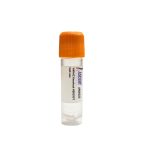
Cryopreserved in vials and shipped on dry ice


Disclaimer:

For Research Use Only

  • Characteristics

    Host Cell

    HEK293T

    Age

    Fetus

    Sex of Donor

    Female

    Gene Name

    YWHAZ

    Gene Species

    Homo sapiens (Human)

    Gene Identifier

    NCBI Gene ID 7534

  • Culture Conditions

    Temperature

    37°C

    Atmosphere

    5% CO₂

  • Quality Control

    Sterility testing

    Daily monitoring confirms that the cells are free from bacterial, yeast, and fungal contamination.

    Mycoplasma testing

    Negative for mycoplasma through PCR analysis

    Pathogens

    Cells tested negative for HIV-1, HBV, and HCV.

  • Disclaimer

    Intended Use

    This product is intended for laboratory in vitro use only. lt is not intended for diagnostic, therapeutic, or clinical applications.

    Disclaimer

    Ascent Research endeavors to provide accurate and up-to-date product information. However, no warranties or representations are made regarding its completeness or reliability. References to scientific literature and patents are for informational purposes only, and the customer assumes sole responsibility for verifying their accuracy.

    By accepting this product, the customer acknowledges and agrees to assume all risks associated with its receipt, handling, storage, disposal, and use, including compliance with all applicable safety and environmental regulations and precautions. Relevant laws, regulations, and ethical guidelines must be followed in conducting any research, modifications, or derivatives derived from this product.

    This product is provided "AS IS", and except as expressly stated herein, Ascent Research disclaims all other warranties, express or implied. Under no circumstances shall Ascent Research, its affiliates, or representatives be liable for indirect, incidental, consequential, or punitive damages arising from the use of this material. While Ascent Research employs rigorous quality control measures, we shall not be held responsible for damages resulting from misidentification or misinterpretation of the provided materials.

Description

The YWHAZ Knockout HEK293T Cell Line is a genetically engineered human cell line generated by CRISPR/Cas9-mediated disruption of the YWHAZ gene. This loss-of-function model abolishes expression of the 14-3-3 protein zeta/delta (YWHAZ), providing a defined system for investigating YWHAZ-dependent signaling networks. The cell line is supplied as a ready-to-use knockout cell pool derived from the widely used HEK293T background, enabling rigorous functional studies without the need for transient knockdown approaches.

HEK293T cells are human embryonic kidney epithelial cells immortalized with adenovirus type 5 DNA and stably expressing the SV40 large T antigen. This derivative of the original HEK293 line supports high-level episomal replication of vectors containing the SV40 origin of replication, making it a preferred host for recombinant protein expression and lentiviral/retroviral production. Additionally, HEK293T cells retain key signaling machinery, including responsive PI3K/AKT, MAPK/ERK, and Hippo pathways, rendering them an appropriate background for dissecting YWHAZ-mediated signal transduction.

YWHAZ encodes the 14-3-3 protein zeta, a phosphoserine/phosphothreonine-binding scaffold that governs the subcellular localization and activity of many client proteins. It is phosphorylated by AKT, PKA, and PKC downstream of growth factor receptors, and subsequently interacts with effectors such as BAD, FOXO transcription factors, YAP, TSC2, and p53. Through these interactions, YWHAZ modulates PI3K/AKT and MAPK/ERK pro-survival signaling, Hippo pathway-mediated growth control, and p53-dependent cell cycle arrest. By tethering RAF1 and PI3K, YWHAZ facilitates signal propagation, while its binding to MDM2 influences p53 stability. Disruption of YWHAZ scaffolding dismantles these regulatory complexes, leading to altered apoptosis (via BAX/BCL2/Caspase-3), cell cycle progression (through CDC25 and p27), and metabolic reprogramming.

In the HEK293T background, constitutive expression of SV40 large T antigen dampens p53 and Rb checkpoints, rendering the cells reliant on growth factor-driven survival signals. YWHAZ knockout in this context is predicted to attenuate AKT and ERK phosphorylation, de-repress FOXO-mediated transcription, and disrupt YAP cytoplasmic retention, thereby sensitizing cells to apoptotic inducers. The high transfectability of HEK293T also facilitates rescue experiments using exogenous YWHAZ mutants, enabling detailed structure-function analyses.

Researchers can employ this knockout cell line to delineate YWHAZ-dependent mechanisms in cancer, neurodegeneration, and metabolic diseases. Standard assays include western blotting for phospho-AKT (Ser473) or phospho-ERK1/2 (Thr202/Tyr204), co-immunoprecipitation of RAF1 or p53, and immunofluorescence for YAP nuclear translocation. Functional readouts such as flow cytometry for Annexin V staining, RT-qPCR for FOXO1/3 target genes, and luciferase-based reporters for FOXO or YAP transcriptional activity provide quantitative pathway insights. Migration and drug sensitivity assays further extend the model??s utility in drug discovery and target validation studies. For further details, please contact Ascent Research.


Reset Password

    Reach Us Questions? Click Me Here!

    Fill out the form below and a member of our team will contact you shortly!

    *Required field


      Reach Us

      Fill out the form below and a member of our team will contact you shortly!

      *Required field

      Product Inquiry (Optional)