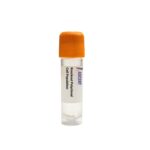
The CREBBP Knockout Raji Polyclonal Cells represent a CRISPR/Cas9-edited polyclonal knockout cell population targeting the CREBBP gene in the Homo sapiens Raji B-lymphocyte cell line. This loss-of-function model is generated without isolation of single-cell clones, yielding a heterogeneous population with diverse editing events that collectively abolish CREBBP protein function. The product serves as a pooled resource for studying gene disruption effects, suitable for applications requiring population-level analyses of epigenetic regulation and signaling in a B-cell lymphoma background.
Raji cells are an Epstein?CBarr virus (EBV)-positive lymphoblastoid cell line originally derived from a Burkitt lymphoma patient. As a neoplastic B-lymphocyte model, they retain hallmark features of aggressive B-cell malignancies, including constitutive NF-??B activity, active B-cell receptor signaling, and rapid proliferation. Their well-characterized genomic and transcriptomic landscape makes them a robust platform for investigating oncogenic mechanisms and therapeutic vulnerabilities in lymphoma.
CREBBP encodes a histone acetyltransferase (HAT) and transcriptional coactivator that serves as a critical node in multiple signaling pathways. It directly acetylates histones H3 and H4 to relax chromatin, and acetylates key transcription factors such as TP53, RELA (NF-??B p65), and STAT1/3, modulating their activity. CREBBP is recruited by phosphorylated CREB downstream of cAMP/PKA signaling, interacts with p300 (EP300), and forms complexes with nuclear receptors like NR3C1 (glucocorticoid receptor). It transcriptionally regulates downstream targets including CDKN1A (p21), BCL2L11 (BIM), and MYC, thereby influencing cell cycle progression, apoptosis, and differentiation. Upstream kinases such as AKT and MAPK further modulate its activity.
In the context of Raji Burkitt lymphoma cells, loss of CREBBP HAT activity impairs acetylation-dependent transcription of tumor-suppressive genes and may enhance oncogenic NF-??B and B-cell receptor pathway outputs. This polyclonal knockout model thus provides a physiologically relevant system to examine how CREBBP deficiency contributes to lymphomagenesis, including its role in diffuse large B-cell lymphoma (DLBCL) and acute lymphoblastic leukemia (ALL). Researchers can dissect CREBBP??s functional interactions with cooperating epigenetic modifiers and assess its impact on global histone acetylation patterns.
Typical research applications encompass functional genomics, epigenetic drug screening, and mechanistic studies of transcription. The model is compatible with assays such as chromatin immunoprecipitation?Cquantitative PCR (ChIP-qPCR) for acetylated histones, co-immunoprecipitation for protein complexes (e.g., CREBBP/p300), HAT activity measurements, and flow cytometry for apoptosis and cell cycle analysis. It also supports reporter gene assays (CREB-responsive luciferase), RNA-seq profiling, and drug sensitivity testing with HDAC inhibitors. For additional information or customization requests, please contact Ascent Research.