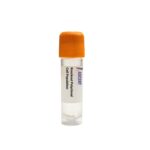
The CSNK2A2 Knockout Raji Polyclonal Cells are a CRISPR/Cas9-edited polyclonal knockout cell population with disrupted CSNK2A2 gene expression in Raji B lymphocytes. This loss-of-function model targets the alpha’ catalytic subunit of the serine/threonine kinase CK2, enabling interrogation of CK2-dependent signaling in a human Burkitt lymphoma background. The polyclonal format avoids clonal bias while providing stable gene disruption.
Raji cells originate from an EBV-positive Burkitt lymphoma and represent mature B lymphocytes with rapid proliferation, intrinsic antibody production, and immune surveillance relevance. They serve as a standard model for B-cell malignancy research, virus?Chost interaction studies, and oncogenic transformation driven by EBV.
CSNK2A2 associates with CSNK2B and CSNK2A1 to form the CK2 holoenzyme, a constitutively active kinase that phosphorylates numerous substrates including AKT1, PTEN, NF-kappaB p65 (RELA), beta-catenin (CTNNB1), p53 (TP53), c-Myc, CDC25, topoisomerase II, and HDACs. Upstream signals from EGF, TNF-alpha, IL-6, Wnt ligands, and stress pathways activate CK2, which in turn regulates key oncogenic and tumor-suppressive networks: PI3K/AKT/mTOR, Wnt/beta-catenin, NF-kappaB, and p53 signaling, as well as DNA repair and cell cycle progression. This positions CSNK2A2 as a central node controlling proliferation, apoptosis inhibition, and survival.
In Burkitt lymphoma and other B-cell malignancies, elevated CK2 activity sustains transformation by stabilizing beta-catenin, hyperactivating AKT signaling, and promoting NF-kappaB-dependent transcription. The EBV-positive Raji background further highlights CK2??s role in c-Myc deregulation and p53 suppression. Knocking out CSNK2A2 in these cells provides a physiologically relevant platform to dissect kinase dependency in lymphoma cell growth and apoptosis resistance.
Applications include drug target validation with CK2 inhibitors like CX-4945, phospho-proteomic profiling, and functional assays using flow cytometry for apoptosis and cell cycle analysis, proliferation measurements, and migration studies. Standard techniques such as Western blotting for CSNK2A2 and phospho-substrates, RT-qPCR, co-immunoprecipitation, and NF-kappaB reporter assays are readily applicable. For further details, contact Ascent Research.