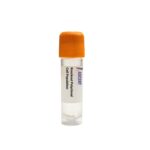
CYB561D2 Knockout Raji Polyclonal Cells are a CRISPR/Cas9-edited polyclonal population featuring targeted disruption of the CYB561D2 gene in the human Raji B lymphocyte cell line. This loss-of-function model enables investigation of CYB561D2-dependent iron homeostasis, redox regulation, and tumor suppression without introducing specific editing patterns or clonal selection.
The Raji host cell line is an Epstein-Barr virus (EBV)-positive Burkitt’s lymphoma-derived B lymphoblastoid line adapted to suspension culture with high transfection efficiency. Widely used in immunology and cancer research, Raji cells serve as a robust platform for studying lymphomagenesis, immune signaling, and antigen presentation in a malignant B-cell context.
CYB561D2 encodes a lysosomal ferrireductase that catalyzes the reduction of Fe3+ to Fe2+, a critical step for iron mobilization from lysosomes. This enzyme is transcriptionally regulated by TP53 (p53) and is further modulated by DNA methylation, histone deacetylation, and potentially E2F transcription factors. CYB561D2 interacts with heme b, ascorbic acid, ferritin, and iron regulatory proteins (IRPs), and functions within a signaling network that includes downstream effectors such as intracellular Fe2+, reactive oxygen species (ROS), lipid peroxidation, and GPX4 activity. Its loss disrupts iron release, contributing to elevated oxidative stress and impaired p53-mediated growth suppression.
In the Raji B-cell lymphoma background, CYB561D2 knockout provides a physiologically relevant model to dissect the interplay between iron metabolism and lymphomagenesis. The engineered cells allow researchers to examine how dysregulated lysosomal iron handling influences ferroptosis sensitivity, tumor suppressor pathways, and oncogenic signaling in a well-characterized lymphoid malignancy.
These polyclonal knockout cells are suitable for functional studies of iron-dependent cell death, drug screening with ferroptosis inducers (e.g., erastin, RSL3), and mechanistic investigations using Western blotting, RT-qPCR, flow cytometry for labile iron pool analysis, lipid peroxidation assays (C11-BODIPY), ROS detection (DCFH-DA), and immunofluorescence for lysosomal markers (LAMP1). For further technical details, please contact Ascent Research.