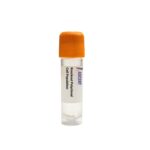
The CYTH3 Knockout Raji Polyclonal Cells are a CRISPR/Cas9-edited polyclonal knockout cell population targeting the CYTH3 gene in human Raji B lymphocytes. This pooled knockout model avoids clonal selection bias and enables direct analysis of cytohesin-3 function. The CRISPR/Cas9-mediated gene disruption generates a loss-of-function system suitable for interrogating ARF6-dependent signaling networks without chemical inhibitors or RNA interference.
The Raji cell line is an EBV-positive Burkitt??s lymphoma-derived immortalized human B lymphocyte, widely employed as a model for B-cell malignancies, immune synapse formation, and humoral immunity. Originating from a patient with African Burkitt??s lymphoma, these cells exhibit characteristic B-cell surface markers and retain active signaling networks pivotal for B-cell activation, adhesion, and migration. Their robust growth in suspension culture and amenability to genetic manipulation make Raji cells a preferred host for studying genes implicated in lymphomagenesis and B-cell dysfunction. The CYTH3 knockout in this background provides a direct means to interrogate cytohesin-dependent processes in a disease-relevant lymphoblastoid context.
CYTH3 (cytohesin-3) is a guanine nucleotide exchange factor (GEF) for ARF6, promoting GTP loading. It is activated by PIP3 produced downstream of receptor tyrosine kinases and GPCRs. CYTH3 interacts with GRASP and ARF6, facilitating ARF6-GTP-driven recruitment of PIP5K to generate PI(4,5)P2. This lipid modification orchestrates actin remodeling via Rac1 and modulates integrin activation, thereby controlling adhesion and migration. The PIP3??CYTH3??ARF6-GTP??PIP5K??PI(4,5)P2 pathway is central to endosomal trafficking and membrane dynamics.
In Raji B cells, CYTH3-mediated ARF6 activation is essential for integrin-dependent adhesion, chemotaxis, homing, and immune synapse formation. Knocking out CYTH3 in this polyclonal population reveals the gene??s contributions to these processes without clonal adaptation. The Raji model, derived from EBV-positive Burkitt??s lymphoma, is highly relevant for studying B-cell malignancies and autoimmune disorders where cytohesin/ARF6 signaling is dysregulated.
Typical applications include Western blotting, RT-qPCR, integrin activation flow cytometry, cell adhesion and transwell migration assays, immunofluorescence for actin, and ARF6 GTP pulldown. These assays facilitate drug target validation for B-cell lymphomas and mechanistic studies of cytohesin family GEFs in immune cell biology. For additional information, please contact Ascent Research.