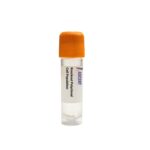
The FAM83D Knockout Raji Polyclonal Cells are a CRISPR/Cas9-edited polyclonal knockout cell population targeting FAM83D in the Raji human B-lymphocyte line. This loss-of-function model enables study of the scaffold protein FAM83D, implicated in oncogenic WNT/??-catenin signaling. The polyclonal pool provides a heterogeneous population of edited cells, minimizing clonal variation for robust functional analysis in a B-cell lymphoma context.
The Raji host cell line is an EBV-positive B-cell line derived from a Burkitt lymphoma patient, displaying cancerous B lymphocyte features. It is widely used in immunological and cancer research, particularly for studying B-cell lymphomagenesis. Raji cells maintain active WNT signaling and express EBV latent proteins, making them an ideal background for dissecting FAM83D-driven oncogenic programs in high-throughput assays.
FAM83D is a scaffold protein that activates WNT/??-catenin signaling by interacting with the ??-catenin destruction complex components FBXW7 and AXIN1. This interaction impedes ??-catenin phosphorylation and degradation, leading to its stabilization and nuclear translocation. In the nucleus, ??-catenin partners with TCF/LEF transcription factors to induce target genes such as c-MYC and Cyclin D1. Upstream, WNT ligands (e.g., WNT3A) bind Frizzled receptors and Dishevelled, inhibiting GSK-3?? to further enhance pathway activity. The signaling network also involves casein kinase 1 alpha (CSNK1A1).
In Raji B-cell lymphoma, FAM83D knockout disrupts a critical oncogenic axis driving proliferation and migration. Aberrant WNT/??-catenin signaling is common in B-cell malignancies, with FAM83D amplification linked to aggressive disease. This model allows direct assessment of FAM83D’s role in lymphomagenesis and downstream pathway dependencies. Researchers can examine the impact on WNT signaling, cell cycle, and invasiveness in a hematopoietic background that retains ubiquitin-proteasome machinery relevant to FBXW7-mediated regulation.
This knockout cell product supports cancer biology, WNT pathway studies, functional genomics in B-cell malignancies, and drug target validation. Key assays include Western blotting for ??-catenin and c-MYC, RT-qPCR for WNT target genes, flow cytometry for cell cycle analysis, transwell migration assays, and co-immunoprecipitation to assess FAM83D?CFBXW7 interactions. Phospho-signaling readouts (e.g., phospho-LRP6) and RNA-seq profiling further characterize pathway changes. For more information, contact Ascent Research.