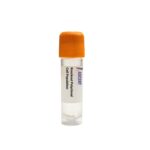
The FRK Knockout Raji Polyclonal Cells provide a CRISPR/Cas9-edited, genetically heterogeneous population with targeted disruption of the FRK gene, avoiding the clonal selection biases inherent to single-cell-derived knockouts. This polyclonal loss-of-function model enables robust investigation of FRK-dependent processes in a human B lymphocyte background, suitable for applications in tumor biology and signal transduction research.
Raji cells derive from an EBV-positive human Burkitt??s lymphoma and represent a well-characterized B-cell lymphoma model. They exhibit germinal center B-cell features and are widely used for studying B-cell malignancies, immune signaling, and drug responses, providing a robust platform for knockout-based dissection of oncogenic pathways.
FRK is a Src family non-receptor tyrosine kinase that negatively regulates proliferation, adhesion, and differentiation. It is activated by integrin engagement and the insulin receptor and modulated by IL-6. FRK suppresses downstream signaling by inhibiting phosphorylation of STAT3, Akt, and ERK. It interacts with adaptor proteins IRS-1, SHC1, and GRB2, as well as the PI3K p85 subunit and phosphatase PTPN11, thereby attenuating PI3K-Akt and MAPK/ERK pathways and influencing cytoskeletal dynamics via paxillin and p130Cas.
In Raji Burkitt??s lymphoma cells, deletion of FRK is expected to abrogate its tumor-suppressive functions, leading to disinhibition of Src family kinase signaling and hyperactivation of STAT3 and Akt effectors. This mimics oncogenic progression and provides a relevant system to dissect FRK??s role in lymphomagenesis, test the sensitivity of B-cell malignancies to multi-kinase inhibitors such as dasatinib, and clarify how EBV latency products interface with cellular tyrosine kinase networks.
Researchers can employ this model in mechanistic studies using Western blotting to confirm loss of FRK protein and measure phosphorylation changes in STAT3 (Tyr705), Akt (Ser473), and ERK (Thr202/Tyr204); quantitative PCR to assess transcriptional adaptation; flow cytometry-based cell cycle profiling and annexin V apoptosis assays; and real-time proliferation monitoring. Co-immunoprecipitation experiments enable mapping of FRK interactors like STAT3, IRS-1, and PTPN11 under knockout conditions, while phospho-kinase arrays offer a high-throughput view of altered signaling. Drug dose-response assays with dasatinib or other Src/ABL inhibitors facilitate target validation and combination therapy exploration. For further information, please contact Ascent Research.