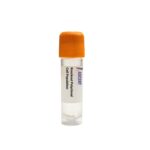
This product is a CRISPR/Cas9-edited polyclonal knockout cell population targeting the LAMA4 gene in the Raji B lymphocyte cell line. The polyclonal format provides a heterogeneous pool of loss-of-function variants, enabling robust assessment of LAMA4-dependent phenotypes without clonal bias. The gene disruption is introduced via CRISPR/Cas9 genome editing, generating a diverse knockout population that recapitulates gene ablation effects across a cellular ensemble. This model serves as a versatile tool for investigating laminin alpha 4 function in lymphocyte biology and related pathologies.
The Raji cell line is an Epstein-Barr virus-positive B lymphocyte model derived from a Burkitt’s lymphoma patient. Raji cells retain key characteristics of transformed B cells, including surface immunoglobulin expression and the capacity for robust proliferation in suspension culture. Their lymphoblastoid morphology and well-characterized signaling landscape make them a workhorse for immunological studies, particularly those exploring B cell receptor signaling, oncogenic mechanisms, and viral transformation. This host background is especially suited to examine the role of extracellular matrix interactions in lymphoid malignancies.
LAMA4 encodes laminin subunit alpha 4, a constituent of laminin-8 and laminin-9 heterotrimers that mediate cell adhesion and migration through engagement of integrin receptors such as ??6??1 (ITGA6/ITGB1) and ??3??1 (ITGA3/ITGB1). The ligand-receptor interaction triggers downstream signaling cascades involving focal adhesion kinase (FAK) and SRC family kinases, which converge on the PI3K-AKT and MAPK1/3 (ERK2/1) pathways. Transcriptional regulation of LAMA4 is influenced by growth factors including TGFB1, EGF, and FGF2, as well as NFKB, while its functional activity interfaces with dystroglycan (DAG1) and partner laminin chains LAMB1 and LAMC1. This node links extracellular matrices to intracellular survival, proliferation, and motility signals.
In the Raji B lymphocyte context, LAMA4 likely participates in tissue homing and microenvironmental crosstalk by facilitating integrin-mediated adhesion to ECM proteins. Knockout of LAMA4 is expected to perturb these interactions, potentially impairing cell adhesion, migration, and downstream signaling events such as FAK and AKT phosphorylation. Given that Raji cells are derived from a B-cell lymphoma, this knockout model offers a relevant system to dissect laminin-dependent contributions to lymphoma cell dissemination and metastatic behavior, as well as to screen for dependencies linked to ECM-receptor pathways.
Researchers can employ this polyclonal knockout model to investigate LAMA4 function in B lymphocyte adhesion, migration, and integrin signaling through assays such as cell adhesion and migration assays, Western blotting for phosphorylated FAK or AKT, and flow cytometry to assess integrin surface expression. Immunofluorescence can visualize laminin subunit localization, while RNA-seq enables transcriptome-wide analysis of LAMA4 loss. Additional applications include drug sensitivity screens targeting ECM-integrin signaling axes and studies of lymphoma progression where LAMA4 may influence tissue invasion. For further details on product specifications and availability, please contact Ascent Research.