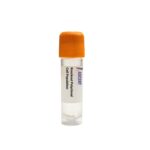
The LIFR Knockout Raji Polyclonal Cells are a CRISPR/Cas9-edited polyclonal knockout cell population engineered from the Raji human B-lymphocyte cell line, featuring disruption of the LIFR gene to create a loss-of-function model. This polyclonal population provides a robust tool for investigating LIFR-dependent signaling in a physiologically relevant cellular context.
The Raji parental cell line is derived from a Burkitt’s lymphoma patient and is characterized by its B-lymphocyte origin, suspension growth, and Epstein-Barr virus (EBV) positivity. Widely utilized in immunology and oncology, Raji cells are valued for their capacity for antibody production, antigen presentation, and as a model system for B-cell malignancies and EBV-associated lymphomagenesis, offering a relevant platform for studying lymphoproliferative disorders.
LIFR encodes the leukemia inhibitory factor receptor alpha subunit, which pairs with the gp130 (IL6ST) co-receptor to form a high-affinity receptor complex for LIF, oncostatin M (OSM), ciliary neurotrophic factor (CNTF), and cardiotrophin-1 (CT-1), as well as participating in signaling by interleukin-6 (IL-6) and interleukin-11 (IL-11) through shared gp130 usage. Ligand binding triggers activation of receptor-associated Janus kinases JAK1, JAK2, and TYK2, leading to phosphorylation of STAT3 and STAT1, which dimerize and translocate to the nucleus to regulate target genes such as SOCS3, BCL2L1, MYC, and CCND1. Concurrently, the receptor complex engages the SHP2-GRB2-RAS axis to stimulate MAPK cascades and recruits PI3K to activate AKT and mTOR pathways, integrating signals that control cell proliferation, differentiation, survival, and apoptosis.
In the Raji B-lymphoma background, LIFR-mediated signaling is implicated in modulating cell survival, proliferation, and immune functions, with potential cross-talk to EBV-driven oncogenic programs. Disruption of LIFR in these cells permits dissection of the contribution of LIF/gp130 cytokine family signaling to B-cell malignancy phenotypes, including uncontrolled growth and resistance to apoptosis, and provides a system to explore the interplay between host cytokine pathways and viral latency.
This polyclonal LIFR knockout model is suitable for a variety of research applications, including mechanistic studies of JAK/STAT, MAPK, and PI3K/AKT pathway activation using phospho-STAT3 Western blotting, STAT3 luciferase reporter assays, and co-immunoprecipitation of LIFR-gp130 complexes; functional analyses of proliferation (MTT assay), apoptosis (flow cytometry-based assays), and migration/invasion; and drug screening of small-molecule inhibitors targeting gp130 cytokine signaling. It also serves as a powerful tool for investigating B-cell malignancies and EBV-associated lymphomas. For further technical information or assistance with experimental design, please contact Ascent Research.