Security Notice: Please be aware of impersonation attempts using our company name
Legitimate communications from Ascent Research will only come from official @ascentresearch.com email addresses.
Quick Order Cart

Cat. No. ARG2045

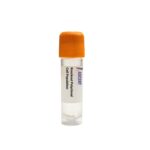
LUC7L Knockout Raji Polyclonal Cells

  • Product Type:

    Polyclonal Cell Population

  • Species:

    Homo sapiens (Human)

  • Tissue Source:

    Bone

  • Disease:

    Burkitt lymphoma

The LUC7L Knockout Raji Polyclonal Cells are a CRISPR/Cas9-edited polyclonal knockout population in the Raji B lymphoblast line, providing a loss-of-function model for the U1 snRNP splicing factor LUC7L. LUC7L interacts with U1 snRNA, U1-70K, and Sm proteins to mediate 5?? splice site recognition. Knockout of LUC7L in this EBV-positive Burkitt??s lymphoma background disrupts spliceosome assembly, permitting investigation of splicing-dependent pathways in B-cell malignancies. Applications include RNA-seq for splicing analysis, co-immunoprecipitation of U1 components, and flow cytometric profiling of B-cell markers.

Inquire Now

In stock

Ships next business day


Ask a Question

Shipping Info:

Cryopreserved in vials and shipped on dry ice


Disclaimer:

For Research Use Only

  • Characteristics

    Host Cell

    Raji

    Cell Type

    B cell line

    Sex of Donor

    Male

    Age

    11 years

    Derived From Site

    In situ; Maxilla

    Gene Name

    LUC7L

    Gene Identifier

    NCBI Gene ID 55692

    Morphology

    Lymphoblast-like

    Growth Mode

    Suspension

    Storage

    Liquid nitrogen (LN2)

  • Culture Conditions

    Growth medium

    RPMI 1640

    Supplement(s)

    10% Fetal Bovine Serum, 1% Penicillin-Streptomycin Solution

    Temperature

    37°C

    Atmosphere

    5% CO₂

  • Quality Control

    Sterility testing

    The bacterial, yeast, and fungi are not detected in these cells by daily monitor.

    Mycoplasma testing

    Negative for mycoplasma through PCR analysis

  • Disclaimer

    Intended Use

    This product is intended for laboratory in vitro use only. lt is not intended for diagnostic, therapeutic, or clinical applications.

    Disclaimer

    Ascent Research endeavors to provide accurate and up-to-date product information. However, no warranties or representations are made regarding its completeness or reliability. References to scientific literature and patents are for informational purposes only, and the customer assumes sole responsibility for verifying their accuracy.

    By accepting this product, the customer acknowledges and agrees to assume all risks associated with its receipt, handling, storage, disposal, and use, including compliance with all applicable safety and environmental regulations and precautions. Relevant laws, regulations, and ethical guidelines must be followed in conducting any research, modifications, or derivatives derived from this product.

    This product is provided "AS IS", and except as expressly stated herein, Ascent Research disclaims all other warranties, express or implied. Under no circumstances shall Ascent Research, its affiliates, or representatives be liable for indirect, incidental, consequential, or punitive damages arising from the use of this material. While Ascent Research employs rigorous quality control measures, we shall not be held responsible for damages resulting from misidentification or misinterpretation of the provided materials.

Description

The LUC7L Knockout Raji Polyclonal Cells are a CRISPR/Cas9-edited polyclonal knockout cell population derived from the Raji B lymphoblast line, engineered for loss of LUC7L function. LUC7L encodes a U1 snRNP-associated pre-mRNA splicing factor essential for 5?? splice site recognition. This heterogeneous pool of gene-disrupted cells avoids clonal biases and provides a robust model for studying splicing regulation. The CRISPR-mediated gene disruption introduces random indel mutations via non-homologous end joining, resulting in functional knockout without predetermining the editing pattern. Such polyclonal models are ideal for unbiased functional genomics screens and spliceosome studies.

Raji cells are an Epstein-Barr virus (EBV)-positive B lymphoblast line derived from Burkitt??s lymphoma, retaining key features of humoral immunity. They constitutively express B-cell markers and exhibit continuous proliferation driven by viral oncoproteins. Widely used in cancer biology and immunology, Raji cells offer a lymphoid context for examining how splicing factor perturbations affect B-cell physiology. Their suspension growth, high transfectability, and responsiveness to immune stimuli make them suitable for large-scale knockout studies, including arrayed pooled screens and detailed molecular phenotyping.

LUC7L functions within the U1 snRNP complex, interacting with U1 snRNA, U1-70K, U1-A, U1-C, and Sm proteins to define 5?? splice site selection. Upstream, its expression is controlled by general transcription factors and splicing-regulatory signals. Downstream, LUC7L modulates the splicing of numerous pre-mRNAs, including those encoding cell cycle regulators and apoptosis factors. Loss of LUC7L impedes U1 snRNP recruitment to nascent transcripts, causing intron retention and alternative exon usage. Consequently, the assembly of subsequent spliceosomal complexes (U2, U4/U6, U5) is compromised, and snRNP biogenesis via the SMN complex may be indirectly affected.

In the Raji B-lymphoma background, LUC7L knockout illuminates the pathological consequences of U1 snRNP dysfunction. Splicing factor mutations are prevalent in B-cell malignancies, and this model allows dissection of how altered 5?? splice site recognition promotes oncogenic gene expression. Disruption of LUC7L-dependent splicing may alter mRNA isoforms of critical lymphoma drivers or tumor suppressors, potentially influencing proliferation, survival, and immune evasion. The EBV-positive status further enables study of virus-host spliceosome interactions, which may reveal dependencies in latency maintenance. Thus, this polyclonal knockout system serves as a physiologically relevant platform for investigating splicing-driven mechanisms in lymphomagenesis.

Typical experimental applications include RT-qPCR and RNA-seq for transcriptome-wide splicing analysis, western blotting for LUC7L protein depletion, and co-immunoprecipitation of U1 snRNP components. Flow cytometry can assess changes in B-cell surface markers and apoptosis induction upon splicing disruption. These cells are also amenable to functional complementation assays, drug sensitivity screens with spliceosome or B-cell receptor inhibitors, and pooled CRISPR modifier screens to identify genetic interactions. Collectively, these tools empower in-depth studies of pre-mRNA processing in B-cell biology and cancer. For additional details, please contact Ascent Research.


Reset Password

    Reach Us Questions? Click Me Here!

    Fill out the form below and a member of our team will contact you shortly!

    *Required field


      Reach Us

      Fill out the form below and a member of our team will contact you shortly!

      *Required field

      Product Inquiry (Optional)