Security Notice: Please be aware of impersonation attempts using our company name
Legitimate communications from Ascent Research will only come from official @ascentresearch.com email addresses.
Quick Order Cart

Cat. No. ARG1934

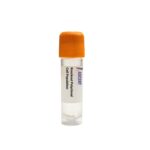
MCCC1 Knockout Raji Polyclonal Cells

  • Product Type:

    Polyclonal Cell Population

  • Species:

    Homo sapiens (Human)

  • Tissue Source:

    Bone

  • Disease:

    Burkitt lymphoma

The MCCC1 Knockout Raji Polyclonal Cells are a CRISPR/Cas9-edited polyclonal knockout population of human Raji B lymphocytes, providing a loss-of-function model for the MCCC1 gene. Disruption of MCCC1 eliminates 3-methylcrotonyl-CoA carboxylase activity, blocking leucine catabolism and altering mitochondrial acetyl-CoA and mevalonate pathway output. This product enables modeling of 3-methylcrotonyl-CoA carboxylase deficiency, investigation of branched-chain amino acid metabolism in B cell lymphoma, and screening for metabolic enzyme inhibitors. The polyclonal format ensures robust, reproducible phenotypes for applications including metabolomics, mitochondrial stress testing, and inhibitor studies.

Inquire Now

In stock

Ships next business day


Ask a Question

Shipping Info:

Cryopreserved in vials and shipped on dry ice


Disclaimer:

For Research Use Only

  • Characteristics

    Host Cell

    Raji

    Cell Type

    B cell line

    Sex of Donor

    Male

    Age

    11 years

    Derived From Site

    In situ; Maxilla

    Gene Name

    MCCC1

    Gene Identifier

    NCBI Gene ID 56922

    Morphology

    Lymphoblast-like

    Growth Mode

    Suspension

    Storage

    Liquid nitrogen (LN2)

  • Culture Conditions

    Growth medium

    RPMI 1640

    Supplement(s)

    10% Fetal Bovine Serum, 1% Penicillin-Streptomycin Solution

    Temperature

    37°C

    Atmosphere

    5% CO₂

  • Quality Control

    Sterility testing

    The bacterial, yeast, and fungi are not detected in these cells by daily monitor.

    Mycoplasma testing

    Negative for mycoplasma through PCR analysis

  • Disclaimer

    Intended Use

    This product is intended for laboratory in vitro use only. lt is not intended for diagnostic, therapeutic, or clinical applications.

    Disclaimer

    Ascent Research endeavors to provide accurate and up-to-date product information. However, no warranties or representations are made regarding its completeness or reliability. References to scientific literature and patents are for informational purposes only, and the customer assumes sole responsibility for verifying their accuracy.

    By accepting this product, the customer acknowledges and agrees to assume all risks associated with its receipt, handling, storage, disposal, and use, including compliance with all applicable safety and environmental regulations and precautions. Relevant laws, regulations, and ethical guidelines must be followed in conducting any research, modifications, or derivatives derived from this product.

    This product is provided "AS IS", and except as expressly stated herein, Ascent Research disclaims all other warranties, express or implied. Under no circumstances shall Ascent Research, its affiliates, or representatives be liable for indirect, incidental, consequential, or punitive damages arising from the use of this material. While Ascent Research employs rigorous quality control measures, we shall not be held responsible for damages resulting from misidentification or misinterpretation of the provided materials.

Description

The MCCC1 Knockout Raji Polyclonal Cells are a CRISPR/Cas9-edited polyclonal knockout cell population derived from the human Raji B lymphocyte suspension line, designed for targeted disruption of the MCCC1 gene. This polyclonal format provides a heterogeneous pool of gene-edited cells, minimizing clonal artifacts and offering a robust loss-of-function model for investigating leucine catabolism and mitochondrial carboxylase biology. The product is immediately available for functional studies without the need for single-cell cloning, ensuring rapid experimental deployment.

Raji cells are a well-established B lymphocyte model originating from a Nigerian patient with Burkitt lymphoma. These suspension lymphoblastoid cells maintain characteristic B cell features, including surface immunoglobulin expression, active B cell receptor signaling, and Epstein-Barr virus (EBV) latency, making them a standard platform for studying B cell biology, lymphoma pathogenesis, and viral oncogenesis. Their rapid proliferation and genetic tractability facilitate reproducible metabolic and pharmacological assays.

The MCCC1 gene encodes the alpha subunit of 3-methylcrotonyl-CoA carboxylase (MCC), a biotin-dependent mitochondrial enzyme that catalyzes the carboxylation of 3-methylcrotonyl-CoA to 3-methylglutaconyl-CoA, a committed step in leucine degradation. This reaction lies within the branched-chain amino acid catabolic pathway and intersects the mevalonate pathway via HMG-CoA, supplying acetyl-CoA and acetoacetate for energy production and lipid synthesis. MCCC1 function is regulated upstream by PPARGC1A-mediated mitochondrial biogenesis, mTORC1 nutrient sensing, and biotin availability. The active MCC holoenzyme requires interaction with the MCCC2 beta subunit and covalent biotin attachment. Downstream, MCCC1 activity influences HMG-CoA lyase?Cmediated generation of acetyl-CoA and mevalonate pathway intermediates, thereby linking leucine metabolism to cellular energetics and isoprenoid biosynthesis.

In Raji B lymphoma cells, MCCC1 disruption eliminates 3-methylcrotonyl-CoA carboxylase activity, blocking the conversion of 3-methylcrotonyl-CoA to 3-methylglutaconyl-CoA. This leads to accumulation of upstream metabolites and attenuates the supply of acetyl-CoA and HMG-CoA, potentially impairing mitochondrial function and lipid homeostasis. Given the reliance of many lymphomas on branched-chain amino acid catabolism for growth and survival, this polyclonal knockout model offers a powerful system to dissect metabolic vulnerabilities in B cell malignancies. It also enables exploration of how EBV latency and B cell receptor signaling intersect with leucine degradation pathways and mitochondrial metabolism.

These MCCC1 knockout polyclonal Raji cells are suited for modeling 3-methylcrotonyl-CoA carboxylase deficiency, characterizing leucine catabolic flux, and screening for MCC inhibitors. Assays include LC-MS metabolomics, MCC activity measurements, Seahorse mitochondrial stress tests, MTT viability under leucine deprivation, and Western blot/RT-qPCR. Additional uses cover biotin-dependent carboxylase biology, metabolic adaptations in lymphoma, and mevalonate pathway crosstalk. For further details, contact Ascent Research.


Reset Password

    Reach Us Questions? Click Me Here!

    Fill out the form below and a member of our team will contact you shortly!

    *Required field


      Reach Us

      Fill out the form below and a member of our team will contact you shortly!

      *Required field

      Product Inquiry (Optional)