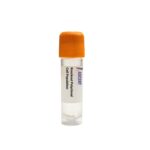
The MFSD10 Knockout Raji Polyclonal Cells are a CRISPR/Cas9-edited polyclonal knockout cell population derived from the Raji B lymphocyte line. This loss-of-function model disrupts the MFSD10 gene, encoding a putative organic anion transporter of the major facilitator superfamily. The polyclonal format provides a heterogeneous pool for functional studies without clonal selection. Through CRISPR/Cas9-mediated gene disruption, this product enables investigation of transporter-mediated drug efflux and metabolic regulation in B cells.
Raji cells are a human Burkitt lymphoma-derived B lymphocyte line, EBV-positive and expressing CD19, CD20, and surface IgM. Widely used in immunology and oncology, they serve as a relevant model for B-cell malignancies, lymphocyte signaling, and drug response. This host provides a context for examining solute carrier transporter function in lymphoma, particularly in chemoresistance and xenobiotic metabolism.
MFSD10 is predicted to mediate organic anion efflux, acting within the major facilitator superfamily and related SLC transporters. Its regulation may involve nuclear receptors PXR and CAR, or oxidative stress pathways. Downstream, loss of MFSD10 can alter intracellular metabolite levels and impair xenobiotic extrusion. Although interacting partners are not well characterized, it may coordinate with other solute carriers, contributing to cellular detoxification networks.
In the Raji B-cell context, MFSD10 knockout is expected to reduce organic anion efflux, potentially modulating chemotherapeutic sensitivity and metabolic homeostasis. This model is valuable for dissecting drug resistance mechanisms in lymphoma, as many chemotherapeutics are transporter substrates. Additionally, links to type 2 diabetes and metabolic syndrome make it relevant for exploring immune cell transporter dysfunction in systemic metabolic disorders.
Typical uses include functional genomics of transporter proteins, drug efflux assays, and chemoresistance studies in Burkitt lymphoma. Assays such as Western blotting and RT-qPCR confirm knockout, while fluorescent substrate efflux and chemosensitivity assays probe transporter activity and drug response. Additional applications include flow cytometry for apoptosis and metabolite profiling to assess intracellular changes. These cells facilitate research on organic anion transport in B-cell biology. For further information, contact Ascent Research.