Security Notice: Please be aware of impersonation attempts using our company name
Legitimate communications from Ascent Research will only come from official @ascentresearch.com email addresses.
Quick Order Cart

Cat. No. ARG1941

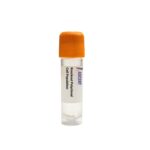
MLH1 Knockout Raji Polyclonal Cells

  • Product Type:

    Polyclonal Cell Population

  • Species:

    Homo sapiens (Human)

  • Tissue Source:

    Bone

  • Disease:

    Burkitt lymphoma

The MLH1 Knockout Raji Polyclonal Cells are a CRISPR/Cas9-edited polyclonal knockout population of the Raji B lymphocyte cell line, enabling loss-of-function studies of the DNA mismatch repair (MMR) protein MLH1. Derived from an EBV-positive Burkitt's lymphoma, these suspension cells offer a model for exploring MMR deficiency in B-cell malignancies. MLH1 forms the MutL?? heterodimer with PMS2 to coordinate repair of replication errors; its disruption leads to microsatellite instability and hypermutation. Applications include MMR functional assays, drug sensitivity screening with temozolomide or immune checkpoint inhibitors, and genomic instability research.

Inquire Now

In stock

Ships next business day


Ask a Question

Shipping Info:

Cryopreserved in vials and shipped on dry ice


Disclaimer:

For Research Use Only

  • Characteristics

    Host Cell

    Raji

    Cell Type

    B cell line

    Sex of Donor

    Male

    Age

    11 years

    Derived From Site

    In situ; Maxilla

    Gene Name

    MLH1

    Gene Identifier

    NCBI Gene ID 4292

    Morphology

    Lymphoblast-like

    Growth Mode

    Suspension

    Storage

    Liquid nitrogen (LN2)

  • Culture Conditions

    Growth medium

    RPMI 1640

    Supplement(s)

    10% Fetal Bovine Serum, 1% Penicillin-Streptomycin Solution

    Temperature

    37°C

    Atmosphere

    5% CO₂

  • Quality Control

    Sterility testing

    The bacterial, yeast, and fungi are not detected in these cells by daily monitor.

    Mycoplasma testing

    Negative for mycoplasma through PCR analysis

  • Disclaimer

    Intended Use

    This product is intended for laboratory in vitro use only. lt is not intended for diagnostic, therapeutic, or clinical applications.

    Disclaimer

    Ascent Research endeavors to provide accurate and up-to-date product information. However, no warranties or representations are made regarding its completeness or reliability. References to scientific literature and patents are for informational purposes only, and the customer assumes sole responsibility for verifying their accuracy.

    By accepting this product, the customer acknowledges and agrees to assume all risks associated with its receipt, handling, storage, disposal, and use, including compliance with all applicable safety and environmental regulations and precautions. Relevant laws, regulations, and ethical guidelines must be followed in conducting any research, modifications, or derivatives derived from this product.

    This product is provided "AS IS", and except as expressly stated herein, Ascent Research disclaims all other warranties, express or implied. Under no circumstances shall Ascent Research, its affiliates, or representatives be liable for indirect, incidental, consequential, or punitive damages arising from the use of this material. While Ascent Research employs rigorous quality control measures, we shall not be held responsible for damages resulting from misidentification or misinterpretation of the provided materials.

Description

The MLH1 Knockout Raji Polyclonal Cells are a CRISPR/Cas9-edited polyclonal knockout cell population derived from the Raji B lymphocyte cell line, designed to disrupt the MLH1 gene. This gene-edited product provides a heterogeneous pool of cells carrying targeted disruptions in MLH1, enabling loss-of-function studies without clonal isolation. Serving as a genetically defined model for DNA mismatch repair (MMR) deficiency, the polyclonal format preserves biological variability and facilitates robust experimental comparisons against wild-type or control populations. This knockout model is intended for use in a broad spectrum of functional genomics studies, drug response profiling, and mechanistic investigations of genomic instability.

The parental Raji cell line is an EBV-positive B lymphocyte line derived from Burkitt’s lymphoma. As a suspension hematopoietic model, Raji cells display B-cell features like immunoglobulin expression and are used in immunology and oncology to study humoral immunity, lymphomagenesis, and viral oncogenesis. The EBV background enables exploration of interactions between viral latency and DNA repair pathways.

The MLH1 gene encodes a core component of the MutL?? heterodimer, partnering with PMS2 to coordinate post-replicative MMR. Upon mismatch recognition by MutS?? (MSH2-MSH6) or MutS??, MLH1-PMS2 is recruited and directs Exonuclease 1 (EXO1)-mediated excision, PCNA-dependent resynthesis, and ligation. MLH1 also associates with PMS1 and MLH3. Its transcription is controlled by E2F1 and TP53, while epigenetic silencing via promoter hypermethylation commonly inactivates MLH1 in cancers. MLH1 loss abolishes MMR, causing microsatellite instability and elevated mutation rates.

In the Raji B-cell context, MLH1 knockout generates a MMR-deficient model for investigating hematopoietic malignancies and Lynch syndrome-associated tumors. This system facilitates studies on how MMR loss drives lymphomagenesis and how B-cell-specific processes such as somatic hypermutation interface with MMR status. It can be used to probe MSI-driven oncogenesis in lymphoid cells and synthetic lethalities or drug sensitivities stemming from MMR deficiency.

Researchers can use these polyclonal knockout cells for microsatellite instability assays, mutation frequency analysis, and cell viability screening with DNA-damaging agents like temozolomide. They are suitable for immune checkpoint inhibitor response studies due to MSI-driven immunogenicity. Standard techniques??western blotting, RT-qPCR, flow cytometry, and immunofluorescence??enable detailed characterization of MLH1 expression and MMR activity. For additional information or a quote, contact Ascent Research.


Reset Password

    Reach Us Questions? Click Me Here!

    Fill out the form below and a member of our team will contact you shortly!

    *Required field


      Reach Us

      Fill out the form below and a member of our team will contact you shortly!

      *Required field

      Product Inquiry (Optional)