Security Notice: Please be aware of impersonation attempts using our company name
Legitimate communications from Ascent Research will only come from official @ascentresearch.com email addresses.
Quick Order Cart

Cat. No. ARG1768

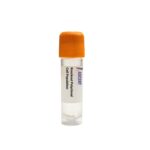
MPDZ Knockout Raji Polyclonal Cells

  • Product Type:

    Polyclonal Cell Population

  • Species:

    Homo sapiens (Human)

  • Tissue Source:

    Bone

  • Disease:

    Burkitt lymphoma

MPDZ Knockout Raji Polyclonal Cells are a CRISPR/Cas9-edited polyclonal knockout cell population derived from human Raji B lymphoblastoid cells, offering a loss-of-function model for the scaffold protein MPDZ. MPDZ organizes tight junction-associated signaling complexes and regulates cell polarity, proliferation, and adhesion through interactions with key partners including claudin-1, JAM-A, and components of the Hippo pathway such as YAP/TAZ. This knockout model enables investigation of MPDZ's role in B lymphocyte adhesion, signaling, and lymphoma pathogenesis, particularly in Burkitt lymphoma. Researchers can employ it for Western blotting, immunofluorescence, flow cytometry, and functional assays to dissect MPDZ-dependent pathways in hematopoietic cells.

Inquire Now

In stock

Ships next business day


Ask a Question

Shipping Info:

Cryopreserved in vials and shipped on dry ice


Disclaimer:

For Research Use Only

  • Characteristics

    Host Cell

    Raji

    Cell Type

    B cell line

    Sex of Donor

    Male

    Age

    11 years

    Derived From Site

    In situ; Maxilla

    Gene Name

    MPDZ

    Gene Identifier

    NCBI Gene ID 8777

    Morphology

    Lymphoblast-like

    Growth Mode

    Suspension

    Storage

    Liquid nitrogen (LN2)

  • Culture Conditions

    Growth medium

    RPMI 1640

    Supplement(s)

    10% Fetal Bovine Serum, 1% Penicillin-Streptomycin Solution

    Temperature

    37°C

    Atmosphere

    5% CO₂

  • Quality Control

    Sterility testing

    The bacterial, yeast, and fungi are not detected in these cells by daily monitor.

    Mycoplasma testing

    Negative for mycoplasma through PCR analysis

  • Disclaimer

    Intended Use

    This product is intended for laboratory in vitro use only. lt is not intended for diagnostic, therapeutic, or clinical applications.

    Disclaimer

    Ascent Research endeavors to provide accurate and up-to-date product information. However, no warranties or representations are made regarding its completeness or reliability. References to scientific literature and patents are for informational purposes only, and the customer assumes sole responsibility for verifying their accuracy.

    By accepting this product, the customer acknowledges and agrees to assume all risks associated with its receipt, handling, storage, disposal, and use, including compliance with all applicable safety and environmental regulations and precautions. Relevant laws, regulations, and ethical guidelines must be followed in conducting any research, modifications, or derivatives derived from this product.

    This product is provided "AS IS", and except as expressly stated herein, Ascent Research disclaims all other warranties, express or implied. Under no circumstances shall Ascent Research, its affiliates, or representatives be liable for indirect, incidental, consequential, or punitive damages arising from the use of this material. While Ascent Research employs rigorous quality control measures, we shall not be held responsible for damages resulting from misidentification or misinterpretation of the provided materials.

Description

The MPDZ Knockout Raji Polyclonal Cells constitute a CRISPR/Cas9-edited polyclonal knockout cell population derived from the Raji B lymphoblastoid cell line, engineered for the disruption of the MPDZ gene. This loss-of-function model enables systematic investigation of MPDZ-dependent processes without fixed clonal selection, preserving functional diversity within the knockout pool.

Raji is an EBV-positive Burkitt lymphoma-derived human B lymphocyte cell line widely used in immunology and oncology research. These cells exhibit characteristics of mature B cells, including robust antibody production and antigen presentation capabilities, and are extensively employed for studies of B cell signaling, lymphomagenesis, and immune response modulation.

MPDZ (MUPP1) is a multi-PDZ domain scaffold protein that localizes to tight junctions and organizes signaling complexes, critically regulating cell polarity, proliferation, and adhesion. It functions by scaffolding components of the Hippo pathway, including MST1, LATS1, and YAP/TAZ, and by modulating Rho GTPase signaling through interactions with RhoA, c-Src, and the Scribble complex. Upstream signals such as PKA phosphorylation and Wnt ligands, mediated by transmembrane proteins like claudin-1 and JAM-A, converge on MPDZ to control downstream transcriptional programs and cytoskeletal dynamics. MPDZ further interacts with key adaptors and effectors including PLEKHA7, Angiomotin, PTEN, and MAGI2, integrating multiple pathways that govern cellular architecture and growth control.

In the Raji B lymphoblastoid model, MPDZ disruption provides a valuable system to study the role of tight junction-associated scaffolds in hematopoietic cells, where their functions extend beyond classical epithelial junctions to influence lymphocyte adhesion, polarity, and signaling pathways relevant to malignancy. Given the links between MPDZ and Burkitt lymphoma as well as other cancers, this knockout model is particularly suited for dissecting its contributions to B cell proliferation, survival, and transformation, potentially revealing new aspects of Hippo pathway regulation in lymphomas.

Researchers can employ this polyclonal knockout cell population for a range of targeted studies, including Western blot analysis of MPDZ and its downstream effectors, immunofluorescence localization of tight junction proteins, flow cytometric assessment of adhesion markers, RhoA activation assays, and YAP/TAZ phosphorylation and localization analyses. Functional assays such as cell proliferation and migration, coupled with transcriptomic approaches like RNA-seq, enable comprehensive dissection of MPDZ-dependent networks in B cell biology and lymphoma pathogenesis. For further technical details on the MPDZ Knockout Raji Polyclonal Cells, please contact Ascent Research.


Reset Password

    Reach Us Questions? Click Me Here!

    Fill out the form below and a member of our team will contact you shortly!

    *Required field


      Reach Us

      Fill out the form below and a member of our team will contact you shortly!

      *Required field

      Product Inquiry (Optional)