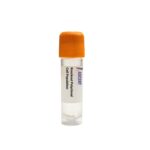
The MTPN Knockout Raji Polyclonal Cells are a CRISPR/Cas9-edited polyclonal knockout cell population derived from the human Raji B lymphoblast line, with disrupted MTPN to generate a loss-of-function model. This heterogeneous pool enables functional studies without clonal isolation, targeting myotrophin??s role in NF-??B signaling in B-cell malignancies.
Raji cells are a suspension-adapted, EBV-positive human Burkitt??s lymphoma line exhibiting a mature B-cell phenotype and constitutive NF-??B activation driven by viral latency products. Widely used for B-cell lymphoma research, they provide a defined background for studying oncogenic signal transduction and evaluating therapeutic compounds.
Myotrophin (MTPN) enhances NF-??B transcriptional activity by binding to the RELA (p65) subunit. Upstream signals such as TNF-?? and IL-1?? activate the IKK??/?? complex, leading to I??B?? phosphorylation and degradation, which liberates NF-??B1 (p50)/RELA dimers. MTPN interacts with nuclear RELA to boost transcription of target genes including IL-6, CCL2, Bcl-xL, and cyclin D1. This mechanism amplifies pro-survival and proliferative signals, contributing to lymphomagenesis and cellular hypertrophy.
In Raji cells, where NF-??B is constitutively active, MTPN knockout is anticipated to dampen the expression of key downstream targets such as IL-6 and cyclin D1, resulting in reduced proliferation and increased apoptosis sensitivity. This model enables dissection of myotrophin??s contribution to Burkitt??s lymphoma pathogenesis and the broader NF-??B network in a B-cell context.
Typical applications include functional genomics of NF-??B signaling in lymphoma, drug target validation for MTPN, and inhibitor screening. Researchers can employ Western blotting for phospho-p65/I??B??, RT-qPCR for NF-??B targets, CellTiter-Glo proliferation assays, Annexin V apoptosis assays, and flow cytometry for B-cell markers. RNA-seq and drug sensitivity profiling with NF-??B inhibitors are also supported. For additional details, contact Ascent Research.