Security Notice: Please be aware of impersonation attempts using our company name
Legitimate communications from Ascent Research will only come from official @ascentresearch.com email addresses.
Quick Order Cart

Cat. No. ARG1816

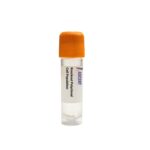
N4BP1 Knockout Raji Polyclonal Cells

  • Product Type:

    Polyclonal Cell Population

  • Species:

    Homo sapiens (Human)

  • Tissue Source:

    Bone

  • Disease:

    Burkitt lymphoma

The N4BP1 Knockout Raji Polyclonal Cells are a CRISPR/Cas9-edited polyclonal knockout population of Raji B lymphocytes with disrupted N4BP1, a negative regulator of NF-??B signaling and interferon-inducible RNase that restricts retroviruses. Loss of N4BP1 removes its inhibition on the IKK complex, promoting NF-??B-driven inflammation. This model facilitates study of B-cell innate responses, antiviral immunity, and NF-??B-mediated lymphomagenesis. Applications include cytokine ELISA, luciferase assays, viral replication studies, and RNA-seq for transcriptomic changes.

Inquire Now

In stock

Ships next business day


Ask a Question

Shipping Info:

Cryopreserved in vials and shipped on dry ice


Disclaimer:

For Research Use Only

  • Characteristics

    Host Cell

    Raji

    Cell Type

    B cell line

    Sex of Donor

    Male

    Age

    11 years

    Derived From Site

    In situ; Maxilla

    Gene Name

    N4BP1

    Gene Identifier

    NCBI Gene ID 9683

    Morphology

    Lymphoblast-like

    Growth Mode

    Suspension

    Storage

    Liquid nitrogen (LN2)

  • Culture Conditions

    Growth medium

    RPMI 1640

    Supplement(s)

    10% Fetal Bovine Serum, 1% Penicillin-Streptomycin Solution

    Temperature

    37°C

    Atmosphere

    5% CO₂

  • Quality Control

    Sterility testing

    The bacterial, yeast, and fungi are not detected in these cells by daily monitor.

    Mycoplasma testing

    Negative for mycoplasma through PCR analysis

  • Disclaimer

    Intended Use

    This product is intended for laboratory in vitro use only. lt is not intended for diagnostic, therapeutic, or clinical applications.

    Disclaimer

    Ascent Research endeavors to provide accurate and up-to-date product information. However, no warranties or representations are made regarding its completeness or reliability. References to scientific literature and patents are for informational purposes only, and the customer assumes sole responsibility for verifying their accuracy.

    By accepting this product, the customer acknowledges and agrees to assume all risks associated with its receipt, handling, storage, disposal, and use, including compliance with all applicable safety and environmental regulations and precautions. Relevant laws, regulations, and ethical guidelines must be followed in conducting any research, modifications, or derivatives derived from this product.

    This product is provided "AS IS", and except as expressly stated herein, Ascent Research disclaims all other warranties, express or implied. Under no circumstances shall Ascent Research, its affiliates, or representatives be liable for indirect, incidental, consequential, or punitive damages arising from the use of this material. While Ascent Research employs rigorous quality control measures, we shall not be held responsible for damages resulting from misidentification or misinterpretation of the provided materials.

Description

The N4BP1 Knockout Raji Polyclonal Cells product comprises a population of Raji B lymphocytes that have undergone CRISPR/Cas9-mediated disruption of the N4BP1 gene, resulting in a heterogeneous polyclonal knockout cell pool. As a polyclonal population, these cells collectively harbor diverse gene-editing events, providing a robust model for studying population-level effects of N4BP1 loss without the clonal biases present in single-cell-derived lines. The gene disruption abolishes N4BP1 function, establishing a powerful loss-of-function platform for interrogating its cellular roles.

Raji cells are a human B lymphocyte cell line derived from a Burkitt lymphoma patient and retain key characteristics of mature B cells, including surface immunoglobulin expression and antigen-presenting capacity. Their origin in a lymphomagenic context and their inherent NF-??B pathway alterations make them particularly relevant for studying B-cell signaling and immune responses. This host line provides a biologically pertinent background for examining N4BP1??s activities in a B-cell environment.

N4BP1 functions as a critical negative regulator of the NF-??B signaling pathway by interacting with and inhibiting the IKK complex, which consists of IKK??, IKK??, and NEMO. This inhibition blocks I??B?? phosphorylation, thereby retaining the p65/p50 NF-??B dimer in the cytoplasm and dampening transcription of pro-inflammatory target genes such as IL-6 and TNF-??. Upstream, N4BP1 expression is induced by type I interferons (IFN-??/??) and viral infection, positioning it as a feedback attenuator of innate immune responses. Additionally, N4BP1 acts as an interferon-inducible ribonuclease that directly degrades viral RNA, thereby restricting retroviral replication. Its activity is modulated through interactions with E3 ubiquitin ligases NEDD4 and ITCH, which likely regulate its stability or post-translational modifications.

In B lymphocytes, NF-??B signaling is essential for survival, proliferation, and antibody production; its dysregulation is implicated in lymphomagenesis and immune disorders. N4BP1 knockout in Raji cells provides a unique model to dissect how loss of this negative regulator influences NF-??B activation dynamics, cytokine profiles, and cellular responses to viral challenges. Since Burkitt lymphoma is etiologically linked to Epstein-Barr virus infection, this model enables exploration of N4BP1??s antiviral functions within a B-cell context where viral RNA sensing and innate defense are particularly relevant.

Researchers can employ these knockout cells to quantitatively measure NF-??B activity using luciferase reporter assays, evaluate IL-6 and TNF-?? production via ELISA, and assess antiviral capacity through viral replication assays. Comparative RNA-seq between wild-type and N4BP1-disrupted Raji cells can illuminate transcriptomic shifts in interferon-stimulated genes and inflammatory mediators, while flow cytometry facilitates profiling of B-cell activation markers. This polyclonal knockout cell population is well-suited for high-throughput screens and pooled functional studies. For further information or to discuss your specific experimental needs, please contact Ascent Research.


Reset Password

    Reach Us Questions? Click Me Here!

    Fill out the form below and a member of our team will contact you shortly!

    *Required field


      Reach Us

      Fill out the form below and a member of our team will contact you shortly!

      *Required field

      Product Inquiry (Optional)