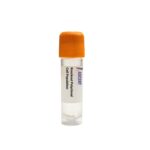
The NLK Knockout Raji Polyclonal Cells represent a CRISPR/Cas9-edited polyclonal population derived from the Raji B lymphocyte line, engineered for loss-of-function studies of the Nemo-like kinase (NLK) gene. This product pool, generated by disrupting NLK via non-homologous end joining, ablates kinase expression across a heterogeneous cell population, providing a robust model for investigating NLK-dependent signaling without relying on clonal selection artifacts. Researchers can interrogate acute and chronic consequences of NLK ablation in a lymphoid context, ensuring that observed phenotypes reflect broad gene disruption rather than single-clone idiosyncrasies. The use of polyclonal knockout cells avoids the confounding influence of clonal variability and minimizes adaptation artifacts, making it suitable for high-throughput screening, functional genomics, and pathway dissection.
Derived from a Burkitt??s lymphoma patient, the Raji host cell line is an Epstein-Barr virus (EBV)-positive human B lymphocyte model widely employed in immunology, cancer biology, and virology research. Raji cells retain features of mature B cells, including surface immunoglobulin expression and robust antibody secretion, and they recapitulate key aspects of adaptive immune responses. Their malignant origin renders them particularly useful for studying B cell lymphomagenesis, oncogenic signaling, and therapeutic resistance. The EBV-positive background further enables investigation of viral?Chost interactions and latent infection mechanisms. In this knockout product, the disruption of NLK within Raji cells allows dissection of how a pivotal kinase intersects with both B cell receptor-driven pathways and viral latency programs, providing a physiologically relevant platform for signal transduction studies.
NLK functions as a serine/threonine kinase that negatively regulates Wnt/??-catenin signaling by phosphorylating TCF/LEF transcription factors such as TCF7L2 and LEF1, impairing their DNA-binding ability and thus repressing Wnt target gene expression. Upstream, NLK is activated by TGF-??-activated kinase 1 (TAK1/MAP3K7) in response to IL-1??, Wnt ligands, and MAPK pathway inputs, and it forms complexes with TAB1, AXIN, and NKD. Beyond the Wnt axis, NLK modulates MAPK and NF-??B cascades, phosphorylating additional downstream effectors including STAT3, CREB, and c-Myb. Consequently, NLK serves as a signaling hub that integrates multiple extracellular cues to control proliferation, differentiation, and apoptosis. Its dual role in curtailing Wnt-driven transcription while fine-tuning stress and immune responses makes NLK a critical node in cellular homeostasis.
In the Raji B lymphocyte context, NLK knockout is expected to alter the balance of Wnt/??-catenin activity, potentially unleashing TCF/LEF-mediated transcription and promoting oncogenic programs relevant to Burkitt??s lymphoma pathogenesis. Dysregulation of NLK has been implicated in various malignancies, including neuroblastoma and hepatocellular carcinoma, and its intersection with MAPK and NF-??B pathways suggests broader roles in immune signaling and inflammation. By removing NLK, this model enables systematic analysis of how loss of Wnt negative feedback reshapes B cell growth, survival, and EBV latency maintenance. The polyclonal nature of the knockout pool ensures that emergent phenotypes are not masked by compensatory mutations, providing a faithful representation of NLK function within a lymphoma microenvironment.
This NLK knockout model supports a suite of research applications, including mechanistic studies of Wnt/??-catenin signaling, cancer cell signaling network dissection, drug target validation, and developmental biology investigations. It is compatible with representative assays such as Western blotting for NLK and ??-catenin, TCF/LEF luciferase reporter assays to gauge pathway activity, RT-qPCR profiling of Wnt target genes, and co-immunoprecipitation to probe NLK?CTCF interactions. Additionally, proliferation and apoptosis assays enable functional readouts of NLK loss. By combining a disease-relevant host background with reliable gene disruption, this product empowers researchers to dissect kinase-dependent signaling and accelerate therapeutic discovery. For further details or technical support, please contact Ascent Research.