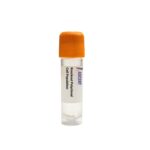
The NT5C2 Knockout Raji Polyclonal Cells product is a heterogeneous Raji cell population with CRISPR/Cas9-mediated disruption of the NT5C2 gene. This polyclonal knockout pool offers a loss-of-function model to study NT5C2 roles in purine nucleotide homeostasis and drug sensitivity, without clonal selection biases.
The Raji cell line is a B-lymphocyte model originating from an EBV-positive Burkitt lymphoma. Widely used in immunology and cancer research, Raji cells exhibit mature B-cell characteristics and robust proliferation, making them suitable for investigating B-cell signaling, lymphomagenesis, and drug mechanisms. The NT5C2 knockout in this lymphoid background provides a relevant context for purine metabolism studies.
NT5C2 encodes a cytosolic 5??-nucleotidase that dephosphorylates IMP and GMP to inosine and guanosine, key steps in purine salvage and nucleotide pool regulation. The enzyme is controlled by substrate availability, the ATP/ADP ratio, and NRF2-mediated transcription. It functions within a network including IMPDH, HGPRT, and PRPP; its products feed into salvage via HGPRT, while IMPDH channels IMP toward XMP and guanine nucleotides. NT5C2 activity directly influences 6-thioguanine nucleotide accumulation and sensitivity to thiopurine drugs like 6-mercaptopurine. Activating mutations increase dephosphorylation of these metabolites, driving resistance in relapsed acute lymphoblastic leukemia.
In the Raji B-cell lymphoma model, NT5C2 knockout provides a unique platform to investigate purine metabolism and drug resistance within a malignant lymphoid environment. The EBV-positive background may uncover virus?Chost metabolic interactions influencing nucleotide homeostasis. By eliminating NT5C2 activity, researchers can assess its specific role in modulating IMP, GMP, and downstream purine pools, and evaluate how such changes affect lymphoma cell proliferation, apoptosis, and sensitivity to thiopurine agents. This model is valuable for studying thiopurine resistance mechanisms relevant to both lymphoma and leukemia, and for identifying compensatory pathways that sustain nucleotide balance in the absence of NT5C2.
The polyclonal knockout cells are ideally suited for a range of experimental workflows, including direct NT5C2 enzyme activity measurements, HPLC-based quantification of intracellular nucleotides, and dose?Cresponse assays with 6-thioguanine and 6-mercaptopurine. Complementary molecular analyses can be performed via western blotting, RT-qPCR, and flow cytometric assessment of apoptosis and cell cycle progression. The model also enables high-throughput inhibitor screening and genome-wide CRISPR screens to identify synthetic lethal interactions. The mixed population avoids clonal artifacts, ensuring that observed phenotypes reflect general gene function. For additional information and to place orders, please contact Ascent Research.