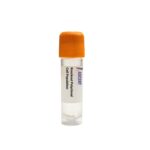
The NXT2 Knockout Raji Polyclonal Cells are a CRISPR/Cas9-edited polyclonal knockout cell population derived from the Raji B lymphocyte line, engineered for targeted disruption of the NXT2 gene. This heterogeneous loss-of-function model enables population-level studies of NXT2 deficiency without clonal selection bias, providing a versatile tool for investigating mRNA export and nuclear transport processes.
Raji cells, a human B lymphocyte line established from a Burkitt’s lymphoma patient, are EBV-positive and retain immune effector functions such as antibody production and antigen presentation. The lymphoma background and active immunoglobulin gene expression render these cells particularly relevant for studying post-transcriptional regulation, lymphomagenesis, and viral host-cell interactions.
NXT2 is an essential mRNA nuclear export factor that heterodimerizes with NXF1 to form the main mRNA export receptor. This complex binds mature transcripts and mediates their translocation through the nuclear pore complex by interacting with nucleoporins NUP98 and NUP62, with the TREX complex and RNA helicase Dbp5/DDX19 contributing to directional release into the cytoplasm. NXT2 function is modulated by transcriptional activity and NXF1 availability, while its downstream effects include release of mRNA cargo for cytoplasmic translation and export of stress response transcripts. Disruption of NXT2 broadly impacts gene expression programs and proteostasis.
In Raji B lymphocytes, loss of NXT2 function is especially informative for examining how mRNA export perturbations intersect with malignant transformation and viral biology. Burkitt’s lymphoma cells depend on efficient mRNA processing for proliferation, and EBV hijacks the host export machinery for viral transcripts. The NXT2 knockout model therefore enables dissection of viral mRNA trafficking dependencies and interrogation of the role of nuclear pore-associated export factors in oncogenic stress responses, including potential synthetic lethal interactions.
Applications include mechanistic studies using RNA-FISH and nuclear/cytoplasmic fractionation with RT-qPCR to assess transcript retention, co-immunoprecipitation and immunofluorescence to probe NXT2?CNXF1 complex formation, and screening of nuclear transport inhibitors. The polyclonal knockout pool also supports functional genomics of nucleoporins and cell viability assays post?stress. For further information, contact Ascent Research.