Security Notice: Please be aware of impersonation attempts using our company name
Legitimate communications from Ascent Research will only come from official @ascentresearch.com email addresses.
Quick Order Cart

Cat. No. ARG1981

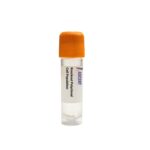
PHKA1 Knockout Raji Polyclonal Cells

  • Product Type:

    Polyclonal Cell Population

  • Species:

    Homo sapiens (Human)

  • Tissue Source:

    Bone

  • Disease:

    Burkitt lymphoma

The PHKA1 Knockout Raji Polyclonal Cells are a CRISPR/Cas9-edited polyclonal cell population derived from Raji B lymphocytes, featuring targeted disruption of the PHKA1 gene. This knockout model abrogates expression of the phosphorylase kinase alpha regulatory subunit, blocking activation of glycogen phosphorylase (PYGL/PYGB) and impairing glycogenolysis. As a result, it provides a powerful tool for studying glycogen metabolism and its integration with calcium and PKA signaling in a B-cell lymphoma background. Applicable in glycogen storage disease IXd research, metabolic studies in lymphoma, and calcium signaling, these cells support glycogen content measurement, metabolic flux, and apoptosis assays. The model enables dissection of PHKA1-dependent pathways in an EBV-positive B-cell line.

Inquire Now

In stock

Ships next business day


Ask a Question

Shipping Info:

Cryopreserved in vials and shipped on dry ice


Disclaimer:

For Research Use Only

  • Characteristics

    Host Cell

    Raji

    Cell Type

    B cell line

    Sex of Donor

    Male

    Age

    11 years

    Derived From Site

    In situ; Maxilla

    Gene Name

    PHKA1

    Gene Identifier

    NCBI Gene ID 5255

    Morphology

    Lymphoblast-like

    Growth Mode

    Suspension

    Storage

    Liquid nitrogen (LN2)

  • Culture Conditions

    Growth medium

    RPMI 1640

    Supplement(s)

    10% Fetal Bovine Serum, 1% Penicillin-Streptomycin Solution

    Temperature

    37°C

    Atmosphere

    5% CO₂

  • Quality Control

    Sterility testing

    The bacterial, yeast, and fungi are not detected in these cells by daily monitor.

    Mycoplasma testing

    Negative for mycoplasma through PCR analysis

  • Disclaimer

    Intended Use

    This product is intended for laboratory in vitro use only. lt is not intended for diagnostic, therapeutic, or clinical applications.

    Disclaimer

    Ascent Research endeavors to provide accurate and up-to-date product information. However, no warranties or representations are made regarding its completeness or reliability. References to scientific literature and patents are for informational purposes only, and the customer assumes sole responsibility for verifying their accuracy.

    By accepting this product, the customer acknowledges and agrees to assume all risks associated with its receipt, handling, storage, disposal, and use, including compliance with all applicable safety and environmental regulations and precautions. Relevant laws, regulations, and ethical guidelines must be followed in conducting any research, modifications, or derivatives derived from this product.

    This product is provided "AS IS", and except as expressly stated herein, Ascent Research disclaims all other warranties, express or implied. Under no circumstances shall Ascent Research, its affiliates, or representatives be liable for indirect, incidental, consequential, or punitive damages arising from the use of this material. While Ascent Research employs rigorous quality control measures, we shall not be held responsible for damages resulting from misidentification or misinterpretation of the provided materials.

Description

PHKA1 Knockout Raji Polyclonal Cells consist of a CRISPR/Cas9-edited polyclonal population of Raji B lymphocytes with targeted disruption of the PHKA1 gene. This product provides a genetically heterogeneous pool bearing diverse loss-of-function alleles, generated by transient delivery of Cas9 and a specific guide RNA, followed by selection to enrich for edited cells. The polyclonal format minimizes clonal selection bias and preserves phenotypic variability, making it suitable for studies requiring bulk cell behavior. The knockout leads to ablation of the phosphorylase kinase alpha regulatory subunit, impairing functional enzyme complex assembly.

The Raji parental line is a human Burkitt??s lymphoma B-cell line, isolated from a patient with non-Hodgkin lymphoma and characterized by EBV positivity. Raji cells serve as a widely used model for B-cell malignancies, antigen presentation, and EBV biology, exhibiting constitutive NF-??B activity and metabolic adaptations typical of lymphoma. Their robust growth and well-characterized signaling networks facilitate investigation of gene function in a lymphoma context.

PHKA1 encodes the alpha subunit of phosphorylase kinase, which activates glycogen phosphorylase (PYGL and PYGB) to mobilize glucose from glycogen. The enzyme complex is regulated by calcium through calmodulin (CALM1) and by cAMP-dependent protein kinase A (PKA) downstream of ??-adrenergic receptors. The alpha subunit provides a scaffold for beta (PHKB) and gamma (PHKG1) subunits, integrating hormonal and metabolic signals. Therefore, PHKA1 functions upstream of PYGL/PYGB and is essential for glycogenolysis, bridging calcium and PKA signaling to glucose-1-phosphate production. Knocking out PHKA1 disrupts complex formation, preventing phosphorylation of glycogen phosphorylase and halting glycogen breakdown.

In the Raji B-cell lymphoma background, PHKA1 knockout offers a model to study metabolic dependencies of malignant B cells. Lymphoma cells often rewire metabolism to support proliferation; glycogen can serve as a carbon reserve or contribute to nucleotide sugar synthesis. Loss of glycogenolysis may force reliance on alternative energy sources and sensitize cells to metabolic stress. Moreover, since phosphorylase kinase is a calcium-responsive enzyme, the knockout allows dissection of calcium signaling cross-talk with glycogen metabolism in apoptosis and immune signaling. This model also permits exploration of glycogen storage disease type IXd, caused by PHKA1 deficiency, in a human B-cell context.

Representative applications include metabolic flux analysis using glucose release assays and glycogen content quantification, complemented by PAS staining. The cells are suitable for Western blotting to verify PHKA1 loss and assess associated subunits, RT-qPCR for transcript monitoring, and phosphorylase kinase activity assays. Calcium flux experiments and apoptosis assays can examine the impact on cell death pathways. For further information, please contact Ascent Research.


Reset Password

    Reach Us Questions? Click Me Here!

    Fill out the form below and a member of our team will contact you shortly!

    *Required field


      Reach Us

      Fill out the form below and a member of our team will contact you shortly!

      *Required field

      Product Inquiry (Optional)